Creature
Generation 3 synth
Third generation synths, or gen 3 synths, are the apex of the Institute's…
Third generation synths, or gen 3 synths, are the apex of the Institute's research into creating a race of servants necessary to maintain their subterranean habitat.
Background
The most advanced synthetics created by the Institute are fundamentally different from their predecessors, the result of nearly five decades of research, from 2178 to 2227. The research used a sample of the Forced Evolutionary Virus and was intended to produce effective synthetic organics, but it ground to a halt in March 2224, as the research team concluded that the organic synth project could not proceed despite perfecting two FEV strains for the project. Radiation-induced hereditary damage proved too much of an obstacle.
Before developing the first truly organic synths, the Institute prototyped the next generation as mechanical synths like generations 1 and 2. Two prototypes were developed distinctly from each other, one testing independent development through experience and one based on a pre-existing personality derived from pre-War brain scans. Each developed their personalities with promising results but both escaped sometime before the Institute could continue experimenting. In 2229, a 3rd generation prototype designed to mimic a human man was field tested in Diamond City and malfunctioned, causing the Broken Mask incident and vilifying the Institute in the eyes of the Commonwealth.
In 2227, the organic synth project was spun off from the FEV research initiative due to the acquisition of Shaun and his undamaged pre-War genetic code. He was recovered by Conrad Kellogg, and his DNA became the basis of the third generation of synths in a project led by Dr. Walter. The infant Shaun became Father to a whole family of engineered synthetic beings.
Biology
Despite sequential numbering, third generation synths are unrelated to their mechanical counterparts, but are derived from Shaun's pre-War DNA and extensively modified using the Institute's own research into the Forced Evolutionary Virus, combining the advantageous adaptations encoded into FEV with the versatility of the human body shape. This allowed the Institute to create a variety of synths of varying races and appearances despite the base DNA coming from only one source.
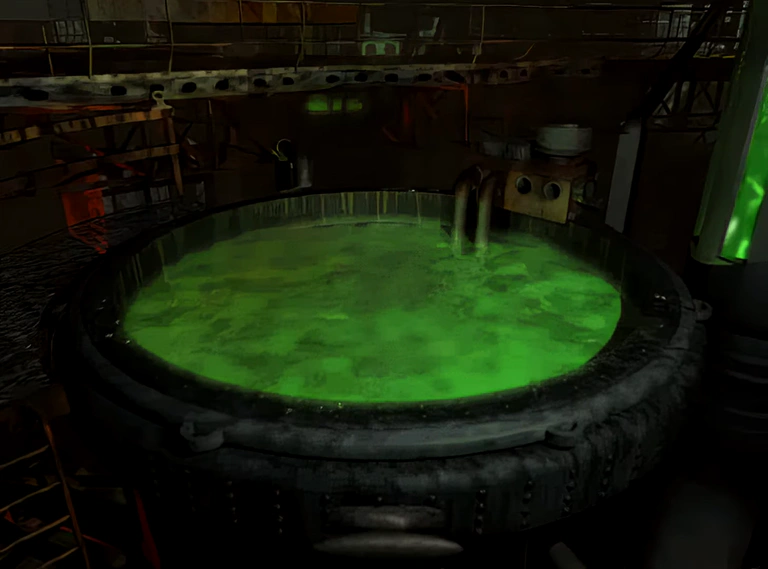
Organic synths are assembled inside Institute Robotics from scratch: The skeleton is assembled by giant machines and serves as basis for artificial soft tissues woven on top of it, including analogues for all human components: Brain, lungs, digestive tract, muscles and so on. The unfinished synth's organs are then kickstarted using powerful electric charges and placed in a fluid bath that completes the activation process by rapidly covering the synth in artificial skin. The synth then emerges with the mental faculties of a full-grown adult human. The blank synth is then ushered for processing: Programming and job assignment. Though entirely biological, each Gen 3 synth contains a neurological implant inside their brain allowing them to be "programmed" and manipulated via voice commands. This implant cannot be detected or removed without killing the synth.
Synth components and programming seem to be unreliable at best in Gen 3s, with some Institute synths requiring repeated wipes, and others escaping when sent to work on the surface. Mind wipes in particular have a high failure rate that results in moderate to severe brain damage. Even the Institute's recall codes are unreliable, with Justin Ayo admitting that too often, returned synths are "unsalvageable". The Institute also avoids relying on programming for surface agents: instead of building coursers, they observe third generation synths for specific traits, then train and upgrade them. When they decide to replace a wastelander, they do not take the original's memories and implant them in the synth. Instead, they either send the replacement to directly kill and replace their target, or if they are replacing a person of importance, they may capture them and torture them for information to help the replacement blend in. This not only takes longer, but relies on getting an honest and self-aware self-assessment from the wastelander. This explains why Institute infiltrators are usually uncovered because their personality and behavior are seen to have changed significantly overnight.
Third gens are human-like, but some liberated synths do not consider themselves human at all. The reasons for this are multiple, chief among them being the assembly process. Third gens are physically incapable of gaining weight. Max Loken, a scientist in Robotics, claims that synths do not require sleep at all to function properly, are completely immune to disease, and do not require the intake of food to function. However, synths evidently still feel sensations of hunger and sleepiness, and Alan Binet also claims that his synth Eve has been dreaming while she sleeps, observing involuntary twitching and rapid eye movements during sleep. Synths can also still eat and digest food and even appreciate taste. All third generation synths share an affinity for Fancy Lads Snack Cakes, mystifying Institute scientists. Synths may also merely be more infection-resistant rather than fully immune, evidenced by the upgrade notes for a new model of synth blood. According to a conversation between Janet and Enrico Thompson, the child synth Shaun will not age, which means that possibly no synth does.
Upgrades
Third generation synths undergo frequent upgrades and patches in a manner similar to robots, and upgrades are constantly in development. Additional implants apart from synth components are often used on Coursers, such as neuro-servos and other implants which were common around the 2240s. According to cut terminal entries, the most experimental upgrades concern their synthetic brains, through the enhancement of specific areas. For example, 2287 saw a major upgrade to synthetic optic nerve tissue for over thirty synthetics, increasing visual acuity by 10 to 12 percent. Other upgrades the Institute implements in its synths are:
The latest models of the third generation display increased autonomous behavior, resulting in a greater number of escapes. Alan Binet, head of Robotics and their chief designer, came under suspicion, leading the SRB to order a full examination of the behavioral mapping in these models, looking for signs of interference.
Software package updates, which can provide incremental increases in eg. firing accuracy. The software used by third generation synths may become bugged and require patching.
Transfusions, which swap out the entire synthetic blood used in organic synths for superior types that provide improved clotting and infection resistance. Artificial blood strains are identified with codes and the latest upgrade in 2281 switched from blood 77-01 to 90-10.
Identification
Generation 3 synths are physically and mentally indistinguishable from ordinary humans, having lab-grown bodies of real human flesh, bones, and organs instead of plastic and metal. Even their DNA is close enough to human to seem ordinary. For example, the Brotherhood of Steel keeps their members' DNA on file, and only discovered one member was a synth once they had Institute records of synth DNA to check against. Dr. Roslyn Chambers, a scientist researching a foolproof way to detect synths, found that no medical tests or procedures can identify someone as a synth without killing them. Psychological tests, such as Covenant's SAFE test, show some promise but are dubious at best.
Rumors abound in the wasteland about traits or behaviors that identify a synth, but even mind-wiped synths such as Captain Avery or Gabriel are unable to tell what they are and firmly believe they are human until it is proven to them.
Discrimination
Although gen 3 synths would qualify as sentient beings by the standards of most of the wasteland, they are generally perceived as agents of the Institute and treated as hostiles if discovered.
In the Institute, most are keen on keeping synths under their direct control as servants. The Institute says repeatedly that synths are essential to its continued existence and will redefine humanity, but do not seem to have any intention of allowing them free will or status as full members of the Institute. The disastrous actions of some synths "liberated" by the Railroad, such as Gabriel, are cited as evidence that synths cannot be trusted to make their own decisions.
Few challenge the ideology and those that do are considered radicals. Robotics head Alan Binet is a noted radical, with his impassioned speeches about artificial sentience and machines a constant feature of Robotics. Binet is keenly aware that his words fall on deaf ears, and when reminded of the option to trade the Institute for the wasteland, is quick to remark that he is only trying to broaden the horizons of his colleagues. His ideas are unpopular, especially when he suggests that synths could be the redefinition of humanity. The situation is made worse in the light of the recent increase in autonomous behavior among the latest gen-three models.
Sources
Adapted from the original article, under CC BY-SA 3.0.