Event
Great War
The Great War, also simply referred to as The War, was a pivotal event in the…
The Great War, also simply referred to as The War, was a pivotal event in the setting of the Fallout series: a global thermonuclear exchange that took place on Saturday, October 23, 2077, as a result of the then-ongoing Sino-American War between China and the United States of America. It resulted in the destruction of all participating nations and abroad, global disruption of the climate and billions of casualties as a result of nuclear blasts, exposure to radiation and the subsequent collapse of social and government structures, all within the span of just two hours. The landscape of the United States and the rest of the world were transformed into a wasteland and even 200 years later, the consequences of the Great War can still be felt in the form of lingering radiation, rampant sickness and disease, hostile mutated creatures, environmental degradation, and significant scarcity of resources resulting in mass societal breakdown and regression to violent lawlessness.
Prelude
The sociopolitical buildup to the Great War began in 2051, when the United States started a campaign of economic sanctions meant to destabilize the infrastructure of Mexico, culminating in a military invasion of the Central American country to seize its oil fields for their own interests, unofficially sparking an era of fragmenting global relations called the Resource Wars. Around a year later, in April 2052, the European Commonwealth followed America's lead in carrying out their own invasion of the Middle East to capture its lavish oil fields, to far less favorable results. This served as the globally recognized starting point of the Resource Wars and the breakdown of international relations. In December 2053, a nuclear detonation decimated the city of Tel Aviv, marking the first use of WMDs since Hiroshima and Nagasaki in World War II, only escalating further by January 2054 with a series of limited nuclear exchanges scorching the Middle East, raising fears worldwide with the reintroduction of nuclear weapons on the global stage.
The results of Europe's 2052 invasion made things worse for an already beleaguered United Nations, but they still tried to exercise their influence and keep the situation contained. However, between May and July of that year, heightened tensions on the debate floor caused many of its constituent nations to withdraw entirely, ultimately leading to the organization's disbandment in July, three months into the war in the Middle East. Even as they struggled against the Middle East's monopoly, the balance of power in Europe came apart, eventually resulting in the European Civil War and the complete collapse of the European Commonwealth into smaller, rival nation-states bent on taking what few resources remained for themselves.
Earlier in April 2053, the United States was facing its own catastrophe with the spread of the New Plague, leading to West Tek being commissioned to develop a cure. By 2054, the assessment of the deteriorating global situation prompted the United States government to begin enforcing quarantines within their own borders while setting up a joint collaboration with the Vault-Tec Corporation, "Project Safehouse," for the creation of the Vaults.
By the turn of the 2060s, the ruination of Europe and the Middle East in the wake of its oil fields drying up spurred the United States into action, believing that Alaska's oil fields were vulnerable. In 2059, American military forces poured into the northwest state in order to defend them and established the Anchorage Front Line. By 2066, an indefinite embargo was placed by the US on the export of petroleum. Due to its own petroleum-heavy economic interests, the communist nation of China was hit particularly hard by the U.S.' tight control on oil exports and chafed under the western nation's refusal to negotiate. Out of desperation, the Chinese government orchestrated an invasion of the North American continent across the Bering Strait later that year, sending the People's Liberation Army to conquer the city of Anchorage and take control of the Alaskan Pipeline, and kicking off the Sino-American War.
Canada was a major party in the early stage of the conflict between the U.S. and China. Though the country initially supported the logistics of the American war effort, the economic cost, environmental destruction, and underlying friction gradually wore on the populace by 2069. Then the tipping point came in 2072. As the U.S. escalated its exploitation of Canada's resources, the thoroughly fed-up populace took to the streets, with protests and riots erupted in several Canadian cities. The boiling situation finally spilled over with an attempted sabotage of the pipeline by unknown forces, of which would be foiled, and the military leaders of America then sought to capitalize on the public outrage to enact military annexation of the northern territory, ending in Canada's dissolution as a sovereign nation. Meanwhile, West Tek's research into a cure for the New Plague was sidelined by the government, instead having their research turn towards the weaponization of the Forced Evolutionary Virus, a prospect which terrified the Chinese.
While their defensive strategy was concentrated in Alaska, the U.S. launched a counteroffensive to strike against mainland China in 2074. The federal government was able to fund a standing army the likes of which the United States had never seen before, with the advanced T-51 power armor being deployed to both fronts in 2076. The entrance of power armor to the battlefield tipped the balance towards the U.S., and the decisive Battle of Anchorage was won in January 2077 with Chinese forces being evicted from American soil. However, this had the effect of causing the global situation to transition from a stalemate in Alaska to a stalemate in China. Diplomacy also stalled, as peace talks between the countries scheduled after the American victory in Anchorage went nowhere, stoking fears of nuclear war.
Unbeknownst to the populace at large, the leaders of corporate America devised their own end goal for the fate of the world. In 2074, Vault-Tec hosted a meeting at their headquarters in Los Angeles attended by figures from multiple powerful groups in the region like RobCo Industries, West Tek, REPCONN Aerospace, and Big MT. Executives Barb Howard and Bud Askins revealed the joint effort Project Safehouse, intended to construct Vaults to protect the American populace in the face of nuclear war. However, with the cooperation of the corporate heads, Vault-Tec planned to turn many Vaults into social experiments to help design a perfect post-nuclear society under their complete control. Against questions of how they planned to ensure such an outcome, Howard made the suggestion that they directly instigate the apocalypse themselves. However, it is unclear if this group would end up actually following through with their apocalyptic plans; at least one attendee, Robert House (who sent his body double in his place), did not believe anyone there would be the ones responsible and instead suspected the involvement of others. Indeed, there was "another player at the table:" Howard's suggestion was not hers originally, but rather one she was forced to deliver on threat of harm to her family by a representative of the Enclave, further muddying the idea of who was ultimately the responsible party.
On October 10, 2077, the ranking commander at Mariposa Military Base became aware that the West Tek scientists he'd been protecting had been experimenting on military prisoners for their FEV research. He had a mental breakdown, leaving Captain Roger Maxson in charge of the subsequent investigation. Maxson interrogated the scientists, including lead researcher Leon Von Felden, obtained confessions, and summarily executed them for their actions. On October 20, Maxson issued an open declaration of secession from the United States to try and force a response from the government, but never received a response in the succeeding week.
Unbeknownst to much of America, the Enclave's leadership, including the U.S. president, his Cabinet, and several figures of military leadership, sequestered themselves onboard a decommissioned oil rig off the coast of California as well as in a congressional bunker below the Whitespring Resort in Appalachia. Though their original goal was to continue the war against China as necessary, the Enclave's infrastructure would become splintered, and contact between their shelters lost, in the aftermath as the destruction was worse than they had anticipated.

Events
The Great War both began and ended on Saturday, October 23, 2077, after talks collapsed that morning in Anchorage. Unknown submersible objects were sighted at 00:03 EST off the coast of California by the United States Pacific Fleet. At 03:37 EST, a squadron of high-altitude bombers were sighted off the Bering Strait and believed to be Chinese. At least one Chinese stealth submarine, the Yangtze, moved close to the American East Coast, launching all warheads, save for one, due to a malfunction.

Six hours later, at 09:13 EST, the Integrated Operational Nuclear Detection System detected the first four missile launches and the United States went to DEFCON 2. Four minutes later, NORAD confirmation sealed the fate of the world. At 09:26 EST, the president ordered a retaliatory strike according to scenario MX-CN91. Nuclear bombs hit Pennsylvania and New York at 09:42 EST, preceded by the west coast not long beforehand. The bombs continued to drop and five minutes later, at 09:47 EST, Washington, D.C. was hit and most American facilities went offline. The nuclear exchange continued for two hours, and both China and the United States suffered catastrophic losses.
The standard strategic nuclear warhead used in the Great War ranged from 200 to 750 kilotons in explosive yield, with high-yield variants found on Chinese submarines. This was actually far worse for the Earth, as the lower yield warheads deposited more soil and debris into the lower atmosphere, resulting in a much more concentrated fallout that eventually enveloped the planet. The entire world was blanketed with multiple nuclear strikes, and the world and its entire ecosystem were irrevocably changed for centuries to come.
Environment
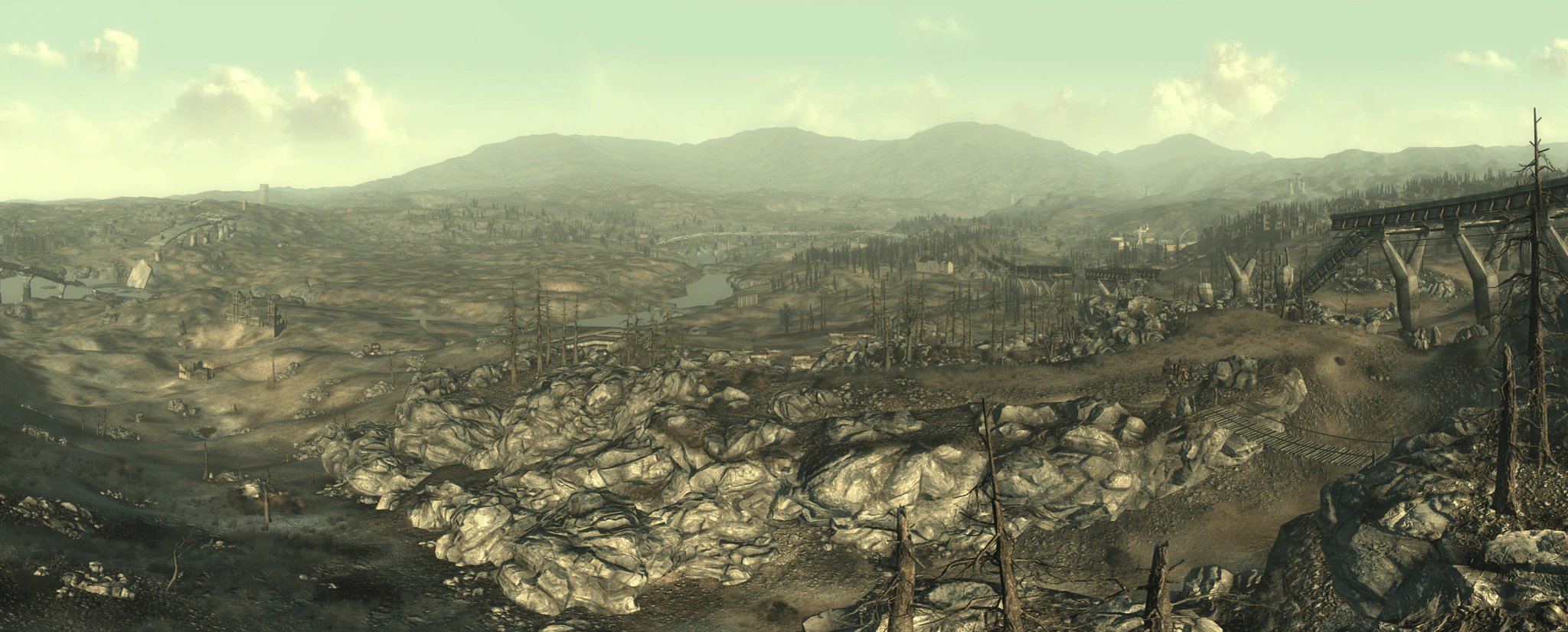
The results of the Great War were devastating, as they combined with biological and chemical weapons that saw widespread use during the Sino-American War. The changes in climate led to widespread alterations of the ecosystem. The new climate meant that many plants could no longer grow or be cultivated, ranging from common vegetables to specialized crops, such as coca plants or opium poppies. Due to necessity, crop variants mutated by radiation were adopted by survivors, including mutated cabbage and maize. These cultivars thrived in the warm weather of the Southwest, with similar mutations proliferating across the colder climates of the northern reaches of the continent.
Animals were also adversely affected. The combination of radioactive fallout and various local mutagens, particularly the Forced Evolutionary Virus in New California, led to widespread genetic mutation. By 2080, new species were created almost overnight, replacing animals that had gone extinct or been out-competed. One mutated species to emerge from this melting pot of genotypes is the brahmin, a mutated cattle variant. Once the mutation stabilized, the brahmin turned out to be well suited for the harsh conditions of the wasteland, requiring little water and relatively small grazing areas, while providing plenty in return, including milk, meat, leather, bone, transportation, et cetera. As such, it rapidly became the most widespread livestock animal in New California, and the backbone of many a wasteland economy.
Humans
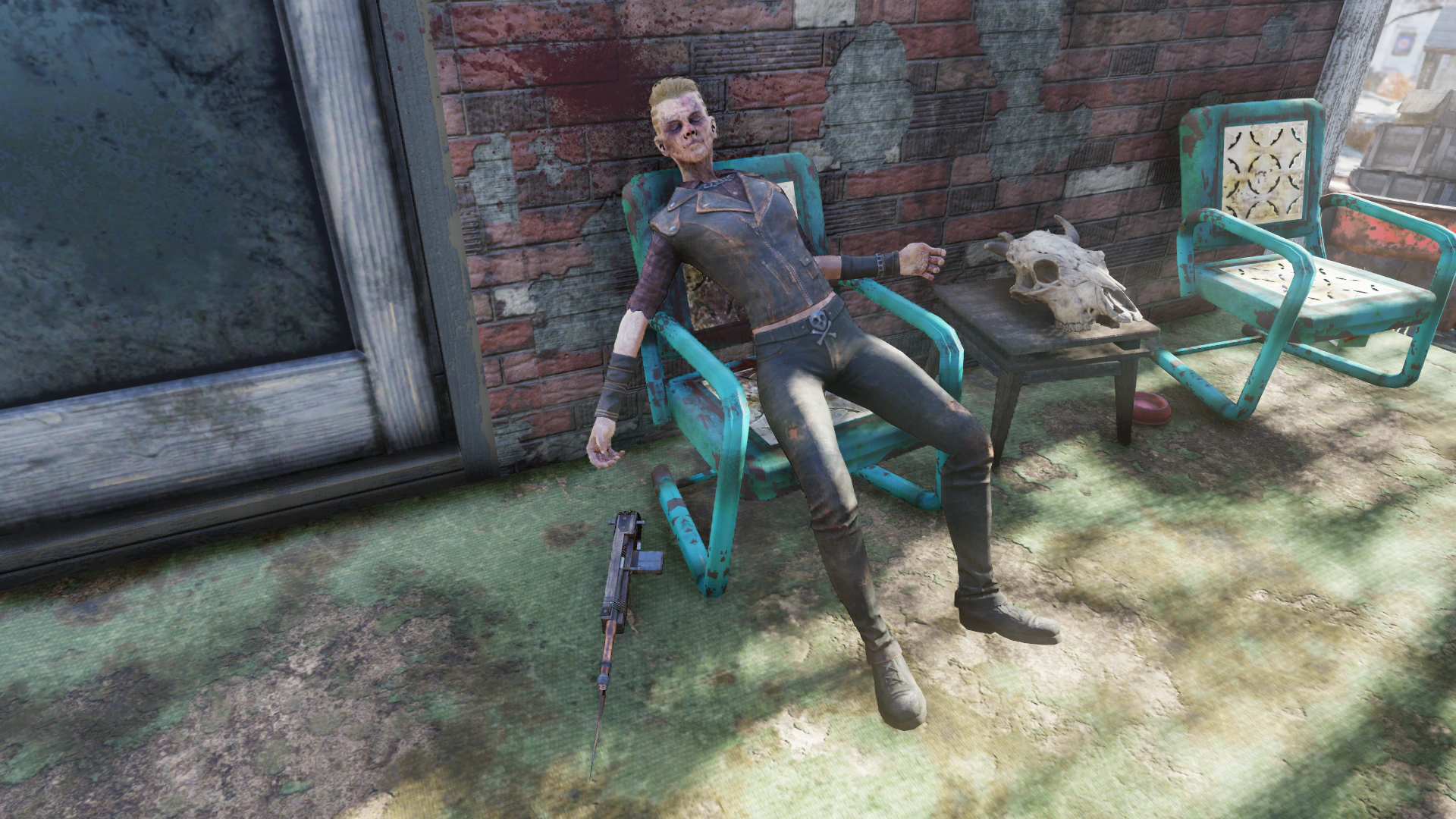
The Great War's impact on humanity and civilization was painfully severe and traumatic. In the immediate chaos that ensued after the bombings, people began fighting each other for resources and what little shelter remained intact. Many survivors would then divide themselves into ragtag communities, tribes, and/or various gangs of unscrupulous raiders. Diseases and illness, as well as starvation and dehydration, became widespread, largely caused by radiation and other environmental contaminants. Suicide was common after the Great War, even decades later. Although emergency response units and elements of the National Guard were mobilized on the evening of October 22, their ability to provide aid to victims and refugees was severely hampered by the lack of any centralized command and control, resulting from electromagnetic pulses which disabled most communications equipment. Despite efforts by the military to bolster relief efforts, the shock of the nuclear attack resulted in their morale crumbling and many deserting their posts. By the time radiation sickness began to set in among victims of the attack, the situation had already become hopeless as they were no longer receiving any supplies with which to aid the victims. Whiskey and painkillers were the only care available to most patients. Combined with an unstable chain of command and limited manpower, organized attempts by the military to restore order ended up in failure, with nothing left but the remains of their equipment by two centuries later.
These trends played out similarly across the country. In one major exception, Las Vegas, Nevada was spared a direct nuclear strike thanks to Robert House, whose missile defense systems disabled or destroyed 68 out of the 77 warheads heading for the city, but this was still a major blow to the region, reduced to tribes and small towns up until the mid-23rd century. Those who lived outside of major cities or managed to escape them in the narrow window of time granted by the sirens generally enjoyed a much better chance of survival. Although suffering from the sudden loss of access to water, food and medical care, these survivors went on to found new communities across the newly born wasteland, becoming the founding fathers of a new civilization struggling to rise from the ashes. These included Darkwater, the founder of Junktown, Angus of the Hub, the founders of Megaton and Diamond City, and so on and so forth.

Some of the less fortunate survivors on the surface turned into ghouls, a result of their exposure to radioactive fallout and/or thermal radiation from the blasts, with their horrifying appearance leading to a kind of racial prejudice among other human survivors.
A relative few were able to reach safety in underground vaults constructed by the Vault-Tec Corporation at the behest of the federal government, with most often trading suffering on the surface for suffering in confinement, due to the social experimentation that had been initiated by the forebears of the Enclave. Some refused to go into their assigned Vaults, believing that it was all just another drill, not realizing the truth of their situation until it was far too late. Vaults that didn't fail as a result of their experiments frequently became another source of civilization across the wasteland, such as Vault 15, whose inhabitants founded the village of Shady Sands (as well as the raider tribes of the Khans, the Vipers and the Jackals), the Los Angeles Vault, which led to the establishment of Adytum, and Vault 8, which led to the establishment of Vault City.
Event time
The beginning of Fallout 4 (2015) establishes the precise timeframe of the Great War: The game starts out in pre-War Boston in the morning, only moments before the bombs fall, showing that the Great War occurred at 9:47 AM Eastern time. New York and Pennsylvania were hit at 9:42 AM, with Boston and Washington, D.C. being hit at 9:47 AM, five minutes after. This time was first presented in Fallout 3 (2008), in which all clocks are stuck at 9:47, and Carrie Delaney's recordings from Early Dawn's Saturday trip to Little Lamplight (the same clocks were also reused in the Fallout: New Vegas add-on Honest Hearts, in the debris of Three Marys, with the same hour, despite being in a time zone 2 hours behind the East Coast). A ghoul, Carol, who recollects her survival of it to the player, claims that the west coast had been hit prior to D.C., and that an amount of time passed between the two, which allowed news to reach them, prompting them to enter fallout shelters.
The timeframe has been consistently maintained in subsequent games (e.g. a terminal in the Palace of the Winding Path in Fallout 76 states a group of technicians saw "bright lights on the horizon, and clouds of fire in the sky" during the morning of October 23) with one exception: The opening narration in the Fallout: New Vegas add-on Old World Blues (2011) states the bombs fell during the night ("On the night of October 23rd, 2077, the scientists received an answer that put all their questions to rest"). However, by 9:47 AM Eastern, dawn has already broke across the contiguous United States. This is the only exception in the games, as in Fallout: New Vegas (2010) Mr. House says that the platinum chip was to be delivered in the afternoon of October 23, "but by then, the world had ended."
However, the timeframe was seemingly contradicted a second time in the Fallout TV series. In the series premiere episode, "The End," a flashback shows nuclear detonations striking Los Angeles on the West Coast during the daytime.
Aftermath
Although the war ended within a single day, remnants of the American government and military had made contingency plans and attempted to follow through on retaliatory strikes, with many in the Enclave retreating to safety in their bunkers. In Appalachia, cut off from the rest of the Enclave, former Secretary of Agriculture Thomas Eckhart wanted to continue the Great War and launch further nuclear strikes against China in retaliation. This required a threat-escalation to access the nuclear silo's automated systems, and Eckhart's actions to do so resulted in the Scorched Plague in Apalachia, as well as a small-scale civil war and complete destruction of the Enclave in the region.
Apart from the Enclave, other general contingency plans were believed to exist in the U.S. military. Non-Enclave military units also continued to function for a brief period, enforcing evacuations of military personnel and assets as well as attempting to maintain martial law in locations such as Boston, while other surviving government units such as Response Unit MD-478 of the National Catastrophe Relief Auxiliary also attempted to provide humanitarian aid before eventually falling apart.
Any contingency plans made by other nations, including China, are currently unknown. However, in the United States, surviving Chinese military assets continued to function in the aftermath of the Great War thanks to an extensive infiltration campaign as well as the use of long-range nuclear submarines. These assets were cut off from their homeland, but under communist dogma continued their final orders regardless. Many were turned into ghouls, such as the remnants of the Mama Dolce's factory in Washington, D.C. or the Fujiniya Intelligence Base in Appalachia. One group operating in a nuclear submarine, however, decided to integrate into wasteland life, forming the Shi in San Francisco.
The weapons of the Great War would continue to ravage the wasteland for decades and centuries afterwards. Most vehicles were left to rust and fell into disuse shortly after the Great War. The main exception to this were Vertibirds used primarily by the Enclave, but later by other factions that won them off of the Enclave. Caches of small arms belonging to both the American and Chinese militaries would be uncovered and used by wastelanders and factions all across the former USA. Military-grade robots such as Mister Gutsies still prowl the wasteland, the majority of their programming having gone haywire and making them hostile to all life. Of the suits of power armor left behind, some were repurposed by small-scale raider gangs, but they would mostly be used by the Brotherhood of Steel who tracked them down whenever they could and used them as the foremost weapon in their arsenal. Finally, nuclear proliferation would persist even after the Great War, as a number of unexploded nuclear bombs remained. The settlement of Megaton was built around an unexploded bomb that could still be detonated with enough tampering. The nuclear arsenals in Appalachia and the Divide remained stocked and would be detonated after the Great War. Other facilities, such as Sentinel Site Prescott in the Commonwealth, also retained their arsenals.
Only a few decades after the War, the nations that were involved and the ideological justifications were being forgotten as the survivors had to deal with present reality, and the legacies of destroyed nations ceased to matter. Only the Enclave would truly carry on the Great War's jingoistic legacy.
Sources
Adapted from the original article, under CC BY-SA 3.0.