Creature
Rad-rat (Nuka-World)
Creatures found in the Nuka-World amusement park in 2287
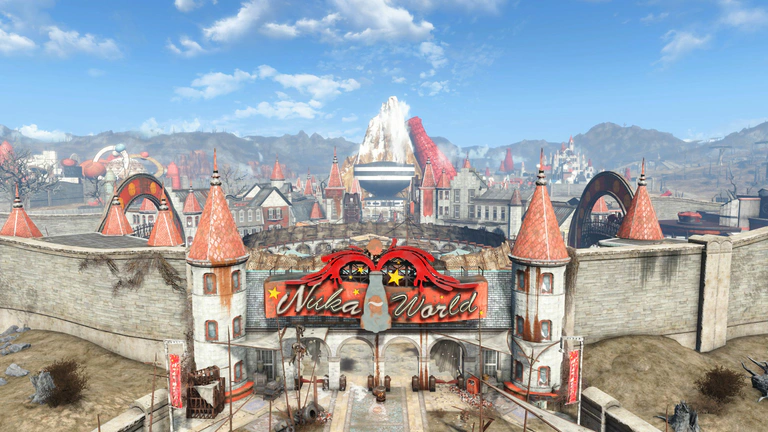
Rad-rats are creatures found in the Nuka-World amusement park in 2287.
Background
Once regular pesty rats before the war, the North American rat population was tainted by the radioactive fallout from the onslaught of atomic warfare. Rad-rats are much bigger than their pre-War cousins. They have large teeth and pearl-like eyes. Their bite and their scratch inflict radiation damage.
Characteristics
Rad-rats, much like their pre-War counterparts, are small rodents, although slightly larger than their counterpart due to their extended contact with radiation. Their fur, like that of mongrels, has fallen off due to radiation and has left them with wrinkled, tight skin. They also emit the same noises as mole rats. They are however much tougher than normal mole rats, having more hitpoints and dealing more damage.
Gameplay attributes
Rad-rats are aggressive; when attacked they will fight back, using their claws and mouths to attack their enemy. They will also use a lunge attack at a distance.
Legendary rad rats of all variants explode seconds after death, dealing radiation damage to the player character.
Rad-rat pup
A pup that is the weakest rad rat variate, but can pose a threat in hordes.
Mangy rad-rat pup
A slightly stronger variant of the rad rat pup.
Rad-rat
The normal rad rat. They can be challenging for player characters at a low levels due to their speed.
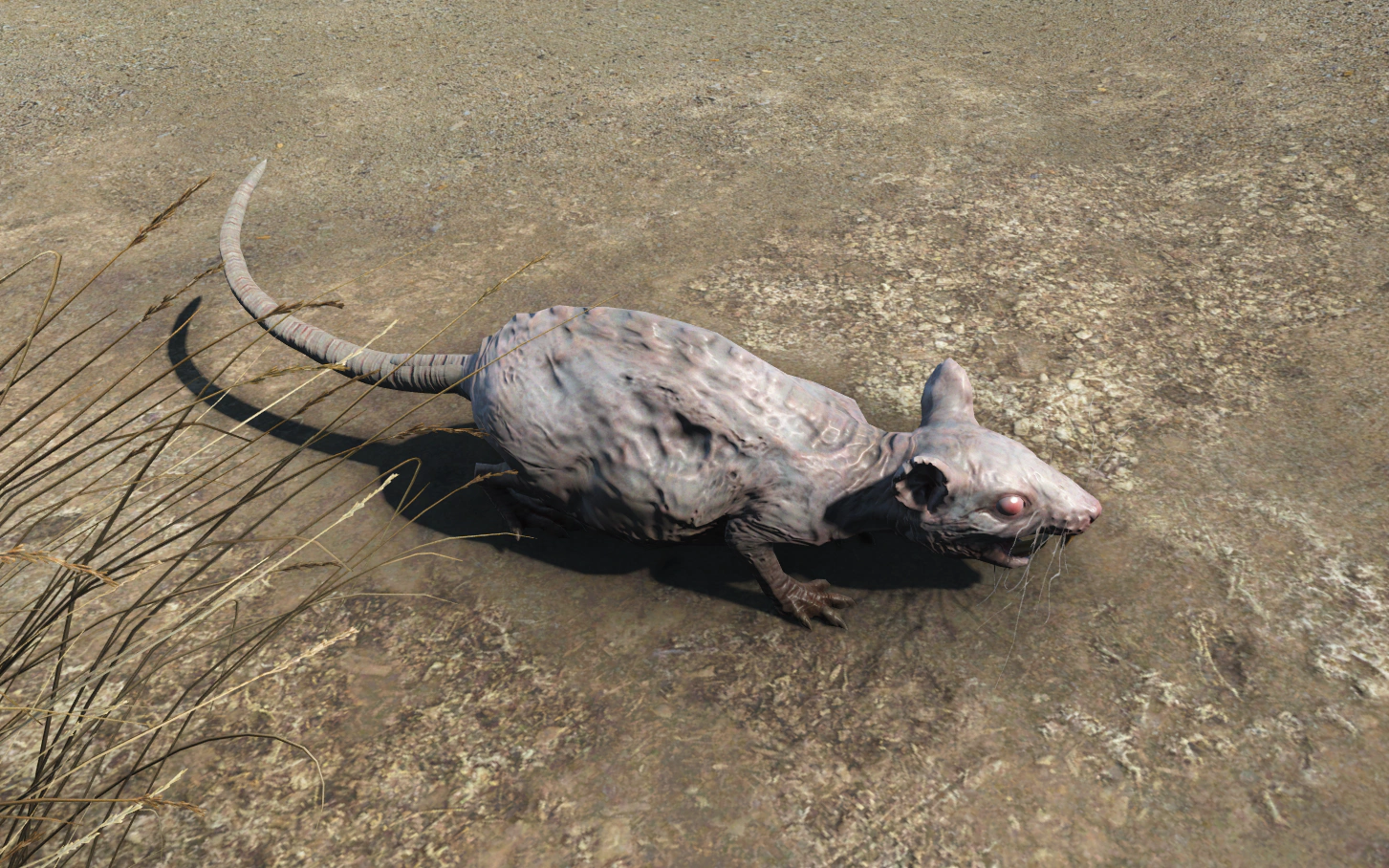
Infected rad-rat pup
A rad rat pup with open wounds all over its body. They are the strongest of rad rat pups.

Mangy rad-rat
A the name suggests, these rats are affected with Mange. Their stats remain same as the their regular variants with the exception of their higher health.
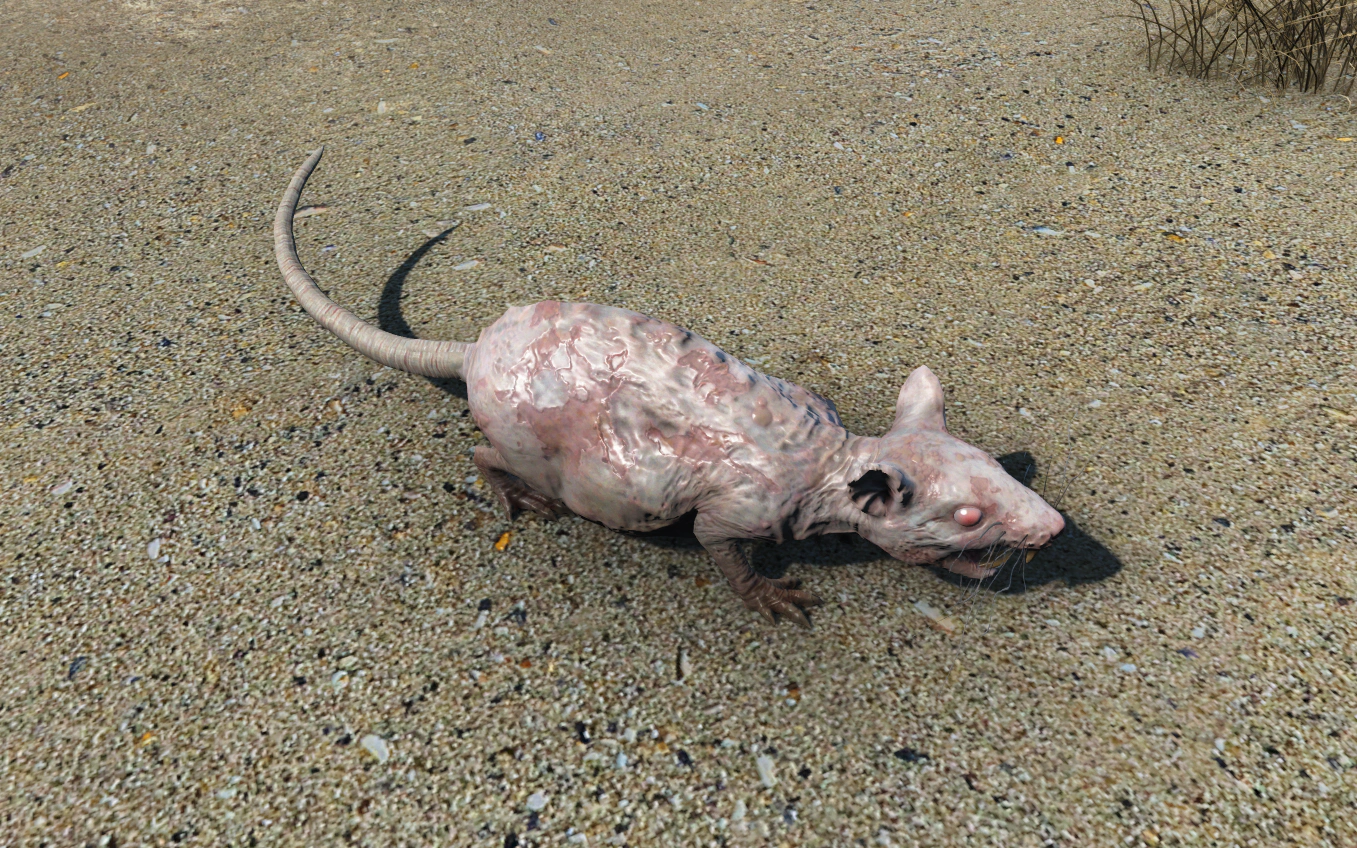
Infected rad-rat
A rad rat with exposed wounds all over its body.
Plagued rad-rat
The strongest of rad rats. they also give off small amounts of radiation damage. This rad rat has more health than a mole rat broodmother and can shred power armor with ease. They appear to glow at night.

Sources
Adapted from the original article, under CC BY-SA 3.0.