Place
Utah
State of the pre-War United States of America
Utah was a state of the pre-War United States of America.
Pre-War
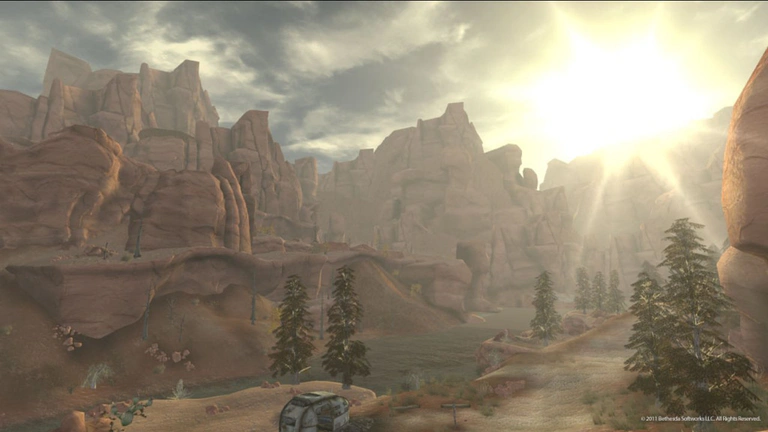
Utah was home to a large population of Mormons, the most of any state by proportion. The southern part of the state was also home to Zion Canyon, a famous natural landmark and national park. Other geographic features in the state included the Great Salt Lake, a large body of water, and the Grand Staircase, part of the Colorado Plateau located east of Zion Canyon.
By the late 21st century, U.S. military installations in the state included an armory near the town of Spanish Fork which received a supply of .45 Auto submachine guns. The National Guard also had assets within the state.

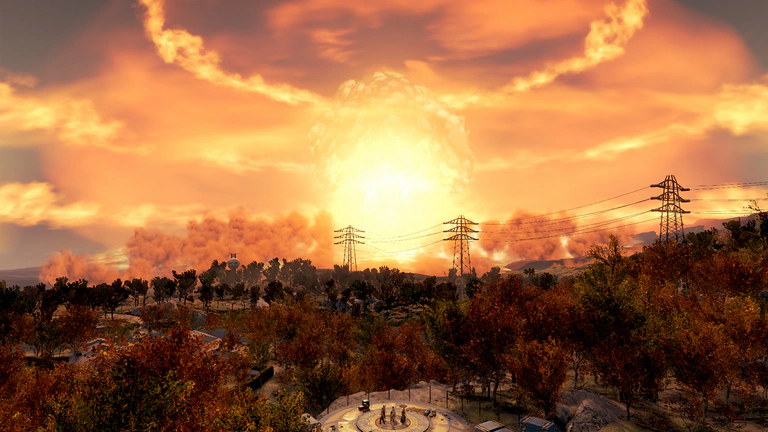
On the day of the Great War, several cities in Utah were targeted by nuclear weapons. Salt Lake City received no less than thirteen direct strikes, with the remains described as "a sea of fire and destruction." Zion Canyon, on the other hand, was spared from the nuclear strikes.
Post-War
In the early post-War era, Salt Lake City was described as "mostly craters," rubble, and the bare remains of highrises. Some areas, like Fountain Green, may have maintained a degree of human habitation, however. Scavengers picked over the ruins of Utah's cities, including Salt Lake City, and took what they could for years after, including still-intact pieces of pre-War law enforcement gear.
However, like in other regions, much of the human presence in Utah was "savage" and unwelcoming, if not hostile, to outsiders. Over time, raider tribes would arise, seizing large swathes of wasteland territory and terrorizing any nearby settlements. By the 23rd century, the White Legs would come to dominate the area around Great Salt Lake, while the 80s would also become a major presence along Interstate 80 and in other areas, including around Great Salt Lake. Other smaller tribes also resided in various parts of the state, and many of them did not speak consistent English. Some of the survivors in Utah were people from other countries who had been vacationing in the state at the time of the war, and their presence came to influence the characteristics and cultures of these tribes. Such raider groups and tribals made up most of the state's post-War population. Some may have been cannibals, at least according to denizens of more "civilized" regions such as the New California Republic.
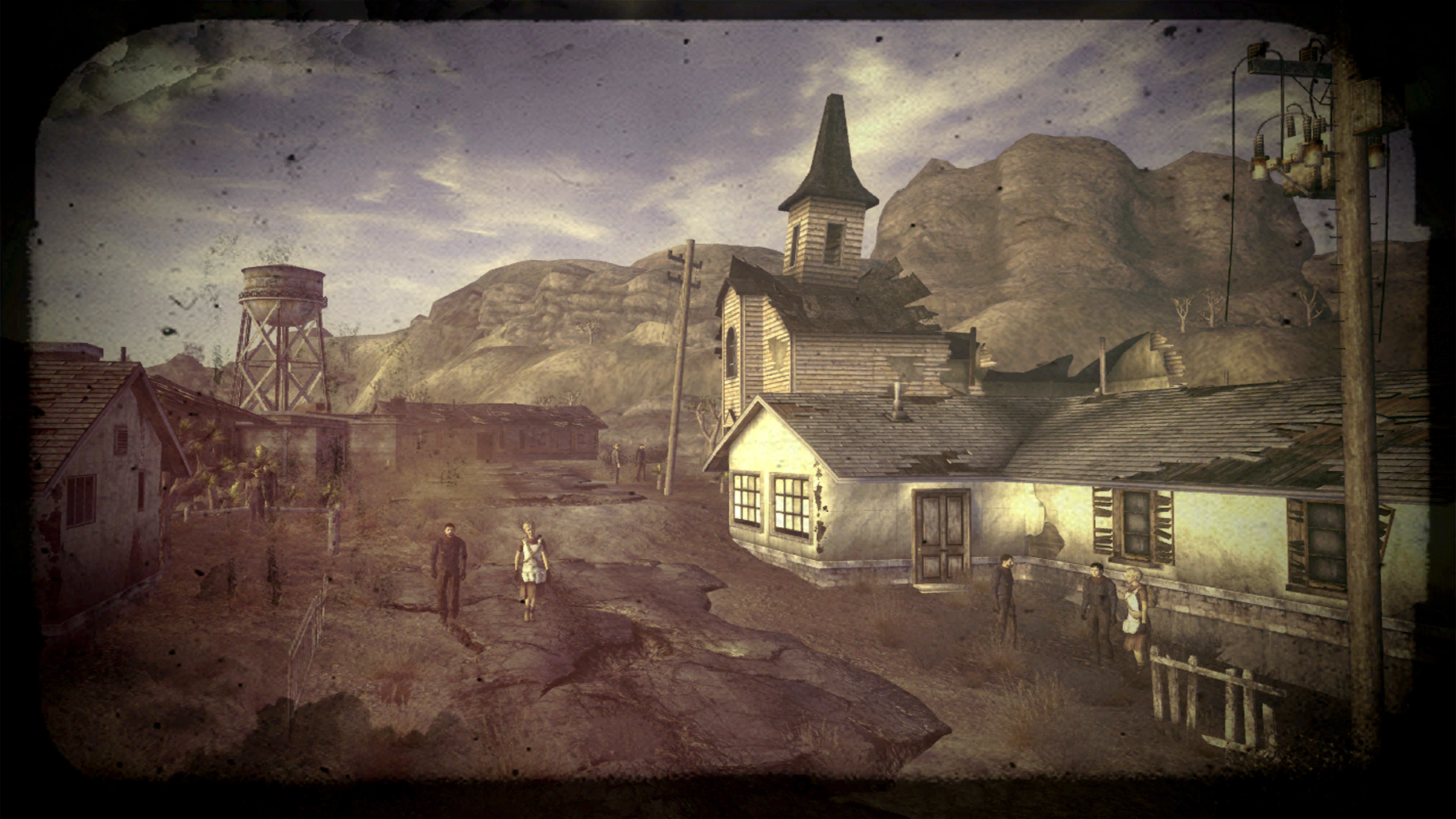
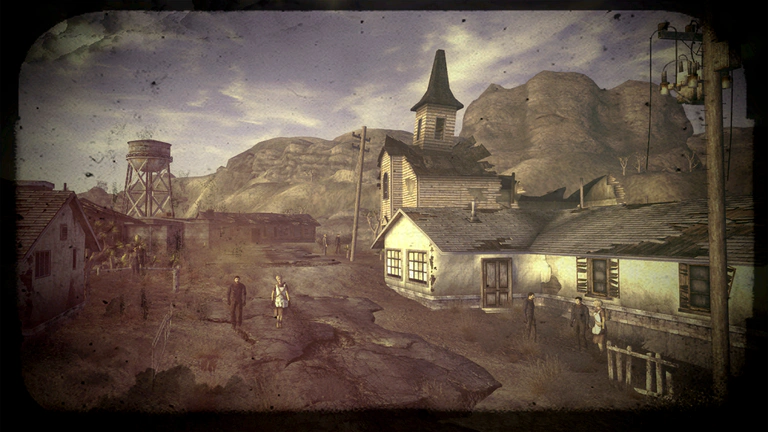
One of the few communities which would remain as a relatively decent haven for travelers was New Canaan. The New Canaanites originated as Mormons who built their settlement in the ruins of Ogden, Utah. Despite their proximity to various raider tribes such as the White Legs, the New Canaanites consistently managed to push away their attacks, establishing themselves as a relatively large, developed, and safe city within the region. Over subsequent generations, New Canaan became a powerful force in the north well into the 23rd century, to the point they controlled much of the trade routes north of the Mojave Wasteland. By the mid-23rd century, New Canaan became a major northern stop on the Short Loop, a trading route which ran all the way back to the core territories of the New California Republic. Salt Lake City was also on this route, suggesting that it, too, was resettled over time.
Zion Canyon remained pristine throughout much of post-War history. It was sparsely populated up until 2123, when 24 children entered the canyon. With the guidance and protection of an unseen "Father in the Caves," the children's descendants eventually formed the Sorrows tribe, who have resided in Zion ever since. The "Father in the Caves" was actually Randall Clark, a pre-War soldier turned survivalist who influenced the earlier history of Zion by driving away an expedition of Vault 22 survivors for their atrocity of killing and eating an earlier group of Mexican refugees.
As part of their beliefs, the people of New Canaan conducted missionary work to engage with the various tribes of Utah. While their motivations were to spread their faith, they also saw themselves as responsible for defending the "ignorant and the innocent" from others who would try to exploit them, like the White Legs, other raiders, slavers, or even prospectors. There is at least one known incident of NCR prospectors attacking tribals, even while New Canaanite missionaries were present. Such incidents led to the losses of the Tar Walkers and Crazy Horns tribes, but other tribes also came to form strong relationships with New Canaan, such as the Dead Horses of Dead Horse Point.
Between 2248 to 2271, Caesar's Legion made headway into Utah, campaigning to conquer and assimilate (or eradicate) the wild tribes of southeastern Utah to grow their numbers. It was from one such tribe "south of the Utah" from which the future leader of the Legion's frumentarii, Vulpes Inculta, was "recruited." The Legion's sphere of influence extends to the Great Salt Lake, from where the decanus Dead Sea was taken as a child, and the Legion was also in contact with many of the tribes of Utah. However, their actual presence in the state is weak, even though their leader Caesar claims otherwise. As of 2281, most of Utah is divided between independent tribes, raiders, and regional warlords, and is significantly more dangerous than New California, Legion-controlled Arizona, or even the Mojave Wasteland.
Locations
Dead Horse Point
Fountain Green
Grand Staircase
Great Salt Lake
Interstate 80
Nephi
New Canaan (pre-2281)
Provo Bay
Rockville
Spanish Fork
Toquerville
Sources
Adapted from the original article, under CC BY-SA 3.0.