Place
New Canaan
Post-War settlement in the wasteland
Thriving in the wasteland
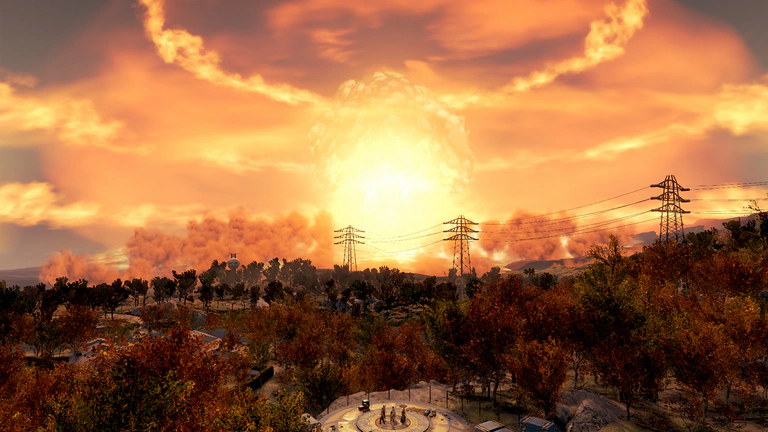
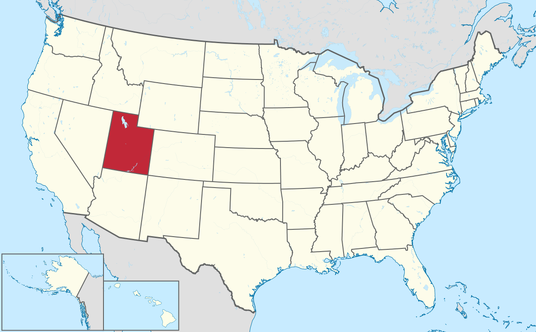
The city of Ogden stood around 30 miles to the north of Salt Lake City, which itself received thirteen nuclear strikes during the Great War and was reduced to a radioactive ruin. Following the nuclear apocalypse, despite Ogden itself also being destroyed, the robust spirit of the city's Mormon population fueled the rebirth of their community, up to the founding of New Canaan and beyond as it became a powerful force in the north well into the 23rd century, to the point they allegedly controlled vast lengths of the trade routes running through the lands north of the Mojave Wasteland.
Rumors of New Canaan's existence and strength reached as far as New California and with it, the New California Republic a few decades before 2281; contact between the two entities was eventually achieved. While initially mistrustful of the New Canaanites due to their religious fervor (after its own experiences with religious cults), the Republic's doubts were dissolved as they discovered that the people of New Canaan were honest traders as well as dedicated fighters, having managed to keep the neighboring raider populations in check while developing a trade network. The New Canaanites' notoriously effective marksmanship was owed to their culture where learning how to wield a .45 Auto pistol was considered a rite of passage for an up-and-coming Canaanite, also helping to build up a strong defensive force that allowed New Canaan to survive amidst the regressive violence plaguing the former state of Utah as it became one of the few islands of stability in a sea of blood shed by regional warlords, savage raider tribes, and ravenous cannibals. The expansion of NCR during the mid to late 2200s and the growth of Canaanite trade routes eventually resulted in competition between Canaanite caravans and the largest of the NCR-aligned trading companies, like the Crimson Caravan. Protectionism in trade helped New Canaan to maintain an edge, though by 2281, they were willing to allow envoys of the Crimson Caravan to open a trading post in the city, with appropriate taxation of course.
Sacking of New Canaan
However, the Mormon settlement's prosperity was not meant to last. Though powerful and prosperous, its days were numbered. The countdown to their final days started with the return of Joshua Graham, once a Canaanite himself before he went down a dark path as the Malpais Legate, a trusted lieutenant to Caesar that led his Legion to conquer and destroy the tribes of Arizona. After a devastating loss to the NCR during the First Battle of Hoover Dam, Caesar punished Graham for his failure by having him covered in pitch, set on fire and thrown into the Grand Canyon, yet Graham survived. Believing it was God's will, Graham dragged his charred body the long way back to New Canaan, a journey that took three whole months. Though he had effectively betrayed them with his former loyalty to Caesar, Graham was surprised to discover the New Canaanites welcoming him as the prodigal son, as if he had never left. Despite this, word of Graham's survival eventually reached back to Caesar; enraged, the conqueror dispatched many of his frumentarii to find and kill him for good. By returning to New Canaan, Graham inadvertently doomed the city, as through his agents sent to hunt for him, Caesar would surely find out about New Canaan's position as a vital link in the NCR's supply lines and seek its destruction.
True to form, Caesar demanded that New Canaan be razed to the ground and established contact with the White Legs tribe inhabiting the Great Salt Lake through one of his most capable frumentarii, Ulysses. Though the raider tribe was always a problem for New Canaan, their disorganized nature and lack of infrastructure meant they were manageable.
Through his teachings, Ulysses turned the White Legs into a formidable weapon. A tribe of raiders, they were violent and incapable of being self-sufficient, so rather than teach them how to live, he taught them how to destroy. The walls of New Canaan were high, but once Ulysses uncovered New Canaan supply caches and helped the White Legs break into pre-War armories, they finally had the means to scale them. Ulysses dictated that they must kill everyone they find: Women, children, the elderly. If New Canaan valued its generations, then that was what they had to destroy. He spoke of strength and Caesar's respect for those who used the weapons they recovered, though the words were lies. As distasteful as he found it, he followed his orders and ordered the death of a people with ancestry going back thousands of years.
The White Legs' attack took New Canaan by surprise. Striking at night, at a time when Graham and many other able-bodied New Canaanites were away, the White Legs invaded the city and butchered everyone they could find. Children were slaughtered in their beds, people found in the streets were cut down without mercy. The elderly Bishop Mordecai was burned alive in his home. By dawn, the once-prosperous population of New Canaanites had been whittled down to a mere thirty left in the region, scattered to the winds.
Eventually, the survivors regrouped along the Colorado River, but the White Legs pursued them still. The New Canaanites eventually came to ground in Zion Canyon, bringing the threat of the White Legs with them, which also extended to the native Sorrows tribe in Zion. Joshua and a Canaanite missionary, Daniel, though of the same tribe, found a conflict of direction pitting them against the other in finding a solution to the White Legs onslaught. Graham wanted to fight and destroy them aided by the might of the Dead Horses warrior tribe as retribution for New Canaan, while Daniel wanted to evacuate the canyon, intending to lose the White Legs' pursuit at the Grand Staircase and protect the Sorrows from any further conflict.
Despite the White Legs' efforts in tearing down its walls, the history of New Canaan did not end with the fall of the city. Though their home was razed, the New Canaanites survived spirit intact. As long as they live, the legacy of New Canaan will live on, able to rebuild elsewhere. However, the effects of New Canaan's loss as a major trading location will be highly consequential for any outfit used to trading with them, like the Happy Trails Caravan Company. Despite the loss of their home, even into late 2281, New Canaanite caravans had still been arriving at the New Vegas Crimson Caravan branch to trade.
In the meanwhile, as of October 2281, the news of New Canaan's destruction had not yet reached the Mojave. At that time, the Crimson Caravan Company was still organizing a trade caravan bound for New Canaan, which the company had yet to establish operations in. The Happy Trails Caravan Company was similarly planning a mission up through Zion to New Canaan; they had lost contact with New Canaan, but evidently still believed it existed. Other wastelanders, such as NCR deserter Layla, also believed that the town was safely out of the reach of Caesar's Legion and sought to flee there, not knowing of its destruction.
Sources
Adapted from the original article, under CC BY-SA 3.0.