Group
Taggerdy's Thunder
U.S. Army Ranger unit
Taggerdy's Thunder was a U.S. Army Ranger unit led by Lieutenant Elizabeth Taggerdy which was stationed in Appalachia for training exercises. Following the Great War, the unit established contact with Captain Roger Maxson on the West Coast via radio. Though Taggerdy was reluctant to even speak to Maxson, who had been branded a traitor, Maxson convinced her to accept a mission to investigate the experiments at West-Tek in Huntersville. Having confirmed the grotesque experiments for herself, Taggerdy accepted Maxson's authority and began training a combat force to stabilize Appalachia. Later, already under Maxson's command, Taggerdy's Thunder hesitantly agreed to abandon their ties to the old world and jointly formed the fledgling Brotherhood of Steel, becoming the core of the order's first satellite chapter.
Background
The unit was originally relocated to Appalachia to participate in war games against two opposing Marine detachments, after an extended tour of duty on foreign soil. Taggerdy considered it an opportunity - a favorable performance evaluation could mean choice assignments in the upcoming offensive. In contrast, most of her unit considered it a break from the war, and planned to use the two-week furlough after the maneuvers to rest, relax, and explore the local watering holes, following the lead of De Silva, who grew up in Appalachia.
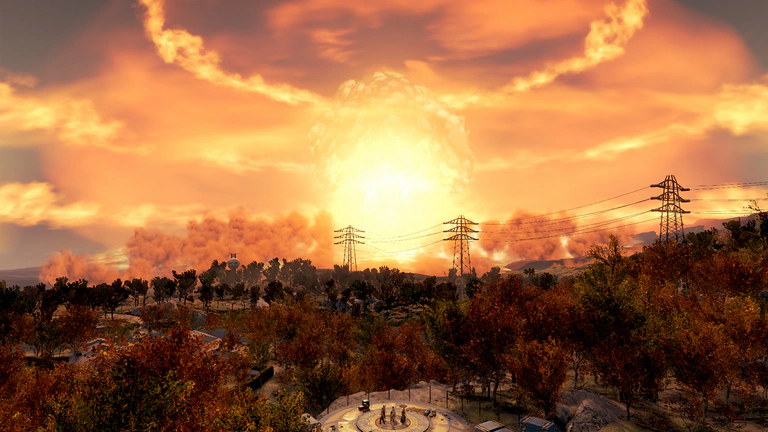
The games pitted Taggerdy's unit as US Special Forces deployed behind enemy lines in an unspecified Chinese province. Tasked with sabotaging target armored personnel carriers and gathering Chinese field intelligence, Taggerdy was given free rein as to how to achieve her objectives while facing two detachments of Marines as the opposing force. As usual, Taggerdy planned for a hard and fast attack, hugging the edge of the exercise area and striking where the Marines were least expecting it. She never got the chance to execute that strategy, as the Thunder was surprised by the Great War. After first dismissing the attacks as part of the simulation, the nuclear warheads that struck Appalachia soon revealed that war came home.
With the chain of command in tatters and nothing but static on the radio, they attempted to raise any kind of ranking officer to receive new orders and move forward through the desolation of the nuclear war. What Taggerdy did not expect to find on the radio was Captain Roger Maxson, looking for someone in Appalachia. Although she was hesitant about speaking to a confessed traitor, her friendship made her decide to give Maxson a chance. The fact that the U.S. Army apparently disappeared in nuclear fire overnight played a key role in the decision. Together with her unit, Taggerdy moved to Camp Venture, an old Free States survival training camp, where they spent the dark winter of 2077. Soon after, she ordered the camp reactivated to fill out the ranks of the Thunder. Due to the strict requirements imposed by the drillmaster, only four recruits made it through to the end of training and became members of the Thunder. However, they were far from the only ones and soon recruits started appearing at the camp in numbers, primarily former soldiers looking for a way out.
That way out presented itself when Maxson announced the foundation of the Brotherhood of Steel. Although Taggerdy was hesitant to accept a completely new system of ranks and ideas, believing that the military training and loyalty to commanding officers was enough to carry the day, she did not object, at first treating it as an order like any other. Although Taggerdy was skeptical, Maxson outlined his plan to give her and her men a new identity as members of the Brotherhood, as a way to return meaning to their lives, combat the overwhelming depression that threatened to take what few survivors made it through the nuclear fire, and to immunize them to the authority of any politicians that might emerge from the vaults (or in Appalachia's case, the Whitespring Congressional Bunker) and set fire to the world again. Taggerdy accepted the new orders without believing in them at first, but soon grew into her role. Although the Thunder technically ceased to exist with their adoption of the new ranks, Taggerdy always preferred her own men and those who made the cut at Camp Venture.
Original
Lieutenant Elizabeth Taggerdy: Commanding officer, became Paladin upon joining the Brotherhood. Killed in action with Moreno during Operation Touchdown.
Sergeant Ted Wilson: Second-in-command. Senior Knight. One of two soldiers who held out on the fourth floor of Fort Defiance when it fell to the Scorched.
Corporal Johnny Moreno: Knight. Killed along with Taggerdy during Operation Touchdown.
Corporal Gary Weber: Rifleman. Squire. Went missing during a patrol.
Private Esposito: Rifleman. Squire. Killed when her position was assaulted by three scorchbeasts.
Private Hannah de Silva: Rifleman. Squire. Killed in action in Huntersville.

Additional
Prior to the formation of the Brotherhood of Steel, all successful recruits became members of Taggerdy's Thunder.
Grant McNamara - Grant was originally a nameless refugee before joining up with Taggerdy's Thunder. He won them over by cracking the security at West Tek research center and helping the Thunder make sense of the atrocities they discovered there.
Although the Taggerdy's Thunder was formally dissolved, Enrique Belmonte was moved up to bunk with the old Thunder in Fort Defiance after getting promoted at Camp McClintock and thus being able to enter the restricted top floor at the Asylum.
Deserters
• A week before completing training, recruit E. Fisher deserted at Camp Venture, thus never becoming an official member of Taggerdy's Thunder.
Equipment
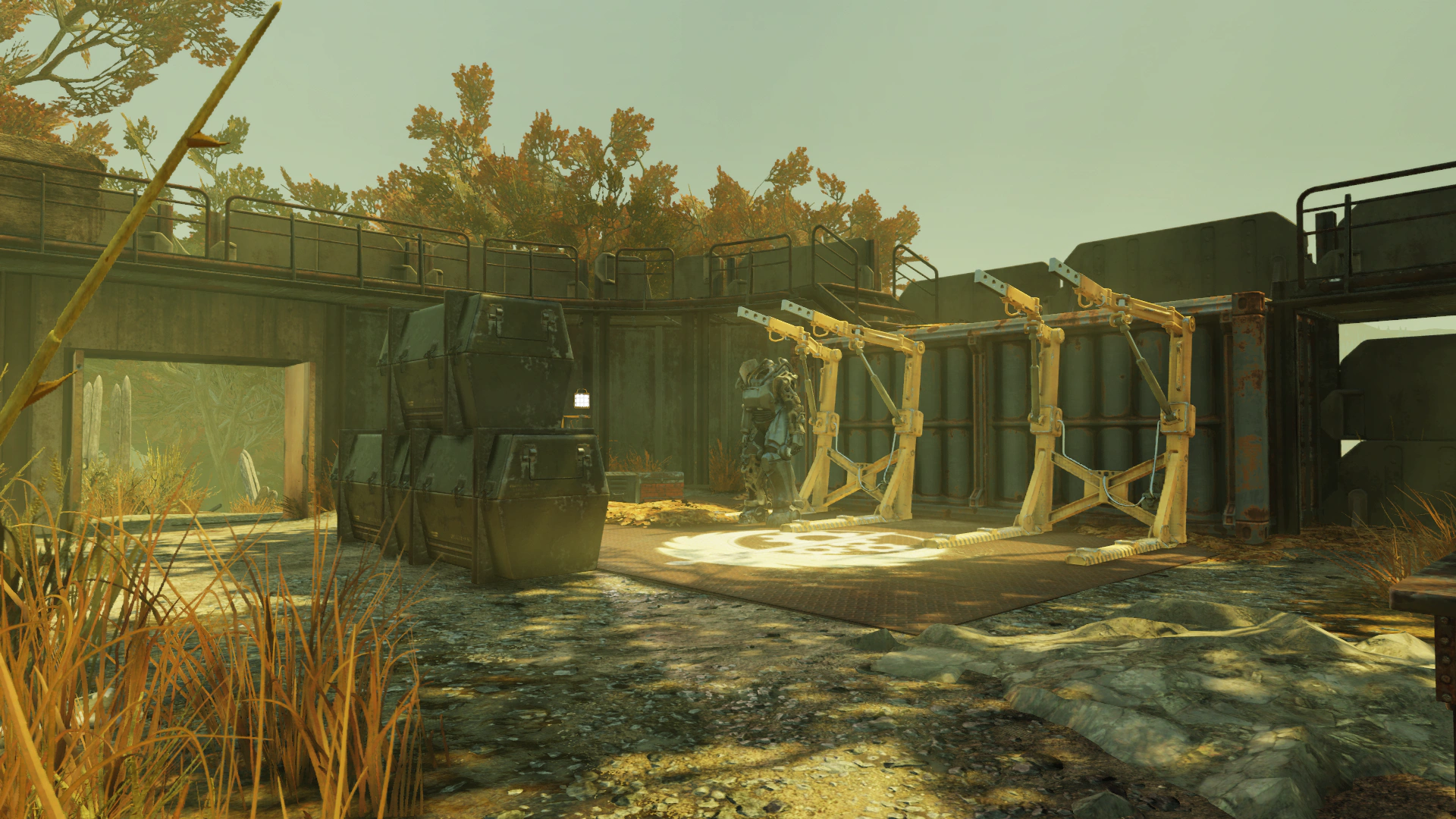
Most of the equipment used by Taggerdy's Thunder was former U.S. military equipment by nature, including power armor and weaponry, amongst other equipment. The Thunder would continue to use such equipment as they evolved into a chapter of the Brotherhood of Steel, and such equipment can still be found around the Thunder's and the Appalachian Brotherhood's former sites.
Sources
Adapted from the original article, under CC BY-SA 3.0.