Group
Brotherhood of Steel (Fallout 76)
Military organization
The Brotherhood of Steel in Appalachia, also known as the West Virginia Brotherhood, was one of the earliest chapters of the Brotherhood of Steel, formed simultaneously with Roger Maxson's foundational chapter based at Lost Hills, California as a joint effort between him and Paladin Elizabeth Taggerdy. Originally setting out to expand the Brotherhood's mission to the East Coast, by August 2095, they were almost completely wiped out trying to contain the spread of the Scorched Plague, save for one member who survived through misfortune. The remains of the organization's members appear in Fallout 76 and they are expanded upon in the Wild Appalachia, One Wasteland For All, and Steel Dawn updates.
Origins
The Appalachian chapter of the Brotherhood of Steel originated from Taggerdy's Thunder, a U.S. Army Ranger unit led by Lieutenant Elizabeth Taggerdy. Deployed to war games organized in Appalachia in October 2077, Taggerdy led the Thunder against a unit of U.S. Marines. On the day of the Great War, the unit was camped in the caves at Spruce Knob, planning their attack on the Marines. They never got the chance to do so, as the Thunder was surprised by the Great War. After first dismissing the attacks as part of the simulation, the nuclear warheads that struck Appalachia soon revealed that nuclear war had arrived.

With the chain of command in tatters, the Thunder attempted to raise any kind of ranking officer to figure out what to do next. They did not expect to receive contact from Captain Roger Maxson on the West Coast, who had earlier declared secession from the United States, hailing survivors in Appalachia. Although Taggerdy was hesitant about speaking to a professed traitor, her friendship with Maxson made her decide to give him a chance. Maxson revealed to Taggerdy the crimes the government had committed at Mariposa Military Base which had led to his declaration of secession, and while Taggerdy did not completely accept his explanation, it planted a seed of doubt in her mind regarding their responsibility to the U.S. military. With survival being the top priority, she opted to take her unit southeast to establish a home base before any further thoughts.
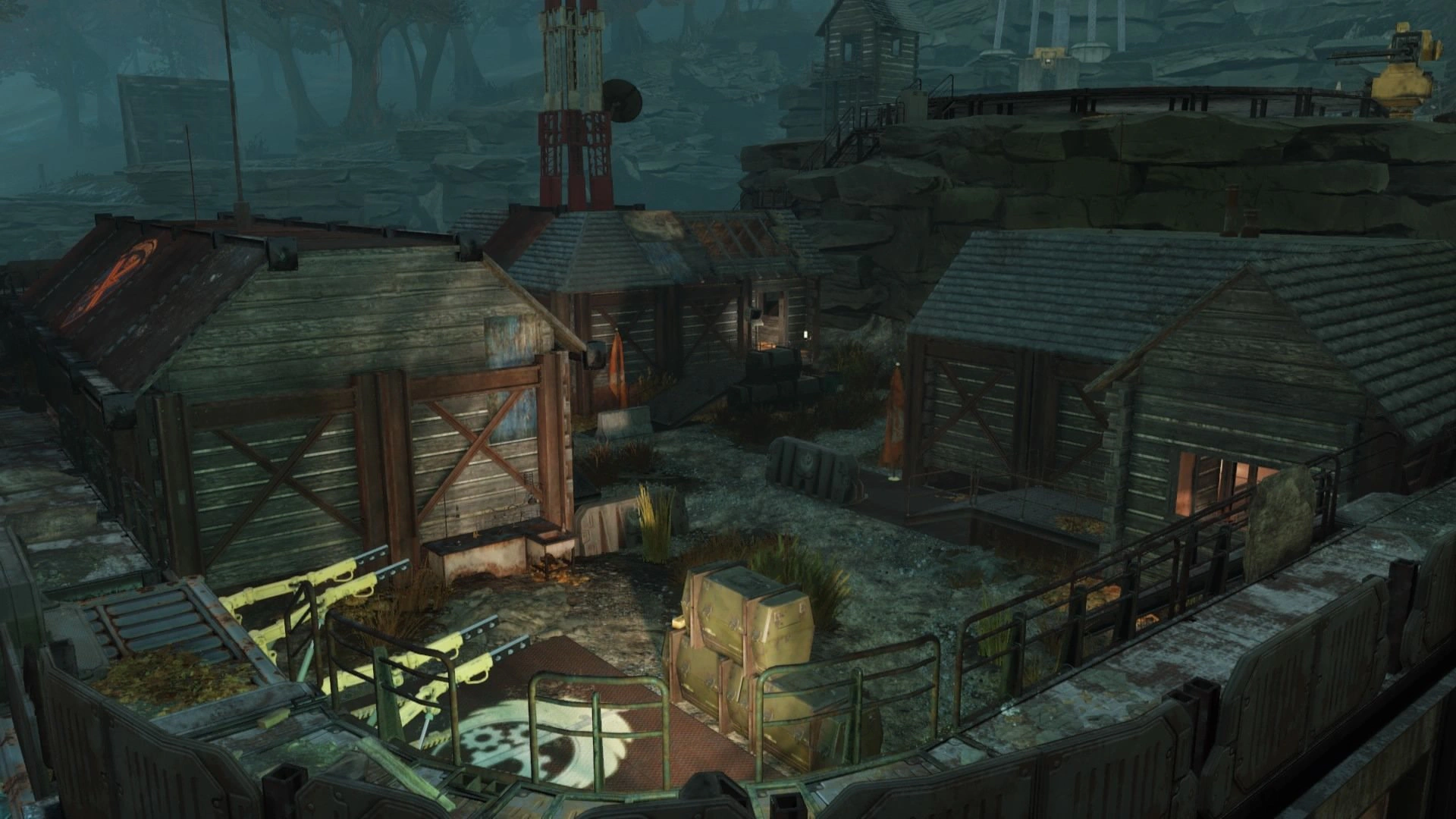
The unit moved to Camp Venture, an old survival training camp, where they spent the dark winter of 2077. It became a base camp for all their subsequent operations. It was around this time that the unit started believing Maxson: at some point, the unit broke into the West Tek research center with the help of Grant McNamara, a refugee who the Thunder had picked up along the way. What they found there proved Maxson's story and led the Thunder to renounce their allegiance to the U.S. government and military. They began to accept Maxson as their commanding officer.
Taggerdy soon ordered the camp reactivated to fill out the ranks of the Thunder. Due to the strict requirements posed by the drill instructor, only four recruits out of nine in the first batch made it through to the end of training and became members of the Thunder. However, they were far from the only ones. Soon, recruits started appearing at the camp in numbers, many being former soldiers looking for a new sense of structure.
That structure presented itself when Captain Roger Maxson announced the foundation of the Brotherhood of Steel in the 2080s. Taggerdy was hesitant to accept a completely new system of ranks and ideas, believing that the military training and loyalty to commanding officers were enough to carry the day. However, she did not object, at first treating it as an order like any other. Although Taggerdy was skeptical, Maxson outlined his plan to give her and her men a new identity as members of the Brotherhood, both as a way to return meaning to their lives and combat the overwhelming despair suffered by survivors of the war, and to immunize them to the authority of any politicians that might emerge from the Vaults (or in Appalachia's case, the Whitespring Congressional Bunker) and try to set fire to the world again. Taggerdy accepted the new orders without believing in them at first, but soon grew into her role.
Alliances and early tensions
Paladin Taggerdy was known for only recruiting from those who had military experience and found it difficult to coordinate with the "civilian" factions in Appalachia. This became apparent in their dealings with the Responders and Charleston: By October 2082, the Brotherhood appeared on the verge of conflict with the Responders, as they requisitioned munitions while the Responders were trying to contain the Huntersville mutant threat. Although they eventually acquiesced to the demands, it did no favors for their relations. However, the relations eventually normalized, especially since the Brotherhood had other problems (as did the Responders, due to the Christmas Flood which destroyed Charleston in December 2082). The Brotherhood's numbers and new classes graduating from Camp Venture exhausted the available space at the survival camp, necessitating expansion.

They decided to expand south into the Cranberry Bog, opting to seize the defunct Allegheny Asylum as their new base of operations, dubbing it Fort Defiance. Although plagued by feral ghouls, the building was structurally sound and had a direct connection to the Thunder Mountain Power Plant via landlines, wrested from the Free States by Taggerdy's troops. While the asylum provided enough space to grow into, they soon encountered problems: scorchbeasts, first as unknown bats flying in from Watoga, easily scared away by miniguns. This was chalked up to bog weirdness at first, which soon proved to be a grave error.
West of the mountains, the Brotherhood forged alliances. The Brotherhood and the Responders united together against the super mutants, fighting a bitter battle known as the Battle of Huntersville to contain the mutants that ultimately ended in a major victory. The campaign ended in May 2086, marking the high point in Responder and Brotherhood relations, although it claimed many lives, including Squire de Silva and Paladin Swafford. Congratulating them on their victory, Elder Maxson also announced a new mission for the Brotherhood: To act as preservationists, keeping the embers of civilization burning, so that the Brotherhood may become the catalyst for a new, better civilization in the future. Taggerdy implemented the new orders, and one of her first orders was to pull troops out from Grafton dam, abandoning passes through the Savage Divide that allowed the Responders and Free States to trade openly. Some responded to this new policy with enthusiasm, others with grudging acceptance. In one extreme case, Hank Madigan disagreed with the mission, and left the Brotherhood to join the Responders. This, together with an earlier desertion by E. Fisher, further strained the chapter leadership's opinions of outsiders. By the end, Grant McNamara, who had proven invaluable for his technical expertise, was one of the only civilians Taggerdy trusted; she even refused to recruit additional scribes from the outside.
The Scorched threat
The new mission quickly took a backseat, however, as the Brotherhood encountered the scorchbeasts and the Scorched in the Cranberry Bog. Conferring with Maxson's ace researcher, Scribe Hailey Takano, the Brotherhood in Appalachia quickly calculated that the scorchbeasts represented a potential extinction event for humanity. Lost Hills supplied several designs and weapon schematics to help stem the tide, including a sonic generator and an automated research program, but by the 2090s, the failing infrastructure of the Old World rapidly rendered satellite communication impossible. Before being cut off, Maxson ordered Taggerdy to hold the tide, but forbade the use of nuclear weapons.
Camp Venture was officially abandoned on July 20, 2093, as the Brotherhood pulled all remaining troops to focus their firepower at Fort Defiance and Thunder Mountain Power Plant. The remaining squires completed their training, though no new candidates were accepted at this point. The Brotherhood focused on fighting the scorchbeasts entirely, tapping all available sources of supplies, taxing their goodwill. By January 2094, that meant routinely requisitioning food, dozens of missiles, fusion cores, and hundreds of rounds of conventional ammunition from all available sources. Another incident did not help either: in the early months of 2095, some Brotherhood members caught wind that Responder Amy Kerry was working on a project, and she theorized the Brotherhood were after her to steal her technology. The Brotherhood demanded supplies and information about Amy's project, even holding Responder leader Maria Chavez at gunpoint. Sensing the Brotherhood were finding her location, Amy fled.

Operation Touchdown
Realizing that time was not on their side, the Brotherhood launched Operation Touchdown in the glassed cavern on January 28, 2095, with Paladin Taggerdy taking the most well-trained troops of the Brotherhood to confront the scorchbeasts in their lair and destroy them. The operation claimed the life of Paladin Taggerdy and her men, but for over a week, no scorchbeasts appeared on the surface. This prompted Senior Knight Wilson, who took command in her absence, to declare a preliminary mission accomplished. However, this proved to be optimistic. By June, the sightings continued to increase in number, indicating that Touchdown had failed. By August, the situation was clear: The Brotherhood had failed in its mission and was rapidly approaching extinction. Rather than flee, the soldiers decided to continue manning their posts until the bitter end, trying to buy as much time for Appalachia as possible.
Throughout this period, Scribe Grant alone recognized the importance of continuing research into the scorchbeasts, if not for them then for those who would come after. This relied on the automated research program provided by Lost Hills: it would allow the Appalachian Brotherhood to continue research on their own. However, they were unable to use it without access to Vault-Tec University, which was located deep in Responder territory, and by that point the factions were no longer in friendly relations. Taggerdy had approved a single mission prior to Operation Touchdown, and refused Grant's further pleas after the two soldiers she sent never came back. After Touchdown, Wilson similarly refused, citing the need for all hands on deck with their top members gone. In the final days of the Appalachian chapter, facing constant siege by Scorched and scorchbeasts, Grant was indeed tied down keeping Defiance's systems alive.
Demise
By August 18, 2095, the Brotherhood's numbers at Fort Defiance had been reduced to five: Senior Knight Wilson, Scribe Grant, Knight "Tex" Rogers, and Squires Evelyn and Enrique Belmonte, who made their last stand and were ultimately overrun. Before their deaths, they sent a message across the Appalachian airwaves to warn that "Defiance [had] fallen." However, because of the Brotherhood's secrecy and poor communication, few realized what their message actually meant until it was too late. Scribe Grant, recognizing the importance of the Brotherhood's knowledge on the Scorched, also left instructions for any future visitors of Fort Defiance to seek out the intel secured in their top floor.
By the following day, August 19, 2095, Squires Rosen and Gilden had become the last survivors at Thunder Mountain, and soon, they were also overrun. With their deaths, the Brotherhood in Appalachia was extinguished, leaving behind a bounty of weapons, automated defenses, and research for those who would come after to try and fight the scorchbeasts.
Organization
The Brotherhood of Steel in Appalachia was initially limited to just Taggerdy's Thunder and its auxiliary forces recruited at Camp Venture (later turned into full rangers and members by the brutal training methods). After accepting Roger Maxson's command, they eventually adopted the existing Brotherhood of Steel ranks, with one minor difference characteristic to the early years of the Brotherhood in that squires were adult members of the Brotherhood training to become full knights. This nomenclature was unpopular among some of the troops from the start, and their arguments reached Maxson, who eventually changed the title. By the time of its destruction, the Appalachian chapter had both initiates (such as Vernon Dodge) and squires (such as Enrique Belmonte, who was the first to complain about the title) in its ranks.
Another difference was the emphasis on the military aspect of the organization. Taggerdy was famously distrustful of civilians, considering them to be weak links in the chain, and that attitude translated into her chapter's dealings with non-military factions across Appalachia, making cooperation difficult. The landmark battle of Huntsville and Maxson's Preservation of Technology speech that introduced a new mandate and elevated scribes like Grant McNamara as equals of the knights changed the internal organization of the faction, but not, unfortunately, the general attitude that prevented effective cooperation and led to Taggerdy's Brotherhood confronting the scorchbeasts alone.
Technology
Like its parent organization in New California, the Appalachian Brotherhood of Steel was the most advanced faction in early post-War Appalachia, especially after the Enclave under Thomas Eckhart went extinct. It used standardized weapons and uniform, and most importantly, had access to a large number of T-51 power armor suits that were standard issue to ranking knights after completing their training at Camp Venture under Senior Knight Ted Wilson. The Brotherhood used many conventional weapons such as the minigun, missile launcher, and even custom-modified hunting rifles. However, they also had access to highly advanced pre-War weaponry, such as the Fat Man, Gatling laser and laser gun. With the help of ultracite, they even modified some of their laser weapons to do improved damage against creatures infected with the Scorched Plague and utilized numerous automated surface to air missiles to combat the Scorched both in the air and on the ground. Augmenting their firepower was a broad array of research and recon tools provided by Lost Hills and Scribe Hailey Takano, including an Automated Research Program for analyzing scorchbeast DNA for weaknesses, sonic scanning module for tracking down the echolocating monsters using their unique frequencies (which provided the intel necessary for Operation Touchdown), and even tentative designs for a modified T-51 power armor utilizing ultracite to enhance its combat performance.
Locations
Originally a small unit of U.S. Army Rangers, Taggerdy's forces eventually exercised limited control of several strategic locations across Appalachia, including:
Big Bend Tunnel east: A chokepoint in the Cranberry Bog to help prevent the Scorched threat from spreading outside the region.
Camp Venture: A survivalist camp that acted as the first permanent base of operations for Taggerdy and the Thunder. Later served as a training camp for Brotherhood recruits. Abandoned in the terminal stages of the war against the scorchbeasts.
Drop Site V9, Firebase LT, Firebase Major, Firebase Hancock, Forward Station Alpha, Forward Station Delta, Survey camp Alpha, The Thorn: Defense sites established along the perimeter of the Cranberry Bog.
Fort Defiance: Formerly the Allegheny Asylum, the fort was established as the Brotherhood sought to expand its operations from Camp Venture. Although never fully cleared of ghouls leftover from the war, it became the nucleus of the Brotherhood's defense against the scorchbeasts.
Grafton Dam: A frontier outpost used to provide power and secure a trade route between the residents of Morgantown and Harpers Ferry.
Thunder Mountain Power Plant: Primary source of power for the Brotherhood forces in Appalachia, seized from the Free States. It was the last location to fall to the Scorched.
Huntersville: Temporarily occupied following the Battle of Huntersville. The Brotherhood set up a small outpost with checkpoints.
Members
Knight Kaede Ito
Scribe Kerry
Squire Kerny/Kerry
Dr. Rachel Pryce
B.
Danny
Henry
Martinez
M.R.V.
Shelley
E. Fisher1
Romeo Squad
Several unnamed members
Generic & Robots
Brotherhood knights
Brotherhood scribes
Brotherhood squires
Brotherhood initiates
Brotherhood vendor
Vendor bot Phoenix
Protectrons
1Formerly
Interactions with the player character
The Brotherhood of Steel is the last faction to be introduced in the course of the main quest, as the main goal of the struggle becomes clear: The destruction of the scorchbeasts. The locations are primarily focused on fighting off the Scorched and scorchbeasts, reflected by the Brotherhood event quests.
There are two vendors for the Brotherhood, Vendor bot Phoenix (Watoga Shopping Plaza) and the Brotherhood vendor (The Whitespring Resort).
Sources
Adapted from the original article, under CC BY-SA 3.0.