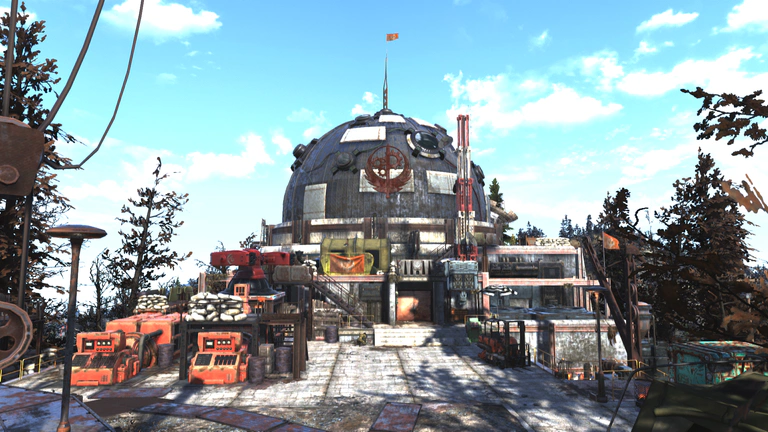
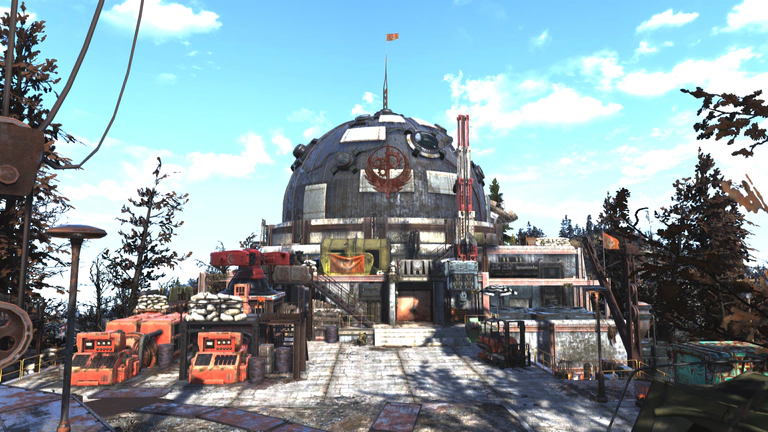
Group
Brotherhood of Steel
Post-War techno-religious paramilitary order
The Brotherhood of Steel (commonly abbreviated to BoS) is a post-War quasi-religious technocratic paramilitary order, founded in the immediate aftermath of the Great War by members of the United States Armed Forces and the government-sponsored scientific community. Originating in California, the organization has numerous extant chapters throughout the former continental United States, becoming the dominant force in many of these regions by the 2290s.
The Brotherhood's original purpose was to preserve advanced technology and regulate its usage. This is because they believe humanity cannot be trusted with the means to destroy itself, and they acquire technology to prevent another apocalypse. Although they tend to be relatively isolationist, the Brotherhood has proved to be one of the most important organizations in the history of the wasteland, though their power, influence, and doctrine vary heavily from chapter to chapter.
The Brotherhood has been featured in every game and other entry in the Fallout series, in one form or another. This article focuses on an overview of the Brotherhood as it appears throughout the series, detailing the evolution of its doctrine and policies.
The Brotherhood of Steel is a quasi-religious technocratic military order, founded in the immediate aftermath of the Great War by members of the United States Armed Forces and the government-sponsored scientific community. Originating in California, the organization has numerous extant chapters throughout the former continental United States, becoming the dominant force in many of these regions by the 2290s.
Earliest conflict with the Enclave
The Brotherhood of Steel first entered into conflict with the Enclave on the West Coast during the year 2241. As the Enclave began to reveal its presence to the post-nuclear world, the Brotherhood of Steel reopened several observation outposts in New California to monitor their activity and learn their motives. During this time period, the Brotherhood of Steel tasks the Chosen One with infiltrating Navarro Air Base and retrieving schematics for the Enclave's modified vertibirds. There are implications that clashes occurred between the two during the NCR-Brotherhood War. Following the events of Navarro's destruction at the hands of the NCR sometime after 2246, the Brotherhood of Steel openly began to hunt down and annihilate remnants of the Enclave on the West Coast.
NCR-Brotherhood War
In the late 2250s to 2260s, the New California Republic's growth would eventually lead to a collision course with the Brotherhood. As the NCR's power grew, the Brotherhood adopted a policy of reclaiming technology from people outside the order, energy weapons most of all. The disagreements over the handling of technology eventually resulted in a full-out war with the New California Republic. The Brotherhood was eventually forced into a retreat. At least six Brotherhood bunkers were lost to the NCR, four of them destroyed by the Brotherhood themselves in a last-ditch attempt to deny them to the enemy. Despite gaining the upper hand over the Brotherhood, the NCR also suffered losses in manpower, materiel, and economy. The NCR's gold reserves were raided heavily by the Brotherhood, causing bank runs. The NCR switched to fiat money to prevent further crisis, but this led to inflation and loss of consumer confidence. Joshua Sawyer: "It happened during the BoS-NCR war. I believe Alice McLafferty mentions it, but I'm not positive. She doesn't detail the events in this much detail, but here they are: The attacks caused NCR citizens (and others who held NCR currency) to panic, resulting in a rush to reclaim the listed face value of currency from NCR's gold reserves. Inability to do this at several locations (especially near the periphery of NCR territory where reserves were normally low) caused a loss of faith in NCR's ability to back their currency. Though NCR eventually stopped the BoS attacks, they decided to protect against future problems by switching to fiat currency. While this meant that BoS could no longer attack a) reserves or b) the source of production (all NCR bills are made in the Boneyard), some people felt more uneasy about their money not having any "real" (backed) value. This loss of confidence increased with NCR inflation, an ever-looming specter of fiat currency. Because the Hub links NCR with the Mojave Wasteland and beyond, the merchants there grew frustrated with NCR's handling of the currency crisis. They conspired to re-introduce the bottle cap as a water-backed currency that could "bridge the gap" between NCR and Legion territory. In the time leading up to the re-introduction, they did the footwork to position themselves properly. If some old-timer had a chest full of caps, they didn't care (in fact, they thought that was great, since the old-timers would enthusiastically embrace the return of the cap), but they did seek to control or destroy production facilities and truly large volumes of caps (e.g. Typhon's treasure) whenever possible." (Joshua Sawyer on SomethingAwful.com)
One major confrontation occurred during the NCR's Operation: Sunburst in the Mojave Wasteland in 2276. Under Elder Elijah's leadership, the Mojave chapter of the Brotherhood of Steel was operating out of the solar power plant HELIOS One when the NCR launched an attack. The NCR's numerical superiority over the Brotherhood, coupled with Elder Elijah's immense reluctance to leave HELIOS, allowed the NCR to overwhelm the defenders, leading to the loss of over half the chapter. The NCR subsequently considered the Mojave chapter of the Brotherhood to be effectively neutralized. The survivors of the Mojave chapter retreated to the Hidden Valley bunker, going under lockdown to prevent detection and bide time to recover. The chapter restricted its operations to recon patrols and occasional high-priority raids, all at night, using Hidden Valley's DERVISH camouflage system to mask their movements.Fallout: New Vegas Official Game Guide Collector's Edition p. 43: "Brotherhood of Steel The Brotherhood of Steel is a militant organization devoted to the preservation of pre-war technology and human knowledge. Their professed mission is to preserve pre-war technology and human knowledge for the benefit of future generations. In practice, its definition of technology is strangely selective, ignoring basic but potentially useful technologies (genetic modification of crops and civil engineering, for example) in favor of combat technology such as energy weapons and power armor: and even now, nearly two centuries after the Great War, the Brotherhood zealously restricts the use and knowledge of such technologies to its own membership. The Mojave Brotherhood operated freely amid the Vegas wastes for several years, carrying out many reclamation missions without serious opposition. The balance of power shifted in 2251, when a large contingent of NCR troops entered the region and occupied Hoover Dam. Conflict was inevitable. Nearly two years of guerilla skirmishes culminated in a pitched battle at HELIOS One, a solar energy plant the Brotherhood had been refurbishing for several months with the goals of bringing it back online and activating its hidden offensive capabilities (the ARCHIMEDES II death ray). The battle for HELIOS One (Operation: Sunburst) proved a disaster for the Mojave Brotherhood. More than half its Paladins and Knights were killed. The chapter's leader, Elder Elijah, disappeared without a trace. The Brotherhood was driven from the facility, which suffered extensive damage. Survivors retreated to Hidden Valley. Since that defeat, the chapter's leader, Elder McNamara, has restricted activity outside the bunker to occasional reconnaissance missions and high-value raids. All operations take place at night, and engagement of NCR forces is strictly forbidden. Though the Brotherhood's ascetic lifestyle has prepared its members for a sequestered existence better than most, the passivity of their current situation has proved highly stressful." (Fallout: New Vegas Official Game Guide faction profiles)
Capital Wasteland (Fallout 3)
The Brotherhood's presence in the east suffered a further setback when Elder Owyn Lyons, head of the Capital Wasteland division, refused a direct order from the Lost Hills elder council, confirming their suspicions that he had gone rogue and was no longer pursuing the original mission. In response, the Brotherhood completely shut off communications to Lyons' division and denied them any reinforcements.

By 2277, the Brotherhood was well-established in the Capital Wasteland, with their headquarters at the Citadel in Washington D.C. The Enclave, however, wanted to control Project Purity for themselves, leading to a conflict between the Brotherhood and the Enclave, culminating in the Battle of Project Purity. The Brotherhood were able to prevent the Enclave's assault using a giant combat robot called Liberty Prime. Although this was a short-term boon for the East Coast Brotherhood, changes were on the horizon for the chapter.
Interim (between Fallout 3 and 4)
The key blow to the Capital Wasteland division came sometime before August 2279, with the death of Owyn Lyons and the loss of now-Elder Sarah Lyons not long afterwards. With the seat of power emptied, the remaining Brotherhood members elected multiple ineffectual leaders. Meanwhile, the adolescent Squire Arthur Maxson matured into a capable warrior and tactician, eventually defeating Shepherd, the new war boss of the Capital Wasteland super mutants, around 2282. This feat earned him a provisional leadership position within the Capital Wasteland division. This position was bestowed by the West Coast elders, who revealed that they still monitored their errant brethren.
Maxson's position solidified in 2283 when he negotiated a treaty with the Brotherhood Outcasts, bringing them back into the fold and reforming the entire organization, turning away from some of Lyons' humanitarian goals and restoring the original mission of the Brotherhood of Steel. While a few members found this distasteful and left, a majority still remained, proud to serve a refocused Brotherhood. Maxson became leader of the Brotherhood's Eastern branch, setting it on a new, more authoritarian path. Around this same time, the Brotherhood began constructing a massive airship known as the Prydwen at the conquered former Enclave facility of Adams Air Force Base; the ship began full operation in 2282. With it, the chapter began to project its presence across the wider East Coast.
Mojave chapter (New Vegas)
By 2281, the Mojave Brotherhood's lockdown in Hidden Valley continued in response to the NCR increasing its presence in the Mojave Wasteland five-fold since 2276. The Mojave chapter, according to Elder McNamara, had time to fully recuperate from their losses suffered from the battle at HELIOS One, although the isolation meant a portion of their new knights and paladins were not experienced in combat outside of virtual training simulators. Some of their first scouting missions revealed that the NCR's presence in the region had only increased in their absence, so the lockdown was extended. The Brotherhood used the time in lockdown to re-strategize when it came to facing the NCR. However, the lockdown was becoming untenable due to morale issues, as well as critical mechanical issues with the Hidden Valley bunker's air filtration.

Though many within the NCR wrote them off as a spent force, Colonel Cassandra Moore still considered the Brotherhood to be a threat. Similar strategic assessments were made by the other major players in the region: Caesar believed they would have to be dealt with eventually, before or after the Legion's victory over the NCR; Robert House also sought to eliminate the Brotherhood's survivors, seeing them as the next-greatest obstacle to his plans after the NCR and the Legion. Yes Man's calculations also predicted that the Brotherhood would be the biggest enemy to anyone attempting to form an independent New Vegas.
Conflict with the Institute (Fallout 4)
The Brotherhood first sent a recon team into the Commonwealth in 2280. They were extremely successful, finding troves of pre-War documents and advanced technology. The second, Artemis, was a failure; its members were killed off in engagements with various hostiles, with the lone survivor, Paladin Brandis, going into hiding. The third recon team, Gladius, also fared poorly, with their numbers whittled down to three by various threats. The surviving trio of Gladius have made their base at Cambridge Police Station and seek to carry out their mission as best as possible and re-establish communication with the Citadel to report their most concerning findings about the region.
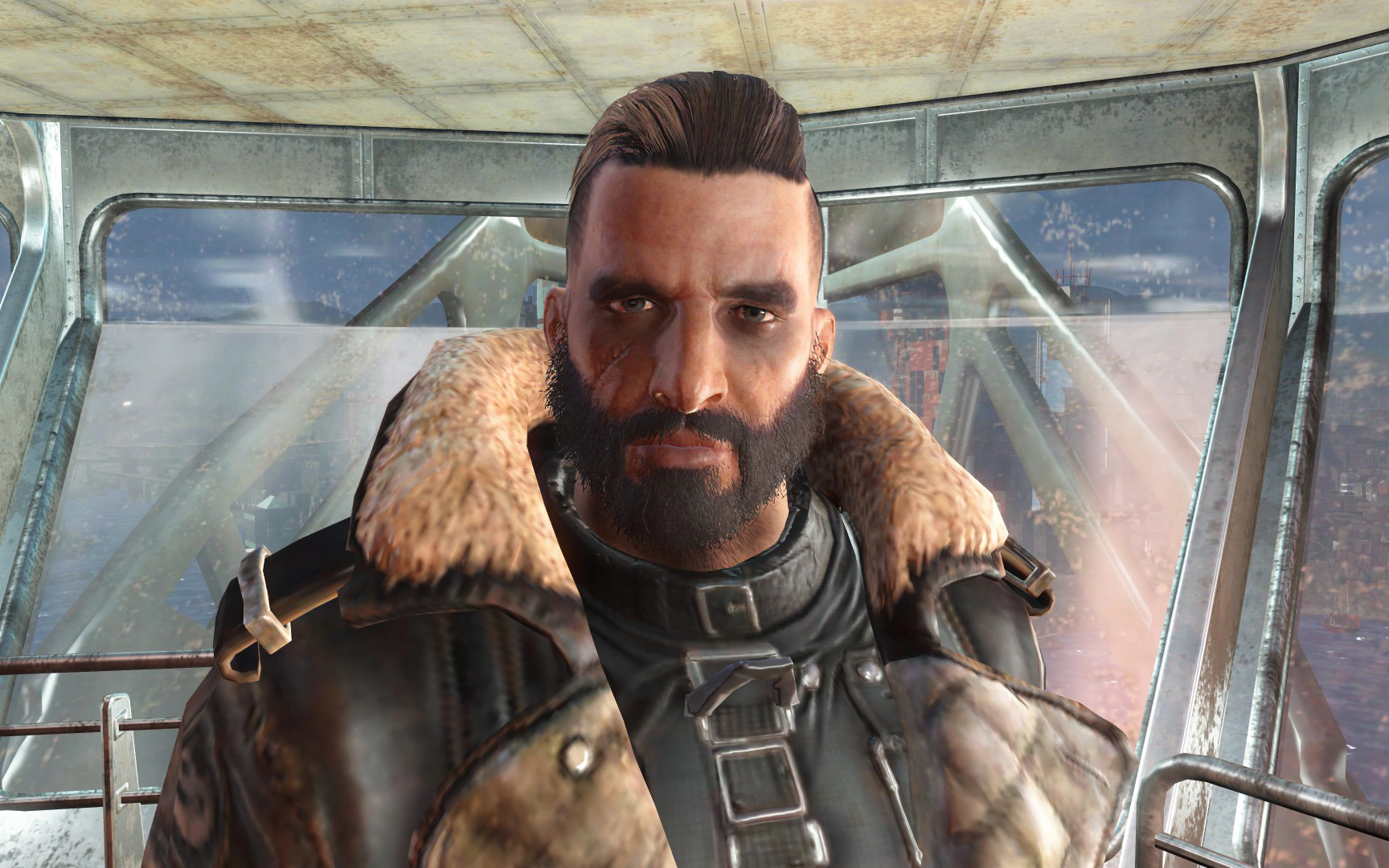
The Brotherhood in the Capital Wasteland eventually received Gladius' message and deployed in force; the message evidenced the existence of the Institute, a scientific cabal which the Brotherhood deemed dangerous to humanity. The Brotherhood sent a full combat expedition led by Elder Maxson, comprised of the Prydwen and a fleet of accompanying Vertibirds, with the main objective of seeking out and destroying the Institute. In the subsequent war for the Commonwealth, the Brotherhood may have also entered conflict with the Railroad and/or the Commonwealth Minutemen, other regional powers.
Cold fusion conflict in Los Angeles (Fallout TV series)
By 2296, the Brotherhood as an organization had splintered into dozens of individual chapters across the wastes, with the Commonwealth chapter maintaining primacy over the overall chapter hierarchy. The Commonwealth chapter received intelligence on an Enclave defector, Siggi Wilzig, who possessed a vital piece of technology that was of interest to the Brotherhood.

A West Coast chapter known as the Knights of San Fernando -- a chapter noted to have a particularly religious adherence to Brotherhood ideology -- was tasked by the Commonwealth chapter with joining the manhunt for Wilzig, with a Prydwen-class airship traveling to the airbase used as the chapter's headquarters to assist in their hunt. Knight Titus and Squire Maximus were among those charged with leading this manhunt, assigned to search the area around Filly in greater Los Angeles. After Titus' death, Thaddeus joined the search.
Despite the manhunt, Lee Moldaver ended up obtaining Wilzig's artifact: a cold fusion reactor and thus limitless energy. Moldaver, leading a group of fragmented NCR remnants, beat the Brotherhood as a result of Lucy MacLean obtaining and giving Wilzig's head (where he had stored the artifact) over to Moldaver. However, the Brotherhood subsequently stormed the NCR remnants' headquarters at Griffith Observatory, killing all of the defenders and allowing the Brotherhood to gain control over the cold fusion reactor.
Brewing civil war (Fallout TV series)
Following their victory over Lee Moldaver's NCR remnants, the Knights of San Fernando began to move to assert their own dominance within the Brotherhood hierarchy. The leader of the Knights of San Fernando, Elder Cleric Quintus, believed the Brotherhood had lost its way, and he wishes to reform and create a newly unified Brotherhood, believing that "power is taken, not given."
This was tantamount to rebellion against the Codex and the chain of command. To improve their position, Quintus had the Knights of San Fernando uncover and claim Area 51 as their new headquarters, and arranged for an alliance with three other western chapters: one from Coronado, one from the Grand Canyon, and one from Yosemite. All three chapters' elders agreed to the alliance after witnessing the power they could obtain from the cold fusion diode. Not long after, a liaison from the Commonwealth chapter, Paladin Xander Harkness, arrived at Area 51.
Society
The Brotherhood is a military order with a strictly enforced hierarchy and chain of command. At the foundation of the hierarchy lies the Chain That Binds, a doctrine that mandates obedience to one's superiors and forbids circumventing ranks when giving orders. Superiors may only give orders to their direct subordinates, but not their subordinate's subordinates. Although intended to ensure the cohesion of command, the doctrine has been generally interpreted as a simple mandate of obedience within the order, with the order flow requirements ignored, abandoned, or altered in practice. However, it does provide a technicality that can be invoked to relieve members of their rank, up to and including elders. When it comes to the individual member of the Brotherhood, loyalty to and defense of the organization is the top priority, a priority that the Brotherhood considers sacred. Secondly comes dedication and loyalty to the Brotherhood's mission. Thirdly is dedication and loyalty to one's superior officer. Brotherhood members are expected to follow each of these rules in the given order. If one's superior should act against the interests of the organization or mission, the third rule is superseded by the second or first rule.

-
Brotherhood banners
Roger Maxson's goals in inventing a new tradition and mythology for the Brotherhood were twofold. First, they would ensure that members of the Brotherhood would be stripped of their ties to the pre-War military and government, ensuring that any surviving general or politician would not be able to invoke their oaths and use them to unleash nuclear devastation on the world again (as was the case with Secretary of Agriculture Thomas Eckhart in Appalachia). Second, it would give the survivors an idea to believe in, something they could dedicate themselves to, and find meaning in their lives after the nuclear war. The inspiration came from the fall of the western Roman Empire when the knights and scribes kept the fire of western civilization alive after the empire imploded. The group would focus on the safe guarding of technology to ensure the preservation of mankind. This was carried out with the eventual goal of using said technology to reestablish a safe and secure society on the American continent once more. By 2287, the Brotherhood had accepted its nation-building role and had indeed begun to carry out its plan to resurrect civilization.
Education system
Whether someone is born into the Brotherhood, chooses to join, or are taken in as a refugee, they receive a general education. With the Brotherhood being one of the few post-war factions to provide an official education, though it is up to the individual member to retain the information provided. In the Brotherhood, education begins at a very young age, they are taught to read, write and speak English. The organization's children attend school and are taught a variety of subjects, ranging from the Brotherhood's history and culture, to lesson's in warfare, combat tactics, to nuclear fusion, physics, chemistry and many other principles of science. The scribes are responsible for educating these younger members. In some chapters children are capable of attaining the rank of squire and they receive training in preparation for their future in the Brotherhood. Squires are occasionally taken out as observers on missions led by high-ranking members of the Brotherhood as a further part of their education. They are not take part in combat and are merely there to observe and study these combat techniques in person.

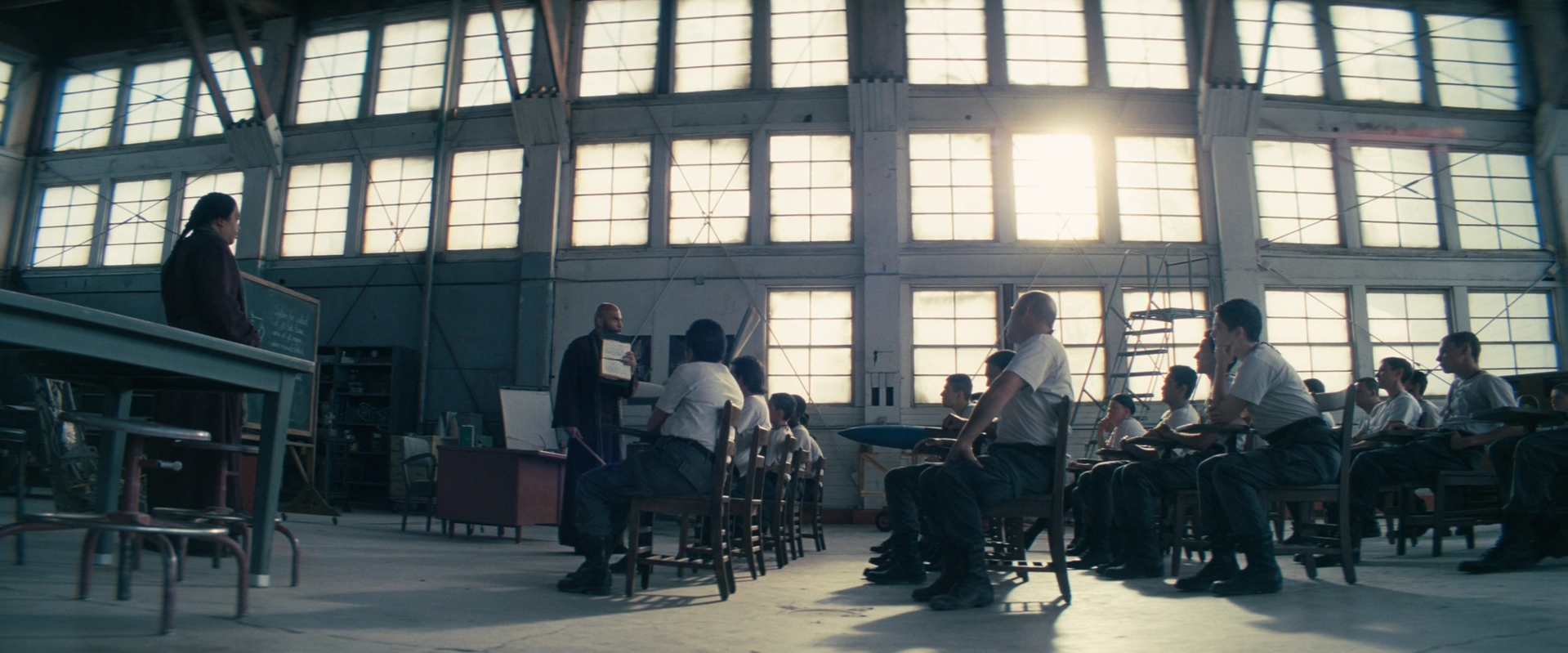
For those of older age or outsiders who join the Brotherhood, they begin their basic training and also continue to receive a more advanced education. This includes further indoctrination of the Brotherhood's rules and regulations to better prepare members for their future specialties. By 2296, the education of aspirants, initiates and squires was also presided over by clerics among the Knights of San Fernando. They are responsible for instilling the quasi-religious beliefs of the organization along with expanding the knowledge of members in terms of technology and philosophy. Each individual member is responsible for retaining the knowledge they are taught. The schooling is militaristic in nature, and disciplinary action is common for those who don't pay attention or disrupt. Following this phase, many become active officers, so much of their future teaching and training resides in the hands of their superior officer or sponsor.
Judiciary system
The Brotherhood of Steel is a disciplined militaristic organization that possesses a variety of laws and regulations. These laws were recorded with the creation of the Brotherhood Codex, which was laid out by the organizations founder, High Elder Maxson. All members of the Brotherhood are subject to the same body of laws. Even elders have been dismissed for violating the Brotherhood's charter or laws, such as destroying valuable technological devices without cause, violating the Chain That Binds doctrine, or murdering a fellow brother. Due to the requirement for elders and other high-ranking members to set an example, they may also be stripped of their position if allowing them to retain it would compromise the morale or integrity of a given chapter. The Brotherhood will conduct necessary investigations into individuals or incidents of interest. Evidence of guilt is required before action can be taken or a sentence given. The organization will even interrogate the accused to determine their motives and level of guilt. Regardless, until proven guilty or innocent, every member of the Brotherhood is entitled to fair trial before the elder of a given chapter.


Penalties for minor offenses, such as theft or insubordination, could result in disciplinary actions like latrine duty, demotion or imprisonment for more significant incidents. For more serious offenses against the organization, such as harming another member, punishment can range from exile or banishment to execution. Justice is often dispatched by one's superior officer. In some rarer cases, disciplinary action may be dispensed by a lower ranking member should a higher ranking member violate the Chain That Binds doctrine, the Codex or the organization's oath taken by each member.
Actions that betray the organization or harm fellow members are viewed with the highest level of severity. Those guilty of treason or those who pose a certain security risk can face execution for their actions against the Brotherhood. Again even in this case, a member of the organization accused of treason has the right to a fair trial. If a situation is deemed critical, it may require the involvement of the Circle of Steel, a section within the Brotherhood dedicated to the organizations internal affairs. It will task its agents with hunting down and eliminating the guilty party. This was seen when ex-Elder Elijah of the Mojave chapter was marked for death by the Circle of Steel following his failure and desertion at Helios One.

Other acts that are seen as an executable offenses by Brotherhood are crimes against humanity and experimentation on human beings. This utter disdain of FEV and similar experimentation can be traced back to the foundation of the organization. In October, 2077, men under command of Brotherhood of Steel founder, Roger Maxson mutinied and executed scientist at the Mariposa military base. This was perpetrated after it was discovered that the United States government had been experimenting on prisoners of War with the Forced Evolutionary Virus. In 2104, members of the Appalachian chapter of the Brotherhood were forced to put a stop to Dr. Blackburn's inhumane FEV experiments. The organization's doctrine displays that members are willing to destroy vital technology or data should it be deemed dangerous to the survival of the human race.
Additionally, an action that is deemed forbidden by the organization, even to those within it, was the post-War use of large-scale nuclear weapons. Even as last resort, this was seen as an unacceptable by the Brotherhood's founder, Roger Maxson, who stated, "The death, the destruction, the end of the World. That came from the nukes. There will always be a reason to use a weapon. Always. But nukes? Never again!" He would even lament that he wished he could erase the technology from mankind's future knowledge. Thus to the Brotherhood, using these weapons was seen as extremely hypocritical to their tenants and regressive to humanity's salvation.
Religious elements
Generally, the Brotherhood has existed as a secular organization, although they have always had some religious motifs due to taking their inspiration from medieval knightly orders. They have often been derided by outsiders for worshipping technology, as many of their members revere the importance of lost technology without fully understanding how they function or what role they played in pre-War society. These religious elements have fostered within the Brotherhood for over a century; in 2161, a reactionary cabal could have taken over Lost Hills if not for the leadership of Rhombus, in which case they could have formed a techno-religious dictatorship known as the Steel Plague.
Over time, some elements within western Brotherhood chapters also deified the Maxson line, and by 2287, they had formed cults dedicated to worshiping Arthur Maxson (who had been sent to the East Coast with Lyons' expedition to avoid unspecified internal conflicts over thirty years earlier). These cults were not supported by the main leadership on the West Coast, who attempted to eradicate them wherever they appeared.
These religious elements became more entrenched in the 2290s, with a class of clerics who handled ideological, ceremonial and seemingly also spiritual affairs emerging within at least some Brotherhood chapters. These clerics became the leadership of one minor chapter, the Knights of San Fernando on the West Coast, which caused the chapter to develop a particular view of the Brotherhood's mission as divinely righteous. Clerics also came into use by the Commonwealth Brotherhood, the dominant Brotherhood chapter of the time, though their clerics were still subordinate to their soldier class. Meanwhile, other chapters such as the Yosemite Brotherhood retained a largely secular character.
Eden

Eden refers to a prophesied future created by the Brotherhood of Steel. It was first indirectly spoken about by the organization's founder, High Elder Roger Maxson. His vision for the organization's future would eventually see them use the vast stockpiles of technology they had collected to reclaim and reestablish civilization on the American continent. Maxson saw the Brotherhood's preservation and safeguarding of technology they would need to rebuild the world as crucial. He described the Brotherhood as acting like a hard shell around a precious seed, but would also state that, "one day, when the time is right, that seed will grow. And a new civilization will be born." By 2296, the concept of Eden was formally used by the Knights of San Fernando as an ideal for how their chapter can better the world, though their aspirants' knowledge of what the Brotherhood deems as paradise may be limited.
Property and trade
Internal

As a rule, most Brotherhood chapters do not have an internal economy and allocate resources based on need, including weapons, armor, and even augmentations. Outside recruits are a special case: While they will receive basic equipment (such as Brotherhood armor and weekly allotments of ammunition), and an allotment of rations to maintain their health, they must serve for ten years before the Brotherhood will provide its most advanced services without charge. Higher-ranking members may bypass this requirement and allocate equipment at their discretion, for example, to reward services rendered to the Brotherhood or provide tools necessary for a mission. All equipment beyond personal items is issued by the Brotherhood and carefully tracked by serial number, especially weapons. Equipment, such as rations, may be used for bets, and some chapters have implemented limited internal trade, keeping superior gear in reserve for higher ranks to purchase. Some chapters of the Brotherhood have even implemented a currency (Brotherhood scrip) for internal trade. The West Coast Brotherhood in particular was presumably very monetarily rich after the Brotherhood stole large amounts of gold following raids on NCR treasury's during the NCR-Brotherhood War.

In the 2280s, as the Brotherhood on the East Coast began to grow and expand - new regulations for internal trade were introduced. The organization saw external trade relations gain more prominence. In order to increase the Brotherhoods level of trade and ability to purchase external goods for supply and manufacturing. Under Elder Maxson's directive, Proctor Teagen would institute several changes. Previously little internal trade existed within Brotherhood society, as most everything was provided. But as external trade increased, the Brotherhood introduced caps as an internal currency to boost their economy and purchasing power. Brotherhood quartermasters, sell items to members for their missions and personal use, this allowed the Brotherhood to have a constant stream of caps to trade externally. They will also purchase items and technology recovered by members with caps, this allows said Brotherhood members to establish a financial base of their own. This occurs because of the Brotherhood's retrieval compensation policy, in which it compensates its members for the recovery of valuable tech or items.
However, when it came to the average member, standard equipment and ammunition for crucial missions, along with all other necessities were still provided free of charge by the Brotherhood. Members were expected to return this equipment to the quartermaster upon the missions completion. Due to the Brotherhood providing the necessities, theft was considered a rare occurrence. Knights and other higher ranking officers similarly received their power armor and other equipment upon achieving their rank and thus did not need to pay for said equipment, but they must either pay for upgrades or modify it themselves. The Brotherhood also has a surplus of certain munitions, thus members can get them for free. Members are also able to request leave for recreational reasons or for visiting family; if for some reason they are unable to have their leave, they will be compensated by the Brotherhood at the earliest opportunity. While on long-term missions, members of the Brotherhood are allowed to regularly contact their relatives unless they are involved in sensitive operations.
External
Appalachia

In the 2080s, the Brotherhood entered into open trade with the Responders and the Free States. The Responders access to food, medicine, and other essential supplies was the foundation of their relationship with the Brotherhood, with caravans crossing through the Savage Divide regularly. The Brotherhood would even send one of their Protectron vendors to sell their goods at the Whitespring Resort's mall, a central location for trade that involved most of the factions in Appalachia at the time. Unfortunately for all parties, these relations would deteriorate as the Scorched crisis intensified. As the Brotherhood spread across Appalachia, they established an outpost located at Big Bend Tunnel east sometime after late 2085. The Brotherhood contingent stationed there was under the command of Knight Melissa Reische. In 2088, she came into contact with Carol Sweeney, the leader of an ex-raider group that settled on the opposite side of the tunnel and established trade with them. For the next several years, through the fall of 2093, Knight Reische's unit actively traded with Sweeney's group. The Brotherhood would provide them shipments of supplies while the former raiders would provide them any scavenged materials of technological or military value, a deal that Sweeney considered to be one-sidedly beneficial for her settlers. Reische's Brotherhood group was very generous, with the stated goal of working to ensure the community on the other side of the tunnel was taken care of.

In 2103, the First Expeditionary Force, under the command of Paladin Leila Rahmani, established itself at the ATLAS Observatory. They dubbed their new headquarters "Fort Atlas," and their presence soon attracted a number of local petitioners, who came to the Brotherhood for a variety of personal reason. Art Knapp wanted to trade a portion of his crops in exchange for Brotherhood's protection from raiders. Tally Lang desired to purchase powerful weapons from the Brotherhood, claiming that she needed it to protect her community of "orphans," while actually being a member of the Blood Eagles. Edgar Blackburn was interested in acquiring the Brotherhood's technology and equipment for the purposes of his research, that was aimed at developing a way for humanity to deal with the long-term ramifications of living in an environment polluted by radiation and deceases that arose in the wake of the Great War.
Knight Daniel Shin, Rahmani's second-in-command, adamantly refused to acquiesce to requests from Art Knapp, as he believed that getting entangled in local conflicts by helping him would shift their chapter's focus away from their primary objective, and Tally Lang, since he was already suspicious of her and would not sell her weapons regardless of circumstances, because the Brotherhood were not trading weapons during that time period. However, his response to Blackburn's proposition was not as absolute. Shin had no interest in assisting Blackburn in his research, stating that funding private projects was not part of the Brotherhood's mission, unless Blackburn agreed to work under their supervision and provide the results of his research to the Brotherhood exclusively. Shin further clarified, that the Brotherhood would take a pointed interest in Blackburn's research in case it proved to be dangerous. Additionally, he was pleasantly surprised by Blackburn's display of commendable discipline, that was showcased in his willingness to let other petitioners be seen first, and pointed out that Scribe Valdez could potentially be interested in his research, should he ever visit Fort Atlas again. In the end, Shin stated that he would merely provide his personal recommendations to Paladin Rahmani in regards to the requests made by these petitioners, since, as the commanding officer, she would be the one to make the final decision.
As part of her strategy to establish close ties with local factions, Paladin Rahmani sought to form a trade agreement with the Settlers of Foundation as a way to both establish a strong relationship with a like-minded community and allow the Brotherhood to avoid having to allocate time and resources to gathering food themselves. While Rahmani believed that establishing the trade deal would be very beneficial to her chapter's long-term prosperity in Appalachia, she acknowledged that the Brotherhood didn't need it to survive. Knight Shin, on the other hand, believed that the Brotherhood should grow stronger from being completely self-sufficient, instead of relying on trade deals, but also trusted in Rahmani's judgement on the situation, noting that chain of command supersedes personal opinions.
Knight Shin is accepting of the trade deal if the initiate from Vault 76 returns with the weapons and favorable terms for the organization. The Settlers relinquished the rocket launchers to the Brotherhood and agreed to the trade deal. They also agreed to update the organization on locations of other weaponry that might be of interest. In exchange the Brotherhood agreed to train Foundation's security force and advise them on defensive tactics. Shin will state that this agreement is mutually beneficial for both factions, with the added advantage of keeping the raiders of the Crater in check due to their alliance. While Paladin Rahmani agreed, she was concerned about the Brotherhood's actions creating a imbalance in the region. The paladin would also mention that she preferred that the settlers that wished to learn how to fight to join the organization instead of making the settlement militarily capable. Shin saw this as hypocritical on Rahmani's part, lamenting that it sounded more like a recruiting drive then an effort to help others.
Paladin Rahmani had also made several unsuccessful attempts to establish trade relations with the Blue Ridge Caravan Company, as each time, her requests were turned down. Joanna Mayfield, the head of the company, later explained that she refused to establish any form of contact between their groups, as she believed that the Brotherhood would attempt to exert control over Blue Ridge's operations and take a cut of their profits. Nevertheless, Minerva, one of Blue Ridge's traders, makes occasional stops at Fort Atlas to sell her stockpile of various plans and schematics.

In 2105, a raider group called the Rust Eagles set up their base of operations at the Metal Dome in close proximity to Fort Atlas. The group was a splinter faction of the notorious Blood Eagles, but had separated due to their fascination with technology, combat robots in particular. With the Brotherhood of Steel's headquarters being in such close proximity, a tech recovery team under command of Initiate Pappas was dispatched by Scribe Valdez to investigate. After making contact, Pappas and his team realized that the Rust Eagles could be negotiated with. An agreement was made between the two factions, in which the Rust Eagles would have a chance to test their robots capabilities in combat, while the Brotherhood team under Pappas was dubbed the Gladiators of Steel and would compete against them in the Metal Dome's coliseum. The Brotherhood would use this opportunity as a chance to recover technology and gather data on both their rivals and their robots. This arrangement created a extremely contentious, albeit respectful atmosphere of competition. The group's methods were viewed as unorthodox and controversial by the most of the Appalachian chapter, but they received all the support they needed from Scribe Valdez.
New California
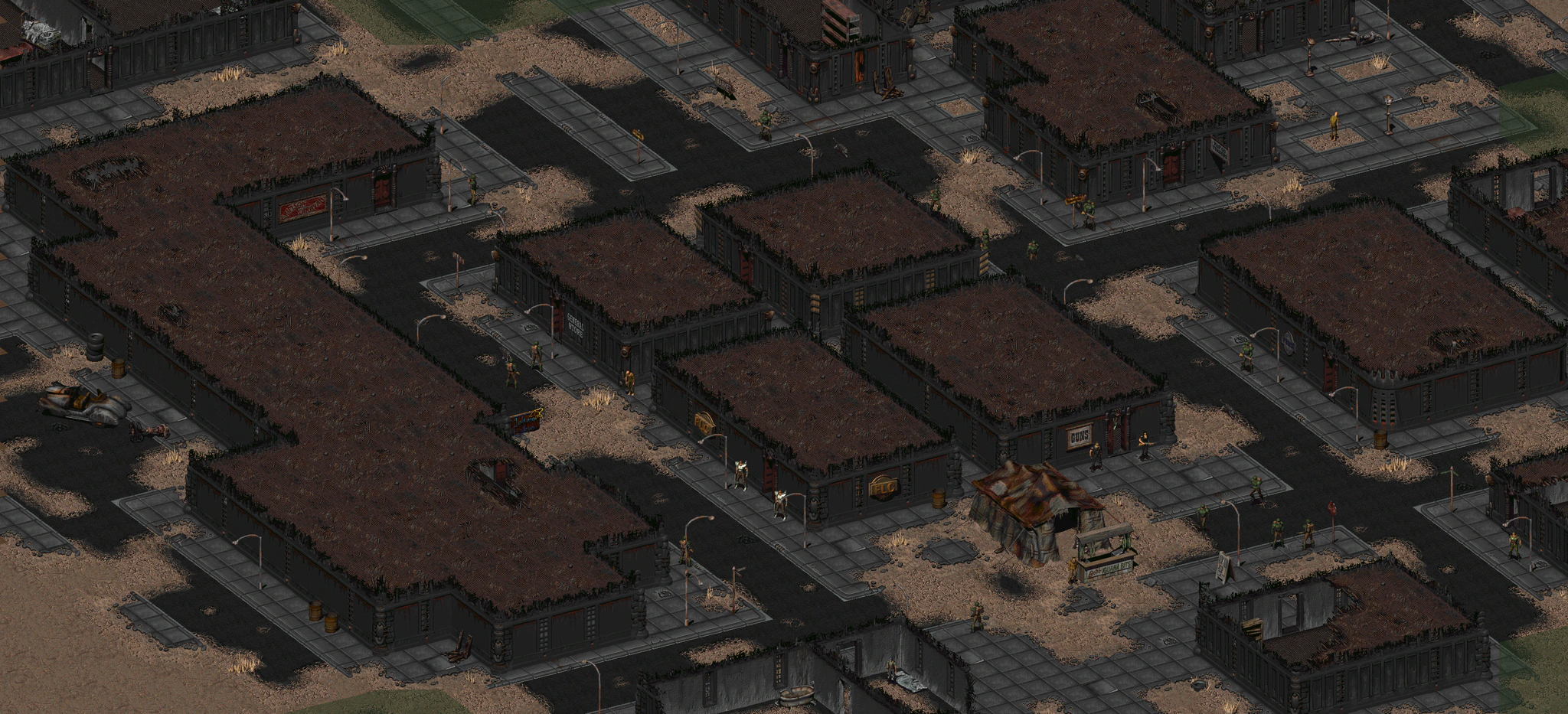
By 2161, the Brotherhood of Steel had formed trade relations with the the Hub through regular exchange of weapons for food and other supplies from the Far Go Traders and the Crimson Caravan Company. By this period, the Brotherhood had become the largest distributor of weapons in the region. High Elder John Maxson even mentions that the Brotherhood is responsible for creating or distributing most of the weapons seen in the civilized Wasteland. The Water Merchants had also attempted to establish official trade relations with the Brotherhood by offering a large volume of water in exchange for a huge stockpile of the Brotherhood's weapons. When the Brotherhood declined the offer, the Merchants sent a group to try and steal them. They were caught by the Brotherhood, but the Elders voted against a reprisal action. The Brotherhood will use currency like bottle caps for external trade, but also trade technologies and other equipment. However, some chapters have more restrictions than others.
In 2189, the Hub would be absorbed by the expanding New California Republic following a vote. This saw the beginning of trade between the Brotherhood of Steel, who were allied with the merchants of the Hub, and the NCR who now controlled the settlement. This included standard trade and barter, but also the exchange of some more advanced technologies, as the two factions were on moderate terms during this period. This would last until the 2250s, when conflict would erupt between the two groups over policies relating to advanced technology.
In 2296, members of the Knights of San Fernando can be seen trading or bartering with locals in New California for goods and services when needed, but they are expected to pay in caps. This is seen when Squire Maximus visits the town of Filly, he utilizes several local businesses to repair a vital piece of his power armor.
Capital Wasteland

Sometime following 2272, the Brotherhood was approached with a offer by Three Dog, the host of Galaxy New Radio. He was seeking protection from the multiple hazards of the Capital Wasteland, in exchange for said protection he would allow the Brotherhood of Steel to establish an outpost at the GNR building plaza. This was seen as beneficial to the Brotherhood, as not only did they gain a strategic location to use as a base, but their new ally operated one of the only working radio stations in the region. They dispatched a unit commanded by Knight-Sergeant Wilks to defend GNR Plaza. While another unit, led by Paladin Berrings, known as the 2nd Monument Defense Detachment was sent to the Mall, where they occupied the Washington Monument. The monument's spire contained equipment used to relay the GNR signal. In exchange for his defense and keeping GNR on the air, Three Dog would also fill the airways with positive news about the Brotherhood of Steel's endeavors in the area. This increased public opinion of the Brotherhood and undoubtedly boosted recruitment and support for the organization. Following the emergence of the Enclave and the start of their war with the Brotherhood in 2277, Three Dog saw it as his duty to counter the propaganda spouted by the Enclave on their radio station with Brotherhood propaganda of his own.
As the Capital Wasteland super mutant conflict raged on, the Brotherhood would find themselves spread out all over the wasteland with limited availability for communication with patrols or small units. This caused issues for the organization, as they had problems keeping tabs on some of their men and by extension, casualties. As the conflict went on and the Enclave returned, resources where stretched thinly. This reduced the organizations capability to conduct recovery operations, as manpower was needed for front line service. This resulted in the chapter's Head Librarian, Proctor Elizabeth Jameson, contracting the recovery of Brotherhood holotags to wastelanders and scavengers. This would allow Proctor Jameson to properly maintain the scrolls. For completion of this task, the Brotherhood was willing to offer wastelanders compensation in caps, or produced technologies for every holotag retrieved. On occasion, trusted wastelanders may receive more specialized payment from the organization.The Lone Wanderer: "I found a Brotherhood Holotag. What should I do with it?" Scribe Jameson: "You have? Oh my. This brings to light a sad affair for the Brotherhood. But perhaps it is something that you can assist us with. If you have the time, I have an offer for you." The Lone Wanderer: "What are the Scrolls that you mentioned?" Scribe Jameson: "Scrolls are kept by the Head Librarian of each Brotherhood bunker. The Scrolls are a record of the Brotherhood itself. Into each Scroll is written the name and deeds of each of our Brothers. Battles, what technology he has recovered, when he was promoted. Everything. The last entry for each Brother is that Brother's death. It is important, as the way a man dies is just as important as the manner in which he lives. And so each man who nobly serves the Brotherhood ascends into our history, to be remembered by those who come after him." The Lone Wanderer: "Where can I find Holotags?" Scribe Jameson: "They are on our fallen Brothers throughout the DC Ruins. However, I can't give you a full report on the locations of all of our operations. As I said, many of the units in the field operate independently, sometimes not reporting into the Citadel for weeks or months." The Lone Wanderer: "Why can't you send your own people to find the Holotags?" Scribe Jameson: "As I told you, with the increase in Super Mutant activity and Elder Lyons' edicts regarding our goals, we are critically short on manpower. Any soldier that I would ask to do this task is one less soldier fighting in the field or defending the Citadel. As much as I hate to involve outsiders, it is necessary if I am to properly maintain the scrolls to honor the dead." The Lone Wanderer: "What's my reward if I bring you these Holotags?" Scribe Jameson: "We have access to a great deal of technology, and because of that, there are a number of things that we can continue to produce. I will be able to offer you caps for the tags you bring me, but from time to time, I will be able to give you something a bit more interesting." (Scribe Jameson's dialogue)

In 2277, the Capital Wasteland chapter's quartermaster, Knight-Captain Durga, was forbidden from trading with outsiders under direct orders from Elder Owyn Lyons, although exceptions could be made with the personal permission from the elder. By 2278, following the defeat of the Enclave at Project Purity, the Brotherhood had begun to trade with some settlements in the Capital Wasteland, Rivet City in particular gained prominence as the Brotherhood of Steel's first and largest trading partner in the region. The two groups had also begun to work closely with one another in order to distribute shipments of Aqua Pura to various settlements across the Capital Wasteland. The Brotherhood provided caps and advanced technology retrieved from the Enclave to the town's security force in exchange for their assistance in protecting water caravans from raiders, super mutants and Talon Company mercenaries. The Brotherhood simply could not protect them all by themselves as the war with the Enclave had consumed large amounts of resources and manpower. This deal started out very beneficial for both parties. However, as time went on turned out to be less then ideal due to the increased intensity of the attacks, which made Rivet City question the logic behind the Brotherhood's insistence on distributing the water for free instead of selling it and letting the merchants use the markup to pay for their own protection, without having to rely on Rivet City.
Although the deliveries of Aqua Pura did not officially extend to the ghouls of Underworld, Scribe Bigsley had nonetheless began to secretly sell water to Griffon in exchange for caps and technology as a way to subsidize other water caravans, despite Elder Lyons' explicit order to distribute the water for free. Unbeknownst to Bigsley, Griffon was re-selling Aqua Pura to raiders, slavers and the Outcasts, who otherwise did not receive water from the Brotherhood, while selling bottles of irradiated water to the blissfully unaware ghouls. This would continue until his misdeeds were discovered by a Brotherhood knight, the Lone Wanderer, with the possibility of the Bigsley being informed of his actions. Regardless, following the establishment of the Water Distribution Network, the Brotherhood would also cooperate with local scavengers and merchants. Their knowledge of the landscape proved invaluable in guiding water caravans across the Capital Wasteland.
The Outcasts at Fort Independence, led by Protector Henry Casdin, were interested in hiring skilled wastelanders to find and deliver all manner of technology to them, from scrap metal to advanced power armor and even alien weaponry, in exchange for ammunition and medicine. The Outcasts, however, would refuse to pay for the retrieval of their own power armor. Should such a "scavenger-for-hire" prove their worth by delivering a significant amount of technology, they would be considered a friend of the Outcasts, allowed to enter Fort Independence and keep the Outcast power armor for themselves, instead of having it confiscated.
At some point before 2287, the Capital Wasteland chapter of the Brotherhood of Steel had successfully employed a strategy proposed by Proctor Teagan, which involved utilizing their vertibirds to track caravans and provide assistance in case they get attacked, in order to earn their trust and gain favorable prices and values for trading in return.
Mojave Wasteland
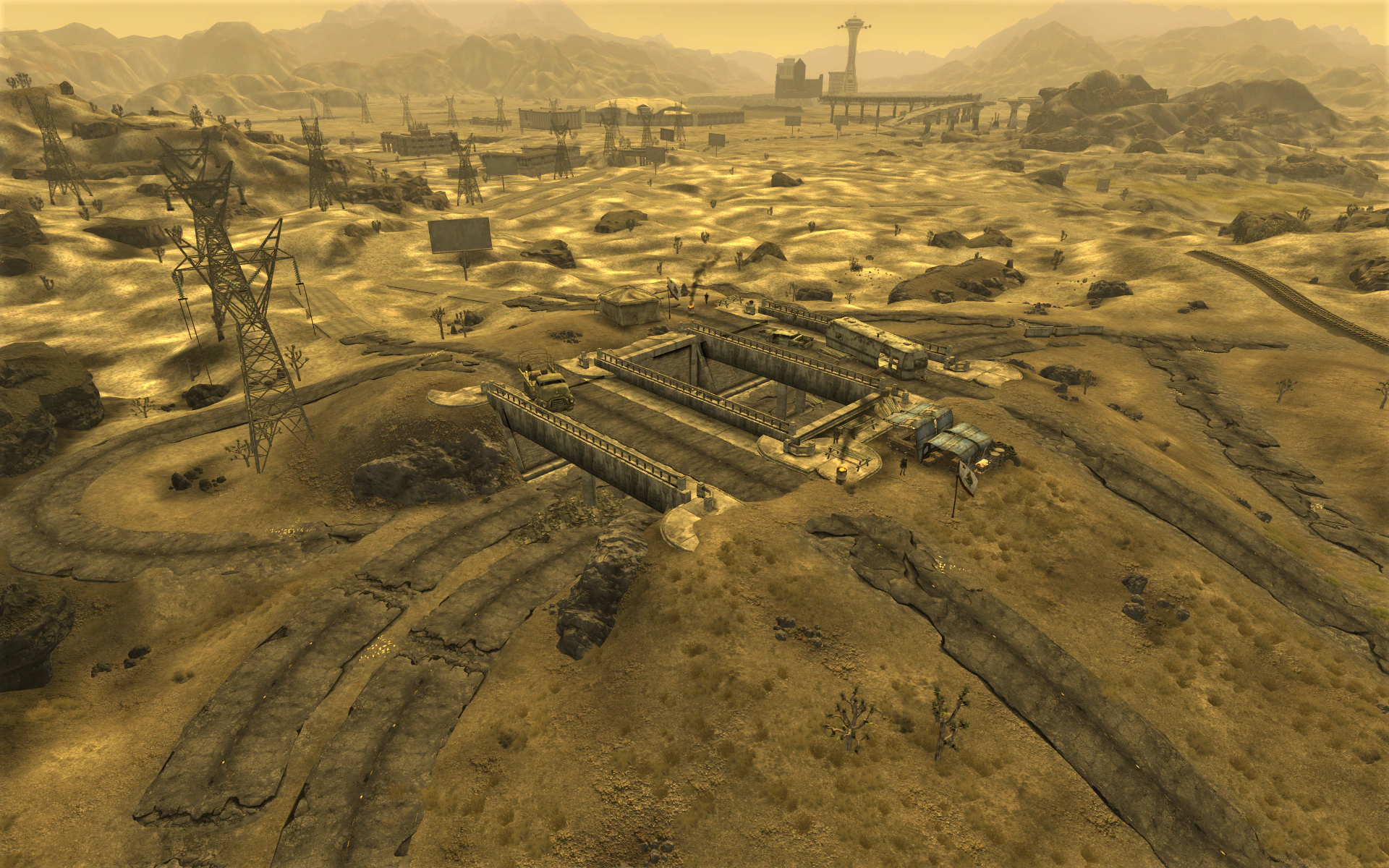
The Mojave Chapter of the Brotherhood, led by Elder Nolan McNamara, found itself in a state of lockdown after suffering a significant defeat at the hands of the New California Republic during Operation: Sunburst, that saw at least half the chapters knights and paladins wiped out, this included some of its most experienced members. These circumstances forced the chapter to trade with outsiders in secrecy, by sending undercover procurement specialists, such as Scribe Veronica Santangelo, to the surface to trade Brotherhood's weapons in exchange for food and other supplies from traveling merchants, since the Brotherhood lacked the ability to feed itself and refused to make the necessary reforms to begin adopting technology that would allow them to start producing food, as it didn't align with their focus on military technology. The chapter's quartermaster, Knight Torres, had strict orders not to trade with outsiders without the elder's permission.
Commonwealth
By 2287, the Commonwealth Brotherhood, operating out of the Cambridge Police Station was offering compensation to wastelanders in return for valued technology. The Brotherhood believes in the compensation of others for goods or services, and according to Paladin Danse will always see a debt paid one way or another. Shortly after the Brotherhood of Steel reinforcements arrived in the Commonwealth, Proctor Teagan sent a request to Lancer-Captain Kells and proposed establishing trade relations with local caravans by employing the same strategy that he had previously used in the Capital Wasteland to great success, by providing protection to travelling merchants in case of an attack in order to gain favorable prices. According to Teagan, this tactic would prove to be even more successful in the Commonwealth, where people lived in constant fear of the Institute. Teagan had also planned to sell surplus medical supplies to outsiders in exchange for ammunition that the Brotherhood was running low on.

Should the Brotherhood emerge victorious, they will establish trade relations with Diamond City, by regularly sending a few of their members on a supply run into the city's market. These supply runners are welcomed in the city, as long as the Brotherhood agrees to keep "heavy artillery" outside of the city's walls. The residents of the city will note that the Brotherhood spends a lot of money while trading. The supply runners themselves will speculate that their assignment might not be strictly pragmatical and that it doubles as a good will effort.
Confiscations
In extreme circumstances, such as war, or if it is deemed absolutely crucial, the Brotherhood is known to engage in forceful requisitioning of supplies or technology from civilian settlements and other groups. Though diplomatic options are usually pursued first.
The original Appalachian Brotherhood chapter was known to be somewhat isolationist, largely due to the chapter leader Elizabeth Taggerdy's unwillingness to trust civilians, furthered by incidents such as the theft of supplies and desertion of civilian recruit E. Fisher. The Brotherhood did initially trade and cooperate with other factions like the Responders for operations like the Battle of Huntersville and, facing the Scorched Plague in Appalachia, also frequently requisitioned/demanded supplies from other factions up through January 2094, to the point of exhausting all goodwill they had. They were also known to use force to take materiel, such as using a show of firepower to claim Thunder Mountain Power Plant from the Free States, or even holding the Responders' leader Maria Chavez at gunpoint to demand the sensor tech developed by Amy Kerry. Though it is worth mentioning that the Brotherhood was facing the threat of the Scorched Plague, the confiscations in material and locations were partially done with the preservation of those individuals in mind. As the Brotherhood was fighting to destroy the threat as a whole for all parties in Appalachia, as the situation at the time was deemed critical.
In 2103, Shawn Hockman arrived at Fort Atlas to launch a complaint. He claimed that at some point, he was robbed at gunpoint by a group of men claiming to be from the Brotherhood of Steel. When this information is relayed to Knight Shin, he denies any possibility of the Brotherhood's involvement in the incident. But also notes that he finds the news of individuals using the Brotherhood's name for their own personal gain disturbing. Shawn remained frustrated that the Brotherhood would let people get away with this, especially in their name. Regardless it was never confirmed if the Brotherhood was responsible for this incident. However, a group of bandits that could be responsible are found roaming around Appalachia impersonating the Brotherhood of Steel. The group is in possession of power armor and weapons, while they attempt to rob travelers of their bottle caps under the guise of donations.
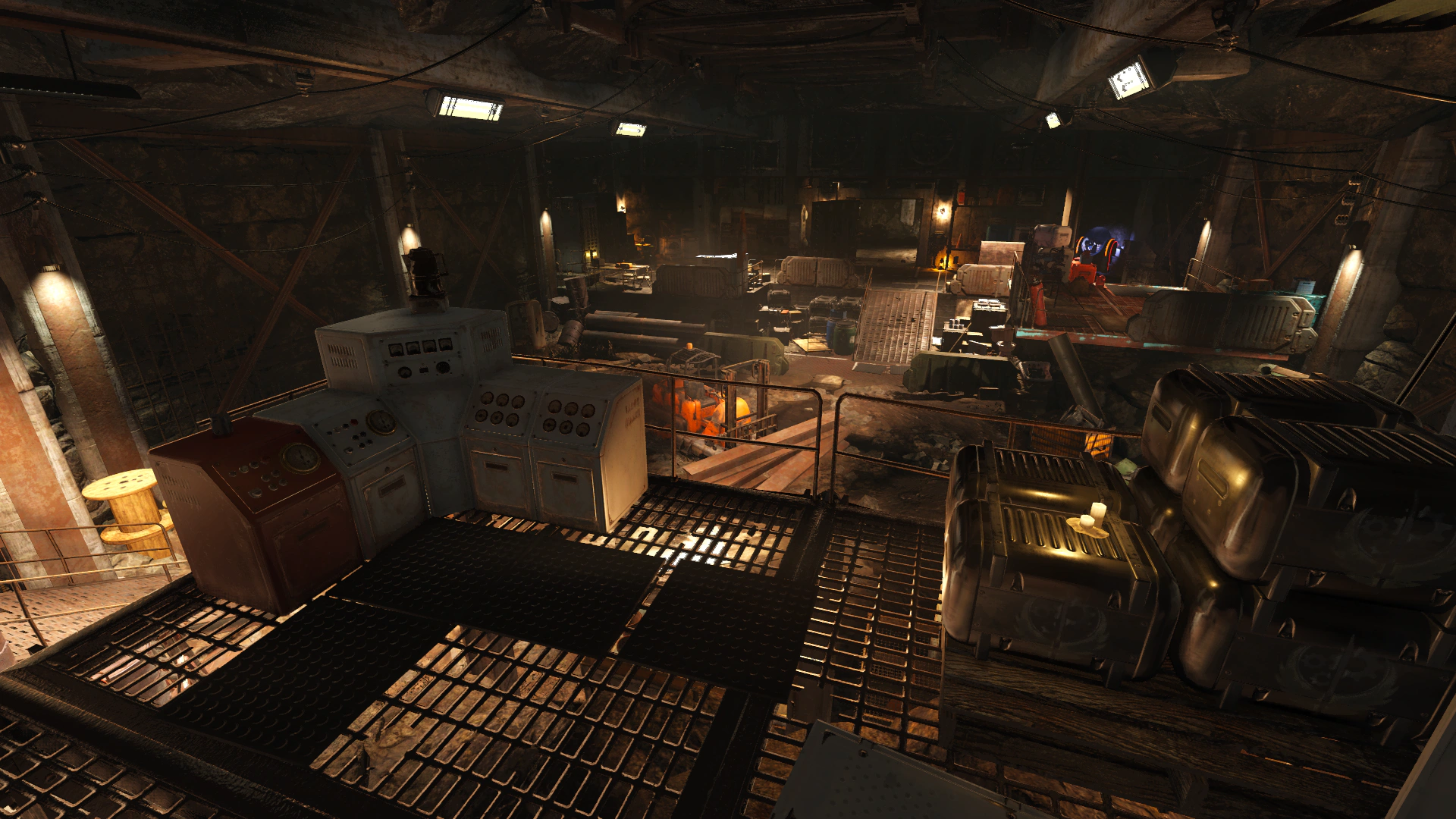
However, during the same year, the Brotherhood First Expeditionary Force was forced to requisition Hellstorm missile launchers from several factions in Appalachia. This included Foundation Settlers, the Blood Eagles and the Crater Raiders. These powerful munitions had initially belonged to the Brotherhood, but following their theft at the hands of a raider group in the Midwest, they began to be used against civilians. They're misuse had even caused the deaths of several members of the Foundation security force during a range incident. The Brotherhood saw it as their responsibility to reacquire their property and prevent further uses of these dangerous weapons.
Sometime during the 2250s or 2260s, the Brotherhood adopted a reactionary policy towards the New California Republic. They attempted to seize advanced pre-War technology, mostly energy based weapons, limiting and controlling the access to such technologies throughout the region. This would eventually result in the NCR-Brotherhood War.
By 2281, the Gun Runners refused to deal in energy weapons, this began due to every caravan that carried these weapons being wiped out or ambushed. The Gun Runners believed it was the Brotherhood of Steel, though these claims were never confirmed. Regardless they decided rather than deal with the constant losses they would disassociate with the technology. They abandoned the market to the Van Graffs entirely. Other groups would use the Brotherhoods reputation with technology to their own benefit. Groups like the Van Graffs and the Crimson Caravan had made deals to destroy their opposition and maximize profits. Part of the covert agreement was the raiding of competing caravan outfits like Cassidy Caravans, staging them as Brotherhood attacks.
During the war with the Institute in 2287, the Brotherhood in the Commonwealth was known to be capable of engaging in forceful requisition of supplies, such as food from civilian settlements if necessary. Should the settlements inhabitants not want to freely donate or accept payment for the crops, intimidation may be employed and the settlement may be seized. Even the elimination of the settlers leader is considered acceptable to complete the mission, since, in the words of Proctor Teagan, "if [they] aren't with us, [they]'re against us." Though this is only seen as a last resort should negotiations fail. If pressed, Proctor Teagan will admit that these requisition operations are not fully sanctioned by the Brotherhood of Steel's leadership or Elder Maxson.
In 2296, the Knights of San Fernando received orders from the East Coast leadership to track down and retrieve a vital piece of technology from a Enclave deserter, Siggi Wilzig, later revealed to be cold fusion research. The search for this technology once again reignited open hostilities between the Brotherhood of Steel and remnants of the New California Republic in the Boneyard led by Lee Moldaver, as the NCR forces under her command were also looking to acquire the research. When the technology made its way into the NCR remnants' possession, the Knights of San Fernando sprung into action. They attacked the Griffith Observatory, which acted as the NCR's headquarters in the area. After a vicious battle, the Brotherhood was able to secure the observatory and the cold fusion reactor. The cold fusion technology was described by the Brotherhood as being crucial, "an object... of profound potential... to harm our nation or to save it."
Social structure
The Brotherhood has several distinct classes that define a member's standing in the Brotherhood social structure, with a strict hierarchy distinguishing each member's position. The Brotherhood is egalitarian in nature, with male and female members both being able to rise up to any rank. At the Brotherhood's foundation, however, the women of the Brotherhood were also called "Brothers" instead of "Sisters," which would not carry over to the East Coast chapters. Additionally, while homosexual relationships are generally tolerated, thanks to isolationist tactics and policies of not recruiting among outsiders (depending on the chapter and period of time) they are pressured to instead seek relationships that will result in procreation. In the Capital Wasteland chapter of 2277, scribes are further divided and organized into three distinct sub-divisions with the following roles and responsibilities:

Initially the Brotherhood recruited from all walks of human life and took a direct hand in the defense of civilians, it was only following the death of Roger Maxson that the Brotherhood truly began its isolationist policies. And thus, for a period of time, joining the Brotherhood of Steel as an outsider was extremely rare, with the exception being those who showed great promise. Chapters that did recruit from wastelanders had seen varying results over time, members who were born into the Brotherhood tend to view them as reckless, creating something of a class difference. Due to the aggressive, undisciplined and trigger-happy attitudes among wasteland recruits in the Capital Wasteland, wastelanders were viewed as lacking when compared to longtime members. However, those who managed to rise through the ranks tended to overcome this stigma. But by 2287, this seems to have changed, with average wastelanders being able to attain high ranks and respect within the organization as equals.
In regards to outsiders, in general they are seen as a necessity to the Brotherhood (whether it be for trade or recruitment), however some members do maintain a patronizing view of outsiders and can have difficulty trusting them. Regardless from the early days of the Brotherhood, it's founder, Roger Maxson, established the organizations rules and objectives recorded in the Codex. The preservation and safeguarding of dangerous or crucial technologies was implemented to prevent humanity from making the same mistakes as their corrupt predecessors. Maxson would even state that the Brotherhood needed the rest of the Wasteland, the organizations entire plan had been made for them. He also prophesied that one day when the time was right that the Brotherhood would utilize the technology they had collected to bring about the revival of civilization on the American continent. The Brotherhood has described primitive factions as being simple-minded citizens, mostly incapable of understanding and properly utilizing technology that the Brotherhood does. The Brotherhood will greet other factions with hostility if they deem themselves to be a threat to the Wasteland or the organization itself. Despite this, on occasion the Brotherhood is willing to work alongside other Wasteland factions, even if this cooperation is sometimes coerced.
The Order of the Sword - responsible for weapons research and development, including guns and ammunition.
The Order of the Shield - responsible for defensive research, including power armor and defensive structures.
The Order of the Quill - responsible for data retrieval and archiving, seeking out books and holotapes for preservation as well as recording the history of the Brotherhood.
Belief system
Origins (Traditionalists)
The traditional beliefs of the Brotherhood were shaped by the experiences of Roger Maxson and his men at Mariposa Military Base and in the aftermath of the Great War. At first, the Brotherhood focused on aiding survivors to the best of its ability, acting as an armed fighting force, rather than the military order it would become. The change came with the realization that the collective knowledge of humanity was in danger of being lost for generations to come. To keep the secrets of the past alive, Maxson decided to dedicate the Brotherhood to the preservation of technology and human knowledge, collecting it in order that the Brotherhood might become the catalyst for humanity's rebirth. As the guardians of civilization, the Brotherhood would focus on the big picture, with direct aid considered a secondary concern.
While scribes were originally considered second-rate members, tools to protect the knights and maintain the Brotherhood's bases, this change in priorities placed them on equal footing with soldiers of the Brotherhood, tasked with preserving and developing technologies recovered from the field by the knights. Maxson's ultimate intention was to establish the Brotherhood as an organization that works closely with people outside of the Brotherhood, as guardians of civilizations, not its gatekeepers. His idea of an open Brotherhood put him at odds with isolationist members of the Brotherhood, including his own son, Maxson II, and Paladin Elizabeth Taggerdy, head of the Appalachian chapter. Although nobody confronted him openly on the issue, out of respect for his role as founder, Roger Maxson, along with the traditionalists seemed to be in the minority by the 2100s.
Preservationists
In 2135, Roger Maxson died of cancer. Although referred to as the Founder and Deliverer, the Brotherhood changed under his son, Maxson II. The most noticeable effect of the change in leadership was the cessation of outside recruitment by 2141, relying solely on natural growth. The Brotherhood creatively interpreted Maxson's words and its role as a steward of humanity and its salvation. Their power armor would remain a symbol of hope, the harbinger of restoration, but the Brotherhood would quietly wait for the right moment to restore the battered Earth to humanity, rather than actively collaborate with outside people. Until then, it would preserve knowledge and control it, so that it could not destroy humanity again by preserving knowledge and its practical applications for future generations, as Maxson intended. While the mandate was to recover, restore, and record whatever the Brotherhood could find, it emphasized hard sciences and the tangible, resulting in a tacit disregard for non-technical, softer fields of knowledge, such as history or sociology. By the late 23rd century, many Brotherhood initiates did not know who Roger Maxson was or what he had done for the order, and scribes captured by the Legion could not account for the group's origins a few centuries after its foundation.
The Brotherhood continued to research theoretical and practical aspects of science, including biology, physics, and chemistry. Practical applications were particularly emphasized, as weapons, ammunition, medical supplies, and so on were exported in exchange for food, water, and other necessities. Exports were limited to conventional technologies, with restricted, advanced items strictly controlled and only provided to those deemed responsible enough to use them.
Regardless of its disregard for soft sciences, the Brotherhood's policies allowed it to reach a position of influence. Its stockpiles of technology and combined knowledge allowed it to emerge as a major research and development house in New California, slowly reintroducing advanced technologies while wisely remaining outside the power structure. Its advantageous position would ultimately lead it to its downfall, as the Brotherhood grew confident in its unchallenged role as quasi-technology police, stagnating.
Reactionaries

The refusal to adapt and evolve led to a decline in the Brotherhood's standing and influence, as the New California Republic emerged as a major power player in the wasteland. Facing a changed wasteland with no plan in place, the increasingly strict adherence to the organization's principles evolved into religious dogmatism, a mindset that eventually dominated its leadership. The Codex became sacred, with Roger Maxson effectively deified. Religious influences trickled into everyday expressions, with "By Steel" becoming an intensifier and an oath, invoking an undefined higher entity.
The definition of technology became very selective. The Brotherhood started to focus almost exclusively on combat technologies, such as energy weapons or power armor, zealously restricting its use to its own ranks. Basic, useful technologies like genetic modification of crops or civil engineering were largely ignored, as irrelevant to the pursuit of narrowly-understood power. Sharing of Brotherhood secrets, even for a greater purpose, is seen as treason warranting summary execution.
The drive to protect the people from the ravages of technology was replaced by hoarding. The Brotherhood became aggressive in their efforts to control technology. No outsiders were permitted to join their ranks. Rather than restoring the Earth, the Brotherhood wanted to outlive and inherit the Earth after other rivals have died out. The Codex itself was either rewritten or reinterpreted to emphasize the world view.
Not all Brotherhood chapters were dedicated to this reactionary policy. Lyons' Brotherhood of Steel diverged when Elder Owyn Lyons turned his chapter into a purely charitable organization in 2276, aiding the wasteland without compensation and opening its ranks to outside recruitment. His insistence on charity, rather than equitable exchange, led to a steady decline and loss of territory over a period of twenty years of their presence in the Capital Wasteland. The Purifier Conflict with the remnants of the Enclave provided an influx of new technologies and resources, but Lyons' leadership remained a problem. Particularly severe was the fact that Lost Hills completely shut off communications with Lyons' chapter and denied them any reinforcements.
Restorers
Major changes were introduced under Elder Arthur Maxson in the 2280s. Like the Brotherhood of the 22nd century, the eastern division rededicated itself to the advancement of humanity. Beyond taking an active role in wasteland politics, the Brotherhood embraced some of its traditionalist roots along with Elder Lyons' policies of eradicating abominations, combining them with a new approach to controlling technology. Abominations brought about by mankind's scientific meddling are viewed as a scourge that needs to be destroyed in order for humanity to prosper. The list typically involves super mutants and feral ghouls, although the Brotherhood also eliminates raiders and other threats as a matter of course.
Control of technology is seen as a means to an end. While the crumbling western Brotherhood attempted to control technology in an attempt to stave off its destruction, Maxson's Brotherhood returned to the original mission of containment: Protecting mankind from technologies that cannot be fully controlled and thus represent a threat to its long-term welfare and even survival. As a result, the Brotherhood seeks to understand the nature of technology, its power and meaning to humans, and fights those who would abuse said power for their own ends, endangering mankind in the process. The most noticeable way in which this policy is implemented is the collection of technology from pre-War sites, to prevent its abuse.
The Brotherhood rejects technological development for the sake of technological development, drawing on the lessons of the Great War. The Brotherhood holds that it was a result of technological progress outpacing man's restraint and moral progress. Consumerism and greed became the driving forces of progress, new technologies exploited by mega-corporations for their own gain, pocketing the cash and ignoring the collateral damage to society and the environment. Though miracle advancements in medicine and welfare were made, the unchecked development spurred by the war with China led to widespread abuse of technology's potential. Bio-engineered plagues, FEV, and ever more destructive nuclear weapons were but a handful of horrors created by pre-War mankind. The Great War was a natural result of putting the implements of Apocalypse in the hands of madmen.
Gen 3 synths, which are indistinguishable from humans, are a perfect example of science run amok, a technology that cannot be fully controlled by humans. They view the combination of the synths' superior physique and capacity to think for themselves as an existential threat to mankind, while the way in which they are created, assembled in a laboratory and programmed like a robot, is anathema to the Brotherhood, which holds human life to be sacred.
While the Brotherhood's new rhetoric has religious overtones, Elder Maxson rejects the notion of being worshiped as divine. The eradication of Maxson cults in the Western Brotherhood is consistent with his desire to be nothing more and nothing less than human: aided and perfected by technology, but not controlled or enslaved by it.
Nation builders
Elder Maxson's reforms had wide-reaching implications. The Brotherhood finally embraced its nation-building role, which was already taken for granted on the East Coast, with Initiates fighting and dying in the name of the Brotherhood, seen no longer as just an order, but as a country. Out West, the emergence of a new caste of clerics, imbuing the Brotherhood's mission with religious overtone has also contributed to the evolution of the Brotherhood: From an elite order of warrior monks into a mass movement, relying not on a handful of troops in power armor, but massed forces of aspirants and initiates accompanying these troops to overcome any conceivable enemy.
This resulted in the introduction of mass outside recruitment, previously practiced by Elder Owyn Lyons and Arthur Maxson, emulating the practices of the New California Republic, crippled after the Fall of Shady Sands. Drawing from every walk of life, these aspirants would become the sledgehammer of the Brotherhood, ready to cut the shape of the future with their swords on orders from the clerics. While the newfound religious reverence for pre-War artifacts and the stiffening of command hierarchies resulted in some disillusionment among certain veterans, those who have never known life outside the Brotherhood followed them with near fanatical zeal as a chance to improve their standing - even if they were orders to kill and reclaim pre-War tech no matter the cost. Though it is also stated by high-ranking members that violence is a tool only to be used as a last resort by the organization.
An offshoot of this new interpretation of the ideology was that aspirants and squires became more expendable, and were expected to serve on the front lines. Normally assigned to knights to slowly train and become new knights. They had always been expected to be willing to die in the line of duty, but with their now increasing numbers the Brotherhood sought to utilize them, as well as provide them with combat experience. A whole ceremony was invented including branding them on the skin. Squires actually looked forward to the ceremony, believing they were not true squires until their flesh carried the mark of a knight.
Iconography
The iconography of the Brotherhood of Steel is built around its emblem: gears, sword and wings. It is used widely to decorate their facilities, tag armor and equipment, and as part of markers and flags identifying their territory. The order marks virtually every piece of equipment it possesses with its sigil.

The Brotherhood insignia has evolved throughout the years. While it has retained its general appearance, the number of cogs on the gears, their facing, and basic color scheme have varied between iterations. Other modifications have also been implemented, such as replacing the gears with a lion rampant, altering the number of teeth on the elements, or changing coloration.
The insignia is usually the only major difference between pre-War military uniforms and Brotherhood outfits. The West Coast Brotherhood chapters (as well as Lyons' chapter) typically use recon armor for their soldiers inside and out of combat, while post-War robes are worn by the scribes and elders. The scribes later Eastern Brotherhood, as well as the earlier Appalachian chapter, instead use engineering-oriented coats with a leather vest with many pouches, with whatever additional gear as suits their purposes. They also use a more specialized, practical outfit for scribes who are assigned to operate in the field consisting of a sweater and a similar leather vest with numerous pouches. Some chapters make occasional use of combat armor, but the Brotherhood are most identified with their heavy use of power armor, which is often seen as emblematic of the Brotherhood.
The type of power armor most commonly used depends largely on the availability of a specific model to a given chapter. The Lost Hills and Mojave chapters primarily use the T-51b, while the Eastern Brotherhood was forced to adopt the inferior T-45d following their expedition to D.C. as it was the best they had on hand (both the Lyons Brotherhood and the Outcasts). However, the T-60 became their dominant model of power armor by 2287. Despite having fought two wars against the Enclave and pillaging their technology, they have not been seen incorporating Enclave models of power armor, but do study them.
The Brotherhood has, on occasion, repurposed old U.S. military propaganda to promote themselves.
Divisions and locations
Canonical chapters - - Lost Hills (New California chapter) Fallout Fallout 2 - Capital Wasteland chapter (Brotherhood Outcasts) (Lyons' Pride) Following unification Fallout 3 Fallout 4 - Mojave chapter (Circle of Steel) Fallout: New Vegas - Commonwealth chapter Fallout 4 Fallout TV series - Appalachian chapter Formerly Fallout 76 - First Expeditionary Force Fallout 76 - Knights of San Fernando Fallout TV series - Grand Canyon chapter Fallout TV series - Coronado chapter Fallout TV series - Yosemite chapter Fallout TV series - Chicago chapter Fallout 3 Fallout 4 - Montana chapter Fallout 3 - Non-canonical chapters - - Midwest chapter Fallout Tactics - Texas chapter Fallout: Brotherhood of Steel Fallout: Brotherhood of Steel 2 - Alaskan Expeditionary Force Fallout: Extreme - Florida Expeditionary Force Fallout: Tactics 2
Montana bunker
Fort Bannister (optional)
Unnamed quarry (formerly)
MDPL mass relay station (formerly)
Interstate 15 (optional)
Highway 95 (optional)
HELIOS One (formerly)
Bunker 13 (formerly)
The Prydwen
Nuka-World outpost
Railroad HQ (optional)
Mass Fusion building (optional)
Diamond City (optional)
Arcadia (optional)
Vault 75 (optional)
Multiple military checkpoints
Huntersville (temporarily)
Multiple military checkpoints and outposts
Multiple military checkpoints and outposts
Coronado
Yosemite
Chicago
Vault prototype
Fort Worth
The Alamo
Fort Williamette (Oregon)
Founding chapter
The headquarters of the Brotherhood and its first chapter is the Lost Hills bunker in California, the place where the organization was founded, and the seat of the Brotherhood's high elder and ruling council for much of its post-War history. It is also the center of their research and military activities.

By the 2240s, Brotherhood installations in New California included small observation bunkers (for example, in the Den, San Francisco, and Shady Sands). All Brotherhood outposts are formally subject to the Lost Hills' ruling council's authority, even if they sometimes tend to act independently, especially if they are located far from California, and contact with the headquarters is rare. The Lost Hills bunker is surrounded by the state of Maxson, which, while named after the founder of the Brotherhood, is a state of the New California Republic which is officially outside Brotherhood rule.
The NCR-Brotherhood War resulted in the destruction of at least six Brotherhood bunkers in New California by 2281. However, the status of the Lost Hills chapter as of the late 23rd century is unclear. By 2296, multiple other Brotherhood chapters, each with their own separate elders, were operating in New California following the destruction of Shady Sands and the subsequent loss of NCR governance around Los Angeles, and the Commonwealth chapter had become the dominant power within the Brotherhood, holding command over all of the known chapters on the West Coast.
Appalachia
The Appalachian Brotherhood of Steel was founded when Roger Maxson contacted Lt. Elizabeth Taggerdy via satellite. The chance meeting led to the earliest branch of the Brotherhood being established in the remote region. Based out of Camp Venture and later Fort Defiance, the chapter focused on recovery and aiding the local population in its early years, before refocusing entirely on the destruction of the scorchbeasts and the Scorched as an existential threat to humanity. The chapter failed in its attempt to contain the threat, with its forces all but wiped out in August 2095, less than twenty years after their foundation.
In the year 2103, the Brotherhood First Expeditionary Force from Lost Hills arrived in Appalachia and set up at Fort Atlas, reestablishing a Brotherhood presence in the region. In doing so, they became the second iteration of the Appalachian chapter. However, a rivalry emerged between the new chapter's leadership, Paladin Rahmani and Knight Shin, regarding the Brotherhood's isolationism. Shin wanted to keep the Brotherhood's tradition at the expense of the safety of the surrounding wastelanders, while Rahmani wanted to abandon the Brotherhood tenets in order to bring about a more united wasteland.
Mojave
The Mojave chapter's bunker is located in Hidden Valley, directly east of the settlement of Goodsprings in the Mojave Wasteland. It is surrounded by powerful underground fans that serve as a high-tech defense system, creating artificial sandstorms that allow the inhabitants to travel to and from the bunker undercover. It also serves as a kind of electronic disturbance to any and all outside factions' targeting sensors, therefore rendering the bunker safe from detection.

Prior to 2276, the Mojave Brotherhood had been active throughout the region before their crippling defeat at HELIOS One by NCR forces and were forced underground on the orders of their new leader Elder McNamara. Due to a complete lockdown ordered to preserve what remaining soldiers he had, McNamara relies solely on teams that were trapped outside of the bunker for intel and trusted undercover operatives to bring food and supplies back to those trapped inside.
East Coast Brotherhood
On the East Coast, the Capital Wasteland chapter established the Citadel, built into and beneath the ruins of the Pentagon in Washington, D.C. This faction was led by the idealistic Elder Owyn Lyons who decided to make the protection of the human inhabitants of the Capital Wasteland from super mutants and other threats his top priority, instead of the acquisition and preservation of technology. While Lyons was officially recognized by the ruling council at Lost Hills as the leader of a Brotherhood faction, because of his changed priorities, he received no support from California, and his faction, for all intents and purposes, was independent. Without reinforcements from the West Coast, Lyons was forced to recruit locally, but, as most new wastelander conscripts are overeager, unskilled, or both, the survival rate of these local members was atrocious. Elder Lyons' daughter Sarah commanded her own elite squad, Lyons' Pride. These soldiers help preserve the Capital Wasteland by holding back the super mutants, who tend to remain in the urban ruins of Washington, D.C.

Members of Lyons' expeditionary force who preferred to stay faithful to the Brotherhood's original goals of locating and preserving technology and knowledge eventually abandoned him in 2276, after Lyons outright refused to permit them to excavate Fort Independence. Under the lead of Paladin Henry Casdin, they left the Citadel to take up residence in the fort and styled themselves as the Brotherhood Outcasts. In addition to carrying out Lyons' original orders, the Outcasts attempted to re-establish contact with the western elders and have Lyons placed in front of a firing squad.
As the war with the super mutants intensified, the Enclave returned in the flesh after fleeing New California several years prior. Their radio broadcasts had been heard for years on wasteland radios. They seized the Jefferson Memorial's "Project Purity" (a project intended to provide clean water to the wasteland), and subsequently consolidated their power throughout the Capital Wasteland. At first favoring caution, Elder Lyons soon changed his mind, engaging the Enclave in a full-scale battle after the Enclave acquired possession of Vault 87's G.E.C.K. and nearly activated Project Purity. With the aid of Liberty Prime, the Enclave was ousted from the Jefferson Memorial and into uncertain disarray. Despite the subsequent loss of Liberty Prime, Lyons' chapter started its recovery to dwarf their fellow chapters back west in power, especially after the devastation of the NCR-Brotherhood War.
Knights of San Fernando
The Knights of San Fernando are a Brotherhood chapter known to be active in New California by 2296. Led by Elder Cleric Quintus, the Knights of San Fernando seemingly emphasize the Brotherhood's quasi-religious beliefs and aesthetics, with a strong presence of clerics in their ranks and their soldiers trained to adhere to strict discipline and military doctrine teaching that the Brotherhood is the foremost power for change. Their only known stronghold by 2296 is an airfield on the West Coast, where squires are raised and trained for their eventual role as aspirants in service to a knight.
In 2296, the San Fernando chapter received orders from the Commonwealth chapter to hunt down the rogue Enclave scientist Siggi Wilzig. The chapter's mission to obtain cold fusion technology held by Lee Moldaver's faction of NCR remnants led to their military takeover of Filly as an outpost, before later participating in the Battle of Griffith Observatory against Moldaver's forces, ending in the Brotherhood's victory and assuming control of Los Angeles.
Later in 2296, the San Fernando chapter sought out Area 51 as another base of operations. Quintus summoned the leaders of the Grand Canyon, Coronado, and Yosemite chapters to a meeting where he shared his plan to shift the balance of power back to the West Coast, with the ultimate goal of restoring the wider Brotherhood's cohesion and himself as its leader. Though he brought the other elders around to his plan, the arrival of Xander Harkness from the Commonwealth complicated matters.
Grand Canyon chapter
The Grand Canyon chapter exists somewhere within the Grand Canyon as of 2296. It is subordinate to the Commonwealth chapter, and had at least one Prydwen-class airship for transport. That year, the chapter was invited to an alliance with the Knights of San Fernando in an attempt to rebel against the Commonwealth chapter using the cold fusion relic. The Grand Canyon chapter's leader readily agreed.
Coronado chapter
The Coronado chapter exists somewhere within Coronado as of 2296. It is subordinate to the Commonwealth chapter, and had at least one Prydwen-class airship for transport. That year, the chapter was invited to an alliance with the Knights of San Fernando in an attempt to rebel against the Commonwealth chapter using the cold fusion relic. The Coronado chapter's leader readily agreed.
Yosemite chapter
The Yosemite chapter exists somewhere within Yosemite as of 2296. It is subordinate to the Commonwealth chapter, and had at least one Prydwen-class airship for transport. That year, the chapter was invited to an alliance with the Knights of San Fernando in an attempt to rebel against the Commonwealth chapter using the cold fusion relic. The Yosemite chapter's leader initially agreed, but pulled out of the alliance after the arrival of a liaison from the Commonwealth chapter.
Montana Chapter
A Brotherhood bunker exists in Montana and was at some point the home of an elder named Patrocolus.
• The following is based on bugged content.
• End of information based on bugged content
Chicago Chapter
The Brotherhood of Steel sent a detachment of troops east by airship to track the remnants of the Master's Army. After crash landing in Chicago, they clashed with the mutants in the city. By 2277, they had been classified by the Brotherhood as a rogue unit and "fell off of the radar" of the organization's other chapters. However, they were able the defeat the remnants of the Super Mutant Army that fled east. They were either killed or were assimilated into the Chicago chapter of the Brotherhood of Steel, which seemed more willing to allow mutants to join its ranks.
Branch organizations
Circle of Steel
The Circle of Steel is a branch organization within the Brotherhood of Steel dedicated to dealing with internal conflicts. In terms of their position relative to the Brotherhood proper, they handle the internal affairs of the whole Brotherhood of Steel. They are based on a faction of the same name that was to appear in the canceled Van Buren.
Tactical units
Lyon's Pride
Lyons' Pride (commonly truncated as the Pride) is a tactical unit within Lyons' Brotherhood of Steel, comprised of elite Brotherhood soldiers led by Sentinel Sarah Lyons.
Non-canonical chapters
Midwestern Brotherhood
The splinter faction, which lost contact with the Brotherhood leadership at Lost Hills, had been an independent organization since 2197, when the airship of its founders crashed near Chicago. Unlike the original, isolationist Brotherhood, the Midwestern Brotherhood expanded aggressively and eventually established a network of bunkers and vassalized towns from Illinois to Kansas, drafting folk from tribes and cities under Brotherhood protection into its ranks. While more open to the outside world, this faction of the Brotherhood is by no means altruistic - the villagers under Brotherhood rule, while protected from raiders and mutants, live in fear of the infamous Brotherhood inquisitors. The Midwestern Brotherhood was far more open in terms of recruitment compared to its West Coast counterparts, accepting ghouls, super mutants and even intelligent deathclaws into their ranks. The Brotherhood's main bases were bunkers that were originally pre-War military bunkers that were found, taken, and rebuilt. In accordance with the Brotherhood's military roots, they were renamed Bunkers Alpha, Beta, Gamma, Delta and Epsilon.
The aforementioned Chicago detachment is a reference to the Midwest Brotherhood as they appeared in Fallout Tactics, though what is mentioned of them is essentially all that remains in canonical installments. However, just like their Fallout Tactics counterparts, the canon Chicago chapter also allows mutants into its ranks.
The following is based on information from Fallout Tactics and is not canon.
End of information based on information from Fallout Tactics
Texas chapter
After the death of John Maxson, Rhombus, the head of the Brotherhood's paladins, became the new high elder, in the non-canonical Fallout: Brotherhood of Steel, set in the "north Texas/Oklahoma panhandle area." . A super mutant faction under the leadership of Attis moved east and attempted to recreate the mutant army using the Corporate Vault. Rhombus, despite some criticism from the ruling council of the West Coast Brotherhood of Steel, started a crusade against the still-existent threat of the super mutant army, now led by Attis, after the events of the first Fallout. The Texan Brotherhood would prove successful in their quest, destroying Attis and his army at the ghoul city of Los.
This chapter's role in the Texas area would have been further expanded upon in the canceled Fallout: Brotherhood of Steel 2, in which they would expand their reach to include Fort Worth and the Alamo.
Unlike the Chicago detachment, the events of Fallout: Brotherhood of Steel have not been referenced in any way in later canonical installments.
The following is based on information from Fallout: Brotherhood of Steel and is not canon.
End of information based on information from Fallout: Brotherhood of Steel
Foreign relations
For further information on relations such as trade, see Trade, Redistribution of technology and Confiscations.
Civilians
Initially the Brotherhood was founded as an organization to help the survivors of the Great War and took direct involvement in the defense of civilians as a top priority. However following 2082, this would take a backseat as the priorities of the organization shifted towards the collection and preservation of technology to safeguard humanity. Regardless, during the Brotherhood's early years it still remained a ever-present goal of the organization for most chapters. Despite technology being the main priority of the organization, the Brotherhood also has a mission to assist civilians when possible but not if it compromised the organization's mission or values. The Codex states, "Shield yourself from those not bound to you by steel, for they are the blind. Aid them when you can, but lose not sight of yourself." And although outsiders were viewed with caution, they were not seen as completely lost by the Brotherhood. They could in the Codex's words, have their "eyes opened" through joining the organization, "Fear those who do not pledge to the Brotherhood for though their eyes may be opened through service, they are now blind."

Furthermore, despite the organizations ever-developing caution when it came to outsiders, they continued to openly assist civilians on both the east and west coast. With the Appalachian chapter of the Brotherhood sacrificing itself to defend the populations of West Virginia and beyond from the Scorched plague in 2095, and the Brotherhood First Expeditionary Force's defense of a settlement from raiders in the Midwest during 2103. By 2161, despite adopting more isolationist policies, the Brotherhood of Steel still assisted wastelanders against serious threats. Even though the organization had stopped recruiting outsiders in 2141 (6 years following Roger Maxson's death), they assisted civilian settlements by driving off the Master's super mutant army during the Unity Crisis. Following this they began to reintroduce technology into the Wasteland over time, becoming a major distributor of both pre and post-war tech.
They would also protect the citizens of the West Coast by assisting in the defeat of the Enclave following their emergence in 2241. On the East Coast, the year 2277 saw open conflict between Lyons Brotherhood and the Enclave over the control of Project Purity. Following their reintegration into the Brotherhood, they would continue to provide clean water to people of the Capital Wasteland into the 2280s. Perhaps most impressively, the Brotherhood would defeat the Enclave with the assistance of a new knight, the Lone Wanderer. Together, they were also able to save the entire population of post-nuclear America by destroying a group that had the capability and had planned to release modified FEV into a major water supply. This would have been perpetrated with the goal of cleansing the continent of all mutations, which by this point basically included everyone besides Vault Dwellers. By 2287, the Commonwealth detachment of the Brotherhood would work to protect the regions citizens against Institute-created threats like synths and super mutants during the War of the Commonwealth. Their long-term goals in the region involved eliminating the Institute and reducing threats such as super mutants, feral ghouls and raiders.
When entering a conflict, the Brotherhood of Steel usually proceeds with two primary goals. One to locate the given threat and destroy it, preventing it from causing further damage to the Wasteland and mankind. The second objective was to assist the innocent people of the Wasteland in dealing with these threats. The Brotherhood of Steel had standing orders to always a verify their targets to prevent or reduce civilian casualties while in combat. In such critical events, the organization's members were also more than willing to spill their blood or give their lives for the betterment of the Wasteland's civilian inhabitants. Most members of the organization cared about what happened to the average wastelander, especially the leader of the Brotherhood on the East Coast, Elder Arthur Maxson - who sought to bring a message of stability to the people of Commonwealth in 2287. Eliminating these threats was seen by the Brotherhood as "essential to humanity's survival". Many within the organization also saw as it as their responsibility to ensure that what remained of humanity followed a safe path that avoided the utter destruction brought about by mankind's hubris during the Great War.
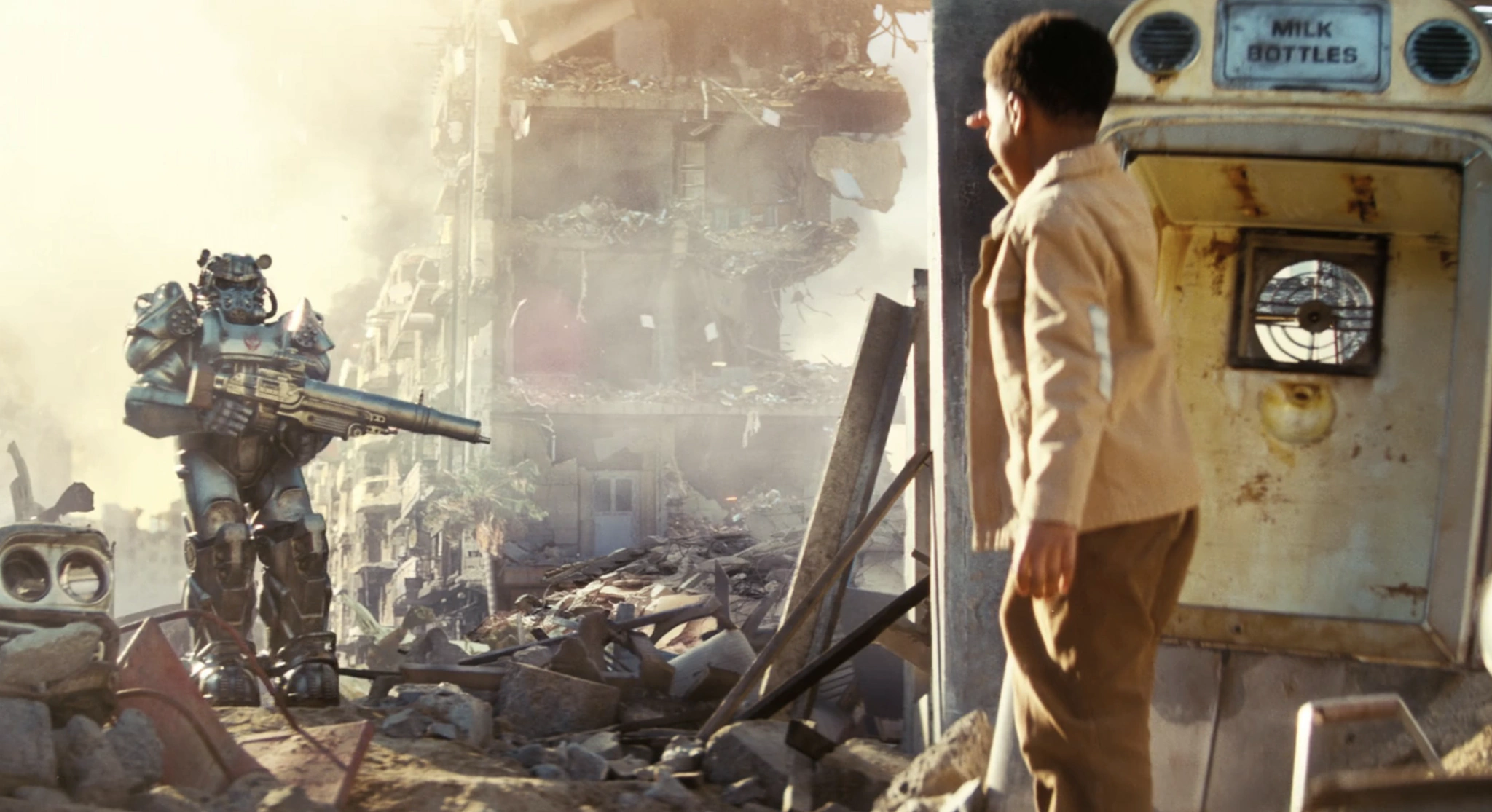
The Brotherhood's hesitancy to involve itself in the average affairs of wastelanders doesn't stem from a place of malice, but is rather due to the fact that it could be a tactically poor choice depending on the situations level of severity. The long-term mission of the organization is the paramount concern for most members, and they will ignore the pleas made by civilians if assisting them impedes those goals. The Brotherhood of Steel does not consider itself to be a "charity" for the average wastelander to exploit for personal gain. The Brotherhood is also hesitant of sharing their technology with others, despite the obvious benefits said technology could bring to the wasteland. Instead they chose to introduce it at a slow rate and only with those who they deemed could be trusted with its use. It is a commonly accepted idea within the Brotherhood that most people of the wasteland are not responsible enough to use (and maintain) all of the technology the Brotherhood has at their disposal. They are known for redistributing some of their technologies in exchange for food and other resources. But they keep the more sensitive, advanced and hazardous technologies under their protection.
While they are generally not hostile to others without a good reason and Brotherhood members are seen as people not to be trifled with. Following the death of founder, Roger Maxson, for a period many members of the Brotherhood were not interested in justice for the weaker and less fortunate wastelanders (or mutants) around them. They largely focused on keeping their secrecy with isolation, along with the pursuit of both preserving and developing technology, which they would often put above human life since technology is irreplaceable in the post-nuclear wastelands—lives are not. Their motives are often based on the long-term results. Against its enemies, the Brotherhood maintains a policy of total warfare. As a general rule, they do not take prisoners, whether the opposition are simple wasteland hostiles like super mutants or raiders, to more complex opponents such as the Railroad or Enclave. This is done because the Brotherhood seeks to neutralize a given threat indefinitely. But the organization takes a lighter approach when dealing with militant civilians, and usually look to subdue rather than eliminate them. In rare cases that wastelanders compromise a critical mission or if they pose a threat to a member of the Brotherhood, the organization will reluctantly pacify or eliminate the threat. The organization does try to prevent unnecessary casualties but acknowledges the fact that collateral damage does and will occur, regardless of its member's dislike of it.

Outside recruitment
During its formation and early years - the Brotherhood of Steel recruited from all walks of human life. Many were former members of the United States Military. Roger Maxson had begun attempting to contact ex-military units across the former United States with the proposition of joining his organization. However, not all that joined were soldiers, others were scientists, first responders or just average wastelanders. The Brotherhood on the West Coast kept growing, welcoming into its ranks a National Guard unit that was formerly stationed near Mariposa. Basic training for new Brotherhood recruits was extensive and strenuous. Even former military veterans found it to be a lot more difficult than their prior training. In Appalachia for example, all new recruits, regardless of background, were required to report to Camp Venture for basic training. The Brotherhood of Steel had made modifications to US Army Ranger training to set a new standard for basic. Part of this basic training even included live fire engagements against hostile targets such as super mutants and raiders. Because of this, casualties were seen as a necessary loss when it came to building a better soldier.
When the Brotherhood expands into a new area, open recruitment may be seen as necessary to the security of the mission. The Brotherhood First Expeditionary Force for example had recruited dozens of initiates and hopefuls on their track across the country. During 2103, they arrived and established their headquarters at Fort Atlas in Appalachia. Following this, they continued to recruit large numbers of local civilians to fill their ranks as a new chapter. These new recruits would then be indoctrinated with the teachings and regulations of the Brotherhood of Steel. They were provided training and sent on patrols or to guard checkpoints for combat experience.
It was only following the death of Roger Maxson that the Brotherhood began their isolationist policies. Following 2141, it is known that the organization would stop recruiting outsiders, despite a few exceptions. But by 2161, they had still remained active on the surface in New California, launching operations and trading with settlements. By 2241, they had become completely isolationist on the West Coast, masking their presence to most of the outside world. During this time period, the Brotherhood did not recruit outsiders as a general rule. When it did, they required the recruits to be very young, so that the proper relationship with technology could be cultivated. Adults have an approach that some in the Brotherhood considered perverted. However, exceptional individuals were conditionally allowed join the Brotherhood. Throughout its history, the Brotherhood of Steel has been known to offer asylum to refugees. Especially children, but adults are also accepted. The Brotherhood has also on occasion offered asylum to larger groups following terrible events such as "the Scourge" or the destruction of Shady Sands. Many of these refugees go on to join the Brotherhood's ranks, while ones who choose not to become Brotherhood refugees or civilians. These actions as a whole act as a form of recruitment, bolstering their numbers.

Following 2255, the Capital Wasteland chapter of the Brotherhood under Elder Owyn Lyons began recruiting wastelanders after they arrived in Washington, D.C.. In order to establish and further reinforce the chapter in the region, the Brotherhood would go on recruiting drives to attract new members from local settlements, such as Rivet City, but still continued to remained hesitant of outsiders. This is how members like Paladin Danse and Knight Cutler joined the organization. Circa 2287, the policy changed somewhat radically. As Elder Arthur Maxson became the leader of the Brotherhood's Eastern branch, he retained Elder Owyn Lyons practice of recruiting wastelanders sponsored by existing Brotherhood members and expanded upon it. Civilians could now choose to approach the Brotherhood to enlist on mass, and are for the most part greeted positively by their future comrades. As it was under Lyons, the sponsor would travel with their charges and teach them the ideals of the Brotherhood and train them in combat. To this end, active members can field promote recruits to initiate rank, but the rank and subsequent promotions have to be confirmed by the elder at the earliest possible opportunity. However, while the member can retract their sponsorship, once the rank is confirmed by the elder, only the elder can dismiss the sponsored party from the organization.
By the 2290s, a similar recruitment policy has been adopted by the West Coast Brotherhood of Steel, in staunch contrast to the near-total refusal to accept outsiders into its ranks in 2281. The Brotherhood accepts recruits from all walks of life and provides them with food, education and a place in the world. However, these recruits or refugees are presumably forbidden from leaving the Brotherhood due to the security risk, regardless of how much one may want to. As Squire Dane tells Maximus there is no leaving the organization when he mentions the possibility of doing so.
Raiders
Raiders have always been seen as a natural enemy of the Brotherhood of Steel and the two groups have been at open conflict for over two centuries. The Brotherhood views the very existence of raiders as a direct obstacle to the organization's mission to save the remnants of humanity. By extension, many within the organization additionally believe that part of their mission is to address the threat these raiders pose. And as a result, the Brotherhood will usually engage, and either destroy or subdue these groups to protect local populations, as well as the organization's own interests. Over the years, there have been several major conflicts between the Brotherhood and different factions of raiders, including the Crater Raiders, Blood Eagles, Vipers, Great Khans, the Blackwater Bandits, and many more. However, the Brotherhood is willing to make temporary alliances or non-aggression pacts with raider groups should a situation deem it tactically beneficial. This is seen when the Brotherhood entered into an agreement with the Rust Eagles raider group rather than choosing conflict with them. They were also willing to form a temporary alliance with the Blood Eagles trapped in Vault 96.

They similarly do not hold ill-will towards those who have formerly been raiders in the past, and are more than willing to have them join the ranks of the Brotherhood should they dedicate themselves towards its goals. The Brotherhood contingent stationed at Big Bend Tunnel east was under the command of Knight Melissa Reische. In 2088, she came into contact with Carol Sweeney, the leader of an ex-raider group that settled on the opposite side of the tunnel. Despite them being former raiders, the Brotherhood would provide them shipments of supplies while the former raiders would provide them any scavenged materials of technological or military value. It is not known if they possessed a relationship, but the Commonwealth raider gang known as the L&L Gang did share some similar aspects of ideology. The raider group operated with the sole purpose of annihilating synths, making them a significant enemy of both the Railroad and the Institute.
In 2103, despite protests from members of the chapter and the groups reputation, Paladin Rahmani expressed interest in forging a long-term relationship with the Crater Raiders in the interest of regional stability. This would not come to pass, as tensions between the two groups increased after the raiders stole Brotherhood supplies, and harassed patrols. As a result, the Brotherhood was forced to requisition their property in addition to the Makeshift vault that was in the possession of the raiders. Similarly, the Brotherhood's mission to locate their stolen property also brought them into conflict with the Blood Eagles located at Dagger's Den. They had been using Brotherhood weaponry against civilians, threatening them for their supplies. A settlement known as the Retreat contacted the Brotherhood for assistance. The Brotherhood would dispatch a initiate to retrieve the supplies and weapons by any means. After killing several Blood Eagles and making their way inside, the initiate confronted the group's leader, Dagger. The Brotherhood representative was more than happy to threaten or kill the Blood Eagles, but was also willing to negotiate a outcome that would not result in bloodshed. following this, the chapter would place the tree-top settlement under their protection.
Mercenary groups
During it's history the Brotherhood has consistently clashed with large mercenary groups. These groups are often motivated only by monetary compensation and are willing to commit heinous acts such as, kidnapping, human trafficking and mass murder. Because of their willingness to accept such contracts and commit these crimes, they are often drawn into conflict with the Brotherhood of Steel. These groups might also be in possession of advanced weaponry and technologies, and thus they may be viewed as competitors or a threat by the organization. In 2104, the Appalachian chapter of the Brotherhood would all but annihilate what remained of the Hellcat Company during their assaults on Vault 96 and West Tek. The mercenary group had been assisting Edgar Blackburn in abducting innocent civilians for his inhumane experiments with FEV, and were responsible for countless deaths in the region.

In 2277, the Capital Wasteland chapter of the Brotherhood would come into conflict with the mercenaries of Talon Company. This occurred because they were attacking Brotherhood water caravans that were carrying clean water meant for the settlements of the Capital Wasteland. These raids resulted in the Brotherhood launching an assault on Fort Bannister. Alpha Squad led by Paladin Jensen, assisted by a knight, the Lone Wanderer, would enter the base. Once inside they killed all Talon Company mercs in their path, including their leader Commander Jabsco, effectively crippling the group. Following this, the Brotherhood would occupy Fort Bannister to use as an outpost.
Even prior to this incident, the Brotherhood was hostile towards Talon Company, with both groups sporadically clashing. This was due to their cruel reputation, their willingness to accept any contract was entirely motivated by profit, with the group's main goal in the area being to keep the region destabilized. They were also responsible for constantly killing civilians, this included the slaughtering of an entire settlement between 2275 and 2276, in which even the women and children were not spared. Despite their issues with Talon Company, the Brotherhood did work positively with some independent Capital Wasteland mercenaries. Similarly to Rivet City, they had been hired to assist the Water Distribution Network. Their skill was respected, but their increasing requests for greater compensation annoyed the Brotherhood.

In 2287, as the Brotherhood of Steel entered the Commonwealth they would find themselves at odds with a large mercenary group known as the Gunners. Willing to accept any contract, and responsible for the constant massacre of civilians, the Gunners became a fast-enemy of the Brotherhood, who were bothered by their cruelty towards wastelanders and misuse of technology. According to Piper Wright, the Gunners lack the organization and moral compass of the Brotherhood of Steel, but made up for it with almost equal levels of training. This was a dangerous combination, as the group was willing to commit heinous acts like the Quincy Massacre, in which the mercenaries slaughtered most of a Minuteman-aligned settlement. Only about twenty people made it out alive, the rest were burned in the center of town. Clashes between the Brotherhood and Gunners would become common, whether it was for a strategic location or resources. During the War of the Commonwealth, the Brotherhood has the ability of capturing strategic locations from the Gunners, this includes the Mass Fusion building.
Relations with NCR
Prior to the late 2240s, the Brotherhood had moderately good relations with the quickly developing New California Republic, to the point that one of the provinces of the fledgling nation state was named after the founder of the Brotherhood: Maxson. It was also the location of the Brotherhood's subterranean headquarters, Lost Hills, but it was never incorporated into the NCR. The two factions were involved in trading and the sharing of some technologies, the Brotherhood even possessed an outpost in the NCR's capital of Shady Sands. These relations would eventually sour due to the introduction of reactionary policies by the Brotherhood in the 2250s. They sought to limit and control the access to dangerous technologies within the region. This brought them into open conflict with the NCR, from which a bloody struggle ensued for decades. Despite past differences and the current conflict, the Brotherhood of Steel has shown itself to be willing to work with other parties or even rivals to achieve a common or crucial goal. Such as the cooperation with the NCR to ensure the defeat of the Enclave following the destruction of the Control station Enclave. During the height of the NCR-Legion War, the Brotherhood of Steel Mojave chapter displayed a willingness to sign a temporary truce with the NCR, as their ambitions in the Mojave were not at "crossed purposes."

If negotiations proceed, the Mojave chapter will send a representative, Paladin Todd, to discuss the terms of the truce with the NCR's Colonel Moore. The Brotherhood's truce came with a condition, Paladin Todd requested that the NCR return the power armor used by NCR heavy troopers, which had been salvaged from their conflict together. In exchange for the return of their property, the Brotherhood would sign a temporary truce with the NCR in the Mojave. They would also provide the NCR with combat support by sending some armored units to the Second Battle of Hoover Dam. The Mojave chapter was willing to do this despite continued hostilities between the two in the west. As per their agreement, the NCR handed over all suits of salvaged power armor and in return the Brotherhood helped patrol Interstate 15 and Highway 95.
By 2296, hostilities between the Brotherhood and NCR remnants continued despite the Fall of Shady Sands. The search for the cold fusion reactor had culminated in the Battle of Griffith Observatory, in which Brotherhood forces from the Knights of San Fernando would emerge victorious.
Attitude towards mutants
The Brotherhood's attitude towards mutants ranges from dislike to outright hostility. When it comes to the ghouls, the Brotherhood on the West Coast dislikes them due to their ideology. As the Brotherhood collects and preserves technology, tinkering ghouls that dismantle or sometimes damage old technology are abhorrent. Their dislike was amplified by salvaging operations in the Glow, a location regarded by the Brotherhood as close to the holy ground due to the deaths of their comrades there and high technology within. Most Brotherhood members came to see ghouls as filthy scavengers. Thankfully, contact between them is limited. Regardless, despite knowing the locations of ghoul settlements, such as Necropolis and Gecko, they did not take hostile actions against them. On the East Coast, the Brotherhood has a similar attitude towards ghouls. Many members dislike them, but similarly the organization does not conduct large-scale operations against them despite knowing the location of Underworld City. Much to the distaste of Underworld's residents, members of the Capital Wasteland chapter stationed at the Washington Monument are known to take pot shots at ghouls to either harass them, or likely to verify if they are feral. The Brotherhood of Steel's presence in the Mall indirectly provides Underworld with a level of protection from the mercenaries of Talon Company. However, the ghouls dislike the Brotherhood for turning their neighborhood into a warzone due to their war with the super mutants. Despite these issues, members of the Brotherhood are not openly hostile towards ghouls that approach to speak with the organization, and are even willing to conduct business with them.
The West Coast Brotherhood's hostility towards super mutants was derived from the location of Lost Hills. The proximity of their bunker to the Mariposa Military Base and the desolate Central Valley put them in the paths of many bloodthirsty mutants. That made them an easy choice for an external enemy to focus members of the chapter on. However, after the fall of the Master, the Brotherhood drove away the super mutants with minimal loss of life on both sides of the conflict. Additionally, they were not hostile towards super mutants that settled down peacefully in the region. There were however exceptions, Marcus, a former high-ranking member of the Master's Army met Knight Jacob, a member of the Brotherhood. While initially hostile, the two forged a strong friendship as they traveled together. In the Fall of 2185, he and Jacob founded the multi-species settlement of Broken Hills. As a sign of their everlasting friendship, in the 2270s, Marcus established the settlement of Jacobstown, which was given its name sake in honor of Knight Jacob.
Some Brotherhood members will even feel pity towards mutants, as a result, they will try to end their suffering as quick as possible. One such member is Knight-Captain Colvin of the Capital Wasteland detachment. A deeply religious individual, Colvin treats combat with reverence. He sees every battle he participates in as a worship and his weapon as a holy item. He bears no malice towards those he kills, including super mutants, he will even pray for the soul of each one he dispatches, believing that he releases them from their torment.
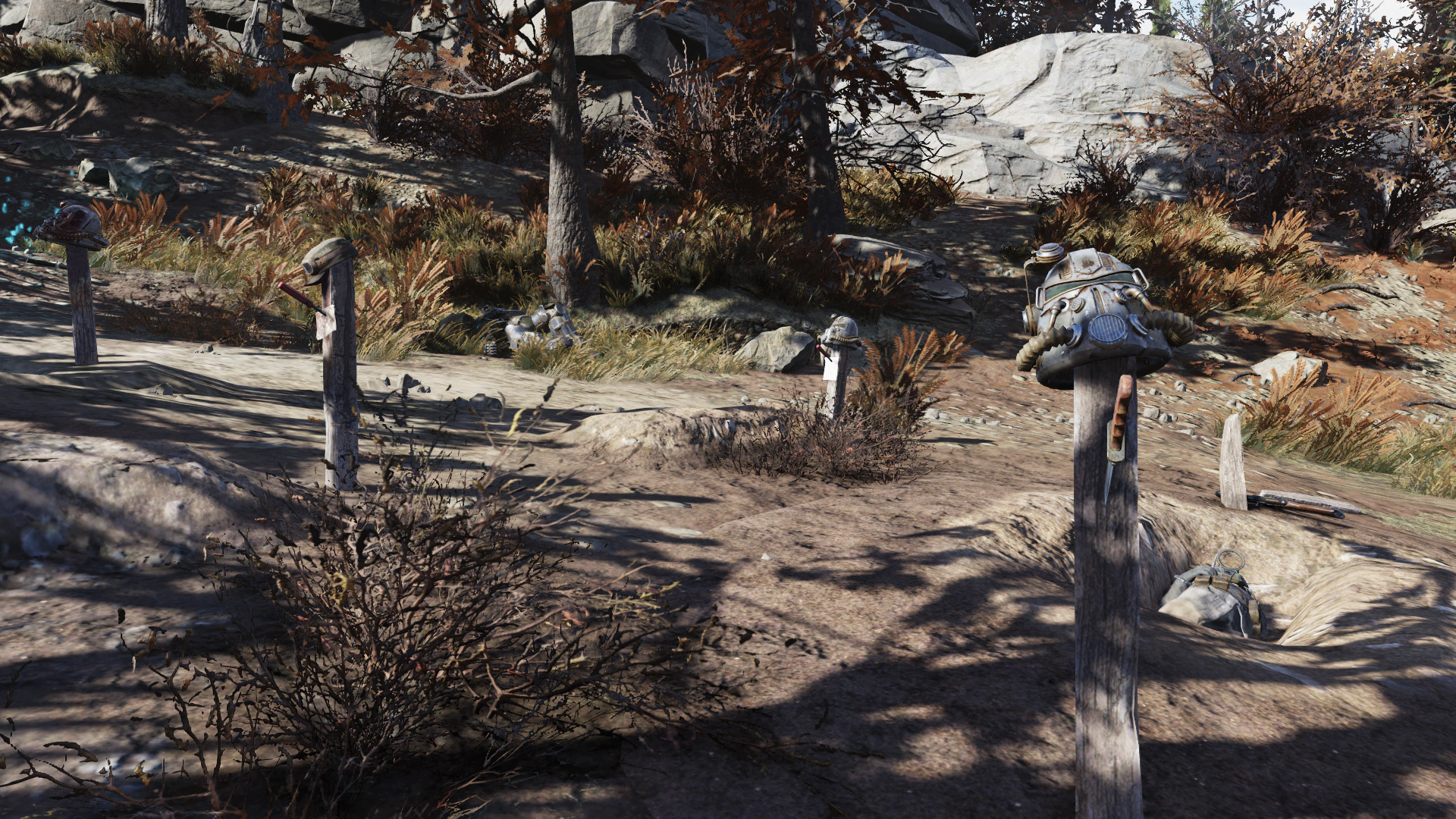
In the early 2080s, the Brotherhood would engage super mutants for the first time in its history. With the goal of saving the inhabitants of Appalachia from the occurring super mutant outbreak, the Appalachian chapter aligned themselves with the Responders. The Appalachian super mutant conflict involved several major events, the first phase culminated in the Battle of Huntersville in 2086. Huntersville was the source of the outbreak, so the Brotherhood and their ally completely destroyed the mutant force there and raised most of the town to the ground, this was done in attempt to prevent further spread. By extension, their efforts in this conflict contributed to preventing a massive catastrophe from unfolding. With the Brotherhood and its allies actions hindering the Enclave's plan to launch Appalachia's unused nuclear weapons against post-war China. In 2104, members of the Brotherhood First Expeditionary Force clashed with super mutants in the region once again. After defending Fort Atlas and offering assistance to other settlements, they gladly put a stop to Dr. Blackburn's inhumane FEV experiments that were plaguing the area.
To the Brotherhood of Steel, super mutants are also a reminder of mankind's misuse of technology, and believe adamantly that it is a wrong and dangerous path for science. Thus, they see it as their duty to destroy these abominations that threaten what remains of humanity. When it comes to conflict with the mutants, it is one of the everlasting situations in which the defense of civilians is the organizations top priority. When it comes to humanity's misuse of technology and experimentation, super mutants surprisingly seem to share similar views to the Brotherhood of Steel. Some will even speak about it, stating, "You humans made us, now suffer for your arrogance!", acknowledging that they are a result of humankind trying to "play god." This is one of the many threats that the Brotherhood works to prevent.

Part of the reason that the Brotherhood has clashed so frequently with super mutants on the East Coast, is that for the most part, mutants created by the Vault 87, Huntersville, or Institute strains are gratuitously violent and lack significant intelligence when compared to their Western counterparts created by the Master.Fallout 3 Official Game Guide Game of the Year Edition p. 42: "Super Mutants" "The Super Mutants that infest the urban ruin of Washington D.C. originated in Vault 87. Those unlucky enough to have reserved space in Vault 87 soon found themselves forcefully taken to a secure part of the vault, where they were locked in airtight chambers and exposed to a concentrated form of the F.E.V. The Overseer and his security force had no real idea what to expect; they were simply following the "plan." When the exposed vault dwellers started transforming into Super Mutants, nearly the entire vault population had been exposed. Those who hadn't yet metamorphosed knew what was coming, and, well...it didn't end well for humanity. The dwellers of Vault 87 were turned into Super Mutants in 2078, and have been a presence in the Capital Wasteland ever since. Most of those original Super Mutants have long since been killed. But whether it's because of the nature of the F.E.V. they were exposed to, or a simple underlying human instinct, the Super Mutants of the Capital Wasteland are obsessed with the preservation of their species. Super Mutants are asexual and incapable of procreation, so their only way of reproducing is to kidnap other humans, drag them back to the Vault 87 chambers, and infect them with F.E.V. And so they have done, for nearly 200 years. Super Mutant society is loosely hierarchical, with the weaker (most recently transformed) Super Mutants generally giving way to the stronger. The Super Mutant hierarchy, as defined by the Capital Wasteland contingent of the Brotherhood of Steel, is as follows: Grunt, Brute, Master, and Behemoth. Generally speaking, the Super Mutants of the Capital Wasteland get bigger, stronger, and dumber as they age. The Behemoths are so strong and savage that they’re the only thing feared by the other Super Mutants." (Fallout 3 Official Game Guide faction profiles) Unlike in the West, where some mutants maintain peaceful communities like Jacobstown, Broken Hills, or Black Mountain under Marcus, East Coast super mutants consistently attack innocent settlements, devouring or mutating their inhabitants. They have no interest in a peaceful coexistence, thus negotiations are not viewed as possible. The constant mass-murder of civilians by these mutants is considered a crime against humanity by the Brotherhood of Steel, and they see it as their duty to cleanse the Wasteland of such threats. On the East Coast, intelligent yet peaceful super mutants like Uncle Leo, Erickson, and Fawkes are seen as exceedingly rare. When they do come along, the Brotherhood is more than willing to work alongside them to achieve a common goal and will not exterminate them on sight.

This forces Eastern chapters of the Brotherhood, both ideologically and strategically, to take a more aggressive and firmer stance when it comes to dealing with mutants. Starting in 2254, the newly established Capital Wasteland detachment led by Elder Lyons launched a war of annihilation against regions super mutants to save the innocent inhabitants of the Capital Wasteland. And by 2277, both sides had taken casualties, but the mutants had been reduced mostly to the D.C. ruins. Less than a year later super mutants were almost completely fractured. After attempting to regroup, their leader, Shepherd was killed by a young Arthur Maxson in 2282.
Prior to 2277, in staunch contrast to the rest of the organization, it was rumored that super mutants were allowed to join the ranks of the Chicago chapter of the Brotherhood of Steel in the Midwest. Many had supposedly been assimilated into the organization following the destruction of remnants from the Master's Army.
Prior to 2276, before the lock-down, the Brotherhood in the Mojave Wasteland had maintained moderate to neutral relations with the neighboring super mutant settlement of Black Mountain. The mutants were even referred to by Brotherhood members as being very "reasonable" during this period. Thus the organization had specifically left the communications array and its technology alone out of respect for the community. However, this policy was established while Black Mountain was still under the control of the benevolent Marcus. By 2281, the bipolar and violent Tabitha had taken power. The mutants under her command became increasingly aggressive, attacking wastelanders. As a result, Elder McNamara declared that no more respect would be given and that their technology was now "fair game". Instead of violent retaliation, the Brotherhood can, with the help of the Courier, install a remote signal transmitter in one of Black Mountain's consoles. It would allow them to access the radar and other detection systems. This would all be done to gather intelligence in preparation for the Brotherhood's return to activity on the surface in the Mojave.
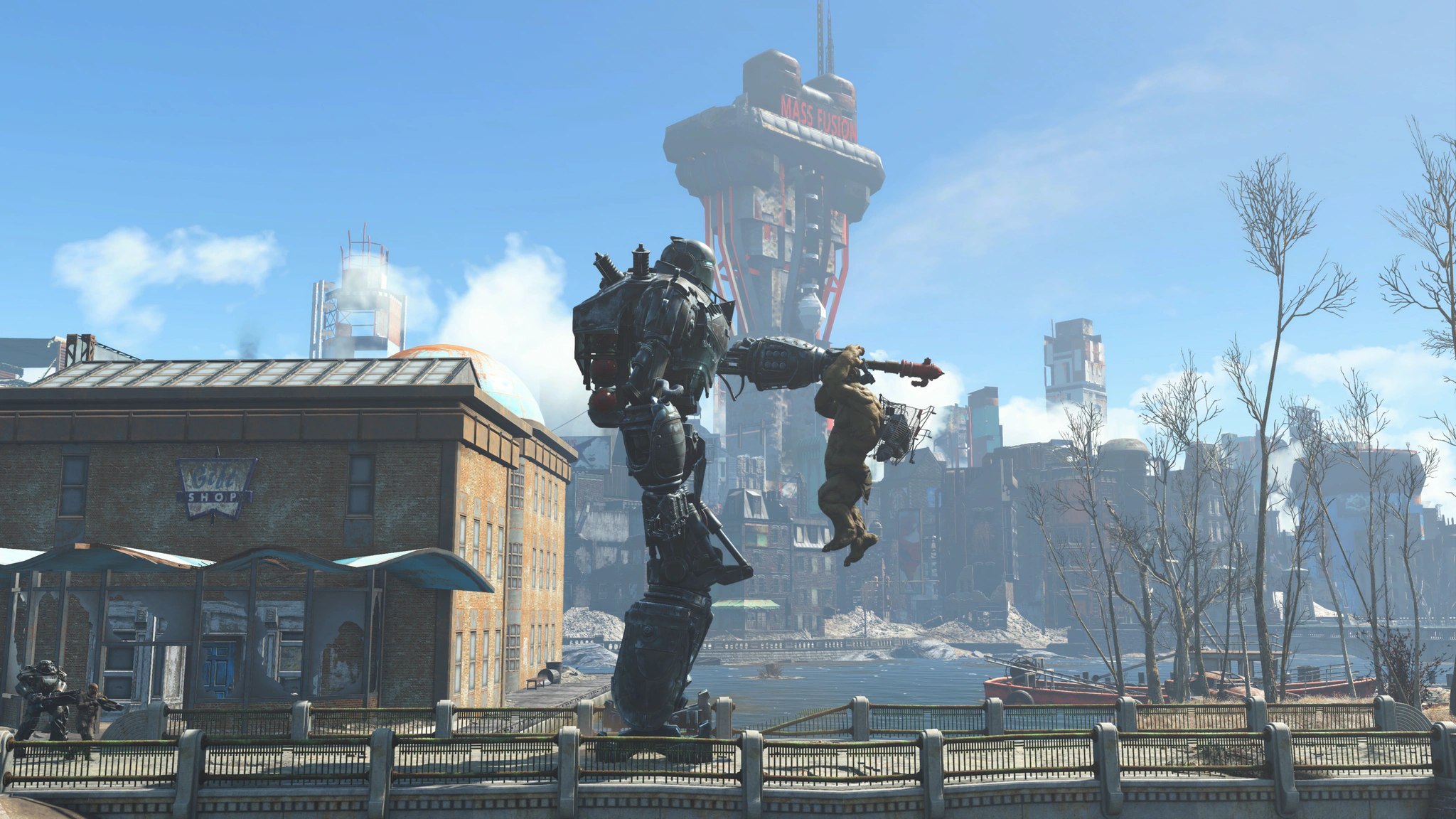
By 2287, the Brotherhood on East Coast had maintained its policy towards mutants, with standing orders to exterminate any post-War abominations, especially one's created by the Institute. In practice though, the Brotherhood usually does not shoot on sight unless targets are confirmed as hostile - even if they are a synth, ghoul or super mutant in a critical location. In 2280, it joined the ongoing Commonwealth super mutant conflict. Some groups in the Commonwealth were supportive of the Brotherhood's conflict against Institute created super mutants. Factions like the Commonwealth Minutemen had been involved in a violent struggle with the super mutants for decades. The Brotherhood's actions in the region towards super mutants were greeted with enthusiasm by some, such as Preston Garvey, who were more than happy to have the Brotherhood's assistance in subduing them, though they remained wary of Brotherhood dominance otherwise. In regards to ghouls, by 2287, the Brotherhood under Maxson seems to treat non-feral ghouls better than the Brotherhood under Lyons did, as dialogue from Paladin Danse suggests that regular ghouls are considered no different from human civilians overall even if discriminatory attitudes towards them are common.
By 2296, the Brotherhood's policy towards mutants on the West Coast seems to be mostly the same, among the Knights of San Fernando. They have retained their dislike of ghouls and super mutants, but still do not go out of their way to launch hostile operations against either group. It is however, widely assumed among new aspirants and initiates that Brotherhood has a policy of shooting ghouls on sight. This is displayed when Squire Thaddeus assumes that Maximus (posing as Knight Titus) had killed the Ghoul the second he had seen him, but to his surprise he is informed otherwise. Similarly when Brotherhood members are confronted by the Ghoul at the Griffith Observatory, they do not fire on him immediately and give him the chance to speak, only shooting at him after he attacks them first. However, the Brotherhood still seems to possesses strict rules about mutants having membership in the organization, this can even include their own members who are in early stages of mutation - though it is not known how stringently this is actually enforced.
Power armor
The use of power armor is closely associated with the Brotherhood, who actively track down pre-War suits, keep them repaired and operating, and even have a limited ability to manufacture their own. Depending on their availability, their use may be reserved for higher-ranking members, while others have to make do with pre-War combat armor or less. Most chapters make do with whatever pre-War models are in the area, and while some suits may be seen as the "default," there is no form of enforcement on which type of power armor a member may use, and they are often simply painted over in Brotherhood symbols.
Even though the Brotherhood has captured Enclave technology on different occasions, they have never been seen fielding Enclave suits of power armor.
T-45d - Most commonly used by: Lyons' Brotherhood, Brotherhood Outcasts and some members of the Mojave Chapter.
T-51b - Most commonly used by: Lost Hills Chapter, Appalachia Chapter, the Brotherhood First Expeditionary Force, and the Mojave Brotherhood
Ultracite power armor - Designed by the Lost Hills and Appalachian Chapters, no production models were ever fielded.
T-60 - Most commonly used by: Eastern Chapters, limited use by chapters on the West Coast.
X-01 - Not used by members, pieces are kept in the Brotherhood armory on the Prydwen.
Advanced Power Armor Mark II - Not used by members but researched, suits in possession of the Outcasts at Fort Independence.
Weapons
Military and energy technology is the Brotherhood's main priority, and their efforts over the centuries have equipped them with a powerful array of power armor, energy weapons, defense turrets, combat implants, computers, and heavy weapons (artillery, rocket launchers, Fat Man launchers, and flamethrowers). Their focus allowed them to amass sizable stockpiles of power armor (T-60, T-51 and T-45 variants) and energy weapons like Gatling lasers and Tesla cannons. The Brotherhood of Steel had a great understanding of many of these weapons, and thus, they were able to manufacture brand new items along with maintaining pre-war technology. As stated by Brotherhood Apprentice Melissa Watkins, "Knights of the West Coast Brotherhood of Steel are responsible for maintaining and manufacturing new weapons and power armor". This production capacity was somewhat limited, but the items produced possessed a high quality due to the most of the manufacturing process being done by hand. Further modifications to pre-War power armor models were also made. Due to Ultracite's effectiveness against the Scorched the Lost Hills chapter designed the Ultracite power armor. The schematics were transferred to the Appalachian chapter to help with their struggle.


The West Coast Brotherhood have always had access to plasma weapons and do equip their forces with them. But outside of Appalachia, their access to them on the East Coast was much more limited prior to the 2270s. During their clashes with the Enclave, the East Coast Brotherhood would come into possession of enough plasma weapons to begin equipping their troops with them. These weapons however, were noted by Brotherhood scribes to be powerful, but had limited options for modification. Some were also unimpressed by the performance of the weapons, which fired at a slower rate and used scarcer ammunition. The Brotherhood's focus on retrieving vital technology has also brought them into contact with Zetan technology. With the Outcasts faction of the Capital Wasteland chapter procuring highly advanced weaponry or energy cells that are alien in origin. This was achieved by sending recovery patrols to UFO crash sites and pre-war government installations. They also would attempt to further study these items at Fort Independence.
The Brotherhood of Steel has also had access to heavy equipment such as artillery as early as the 2080s. Brotherhood schematics and blueprints for heavy mortars can be found at Fort Defiance, the fort itself also included multiple artillery guns as a part of its defensive capabilities. By 2287, the Brotherhood continued to operate forms of heavy artillery. With the Commonwealth Brotherhood being in possession of equipment that is stationed somewhere in the downtown Boston area - Diamond City in the event of their victory, will ask that the Brotherhood keep them out of the city limits. In 2296, the Knights of San Fernando similarly also possesses some forms of artillery. Members can be seen transporting artillery shells via wheel barrow at a Brotherhood airbase in New California, a substantial stockpile of shells can also be seen next to a storage shed. During the 2090s into the 2100s, the Brotherhood also began operating moderate numbers of automated SAM missile defense systems to deal with airborne threats. During the battle of Adams Air Force Base in 2277, the Brotherhood gained access to perhaps the most devastating weapon it had possessed, the Bradley-Hercules orbital strike satellite.
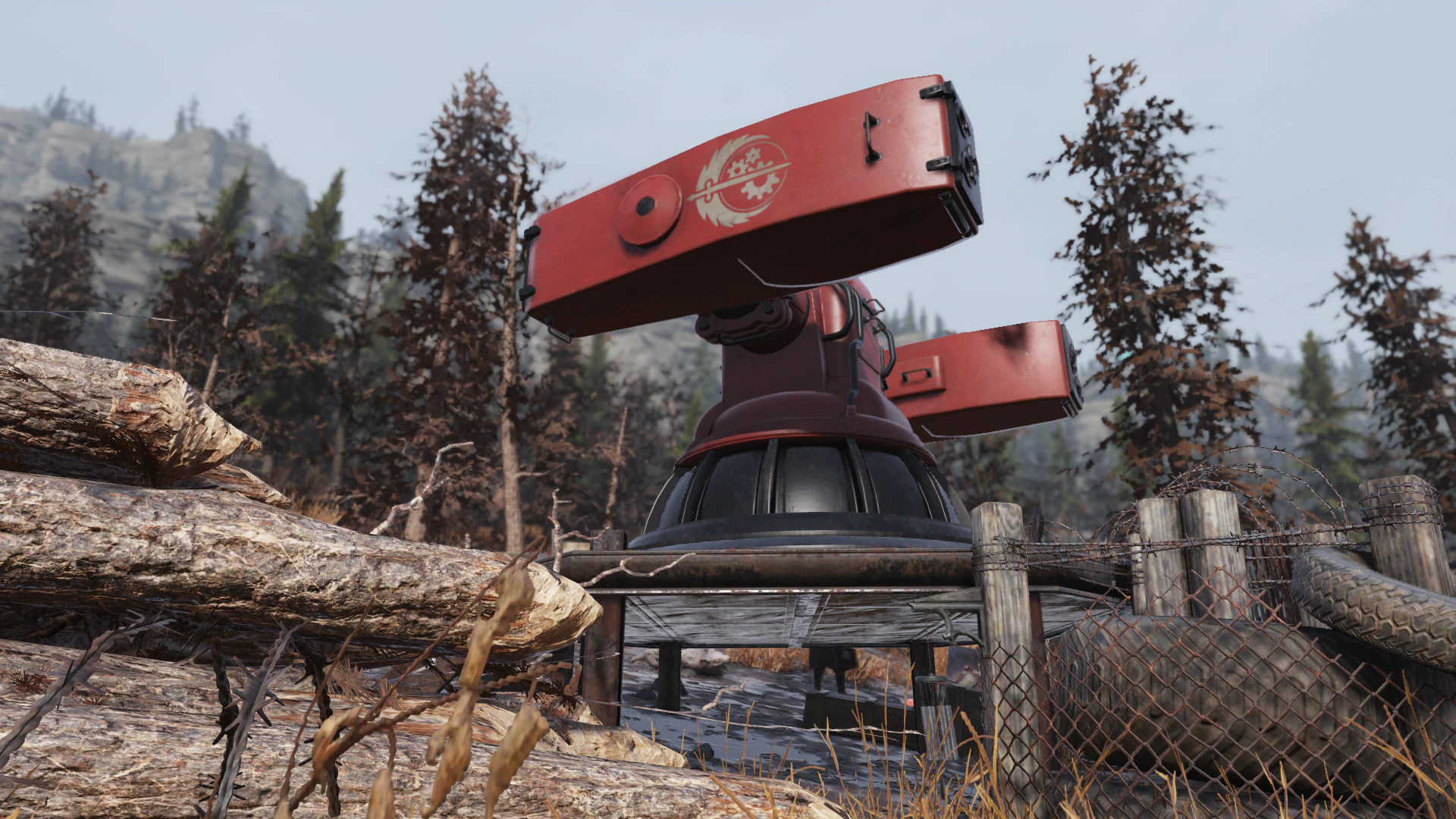
Apart from applied combat technologies, the Brotherhood also has access to advanced medical technologies, such as cybernetics and combat implants. Furthermore, they have access to sonic and sensor technologies, automated research programs and even the ability to jam teleportation technology. The Brotherhood also has virtual reality training systems, which allow personnel to maintain their combat prowess even under lockdown. Prior to 2296, the Knights of San Fernando designed an instrument that was able to track radiation signatures. Some chapters have also supplemented their combat force with recovered robots, like Robobrains, sentry bots, Mister Gutsies, Mister Handies, and even a prototype combat robot known as Liberty Prime. Other robots like Protectrons have been reprogrammed by the Brotherhood to act in many roles, such as combat, security, construction, maintenance, trading and even recruiting units.
Vehicles
In the 2080s, the Brotherhood unit stationed at Forward Station Delta had temporary access to heavy ground vehicles. This included pre-War APCs and even a tank that where reactivated by Initiate Tieggs. The Brotherhood did not possess many working ground vehicles, at least not by the early 2160s. By contrast, in 2105, the Brotherhood First Expeditionary Force was known to use pre-war APC's for transport such as in the case of Forward Station Tango in Appalachia. In 2277, during the Brotherhood's war against the Enclave in the Capital Wasteland, they occupied the Rockland car tunnel. The Brotherhood was able to refurbish some pre-war military trucks, and utilized them to transport supplies and provisions like Aqua Pura from Washington to the front-line in the Rockland. Some chapters of the Brotherhood had operated vertibirds as early as the 2080s. Former members of the United States Air Force had joined the newly formed Brotherhood, and with them they brought their equipment and experience.


The Brotherhood did have access to an entire fleet of airships in the mid-22nd century, used for exploration and recon. However, over the years, the fleet was either destroyed or dismantled for spare parts. By the 23rd century, none of the airships remained, with one vessel crashing in the Midwest on a long-range exploration mission. It was not until the acquisition of Pride One, a captured Enclave vertibird, at the end of the Brotherhood-Enclave War (East Coast), that the Brotherhood was known to have returned to the skies. Four years later, the Brotherhood finished constructing a new, more advanced, airship at Adams Air Force Base which they christened the Prydwen, which was launched in 2282. The Prydwen's construction was carried out alongside a brand-new vertibird fleet. This fleet would be made up of captured and restored Enclave vertibirds, as well as brand-new ones built from scratch. By 2287, the size of this new air force was so significant that the Brotherhood created an entirely new caste, known as lancers, in order to pilot them. The Brotherhood utilizes two main variants of the vertibird. The most commonly seen is the standard transport variant, with its large cargo bay and side mounted minigun. The Brotherhood does also possess fully-armed gunships for dedicated attack missions. However, the organization use's these sparingly for critical tasks. By 2296, the Brotherhood's manufacturing had turned the Prydwen into an airship class of her own, with the organization creating several sister vessels over a 9-year period. During 2297, a large fleet consisting of at least 4 Prydwen-class airships were present for hostilities in New California.
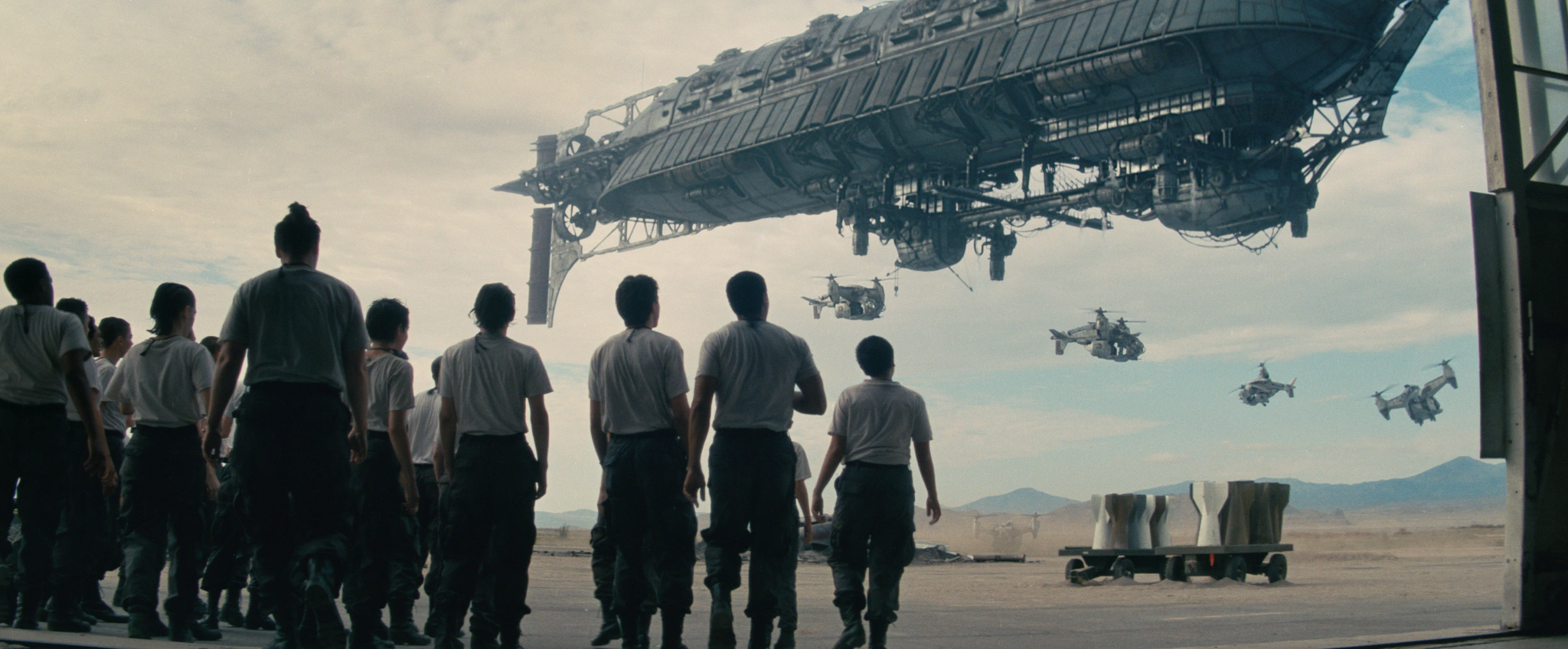
Research and manufacturing
While the overall devotion to research had fluctuated over the course of centuries, the Brotherhood was once at the forefront of research in the wasteland on the West Coast. In the 22nd century, for example, research topics ranged from redeveloping laser weapons, through physics, to astronomy and theories on time travel.
West Coast
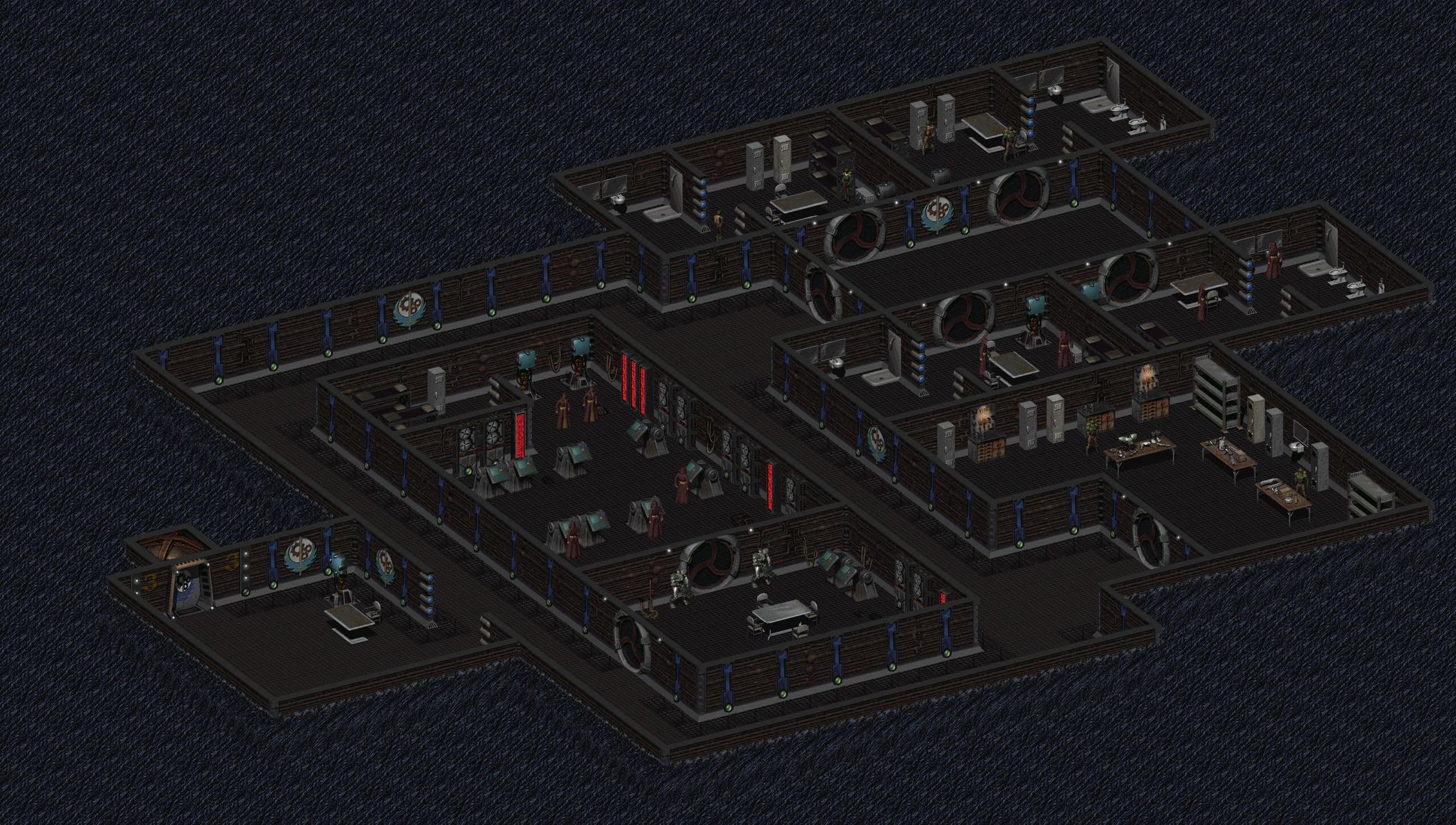
In terms of manufacturing capacity, the West Coast Brotherhood mostly relies on items hand-made by the knights. Although limited supplies pose a challenge, the real problems come from the actual manufacturing and prototyping process, especially when the reality does not seem to match the knights' expectations. Regardless, the Brotherhood was able to maintain a high enough output of technology (primarily weapons and ammunition) to support themselves and trade the surplus for water, food, and other necessary supplies. By 2161, the Brotherhood of Steel in Lost Hills was manufacturing and modifying brand new laser weapons. Production and development of these weapons was under the control of the chapter's then Head Scribe, Vree.
The Brotherhood of Steel had a great understanding of these technologies, this allowed them to not only collect them, but also gave them the ability to manufacture new items from scratch - along with maintaining and improving pre-war technology they have secured. As stated by Brotherhood Apprentice Melissa Watkins, "Knights of the West Coast Brotherhood of Steel are responsible for maintaining and manufacturing new weapons and power armor". Though this production capacity was somewhat limited, however, the hand manufacturing and the high degree of sophistication of their primary weapons meant that the Brotherhood's items were always of high quality. In a conflict, this also had limited strategic flexibility: In the 2260s - 2270s, it could not compete with the production of a populous nation-state like the New California Republic, with their reserves of workers, industrial output and the mass manufacturing of inexpensive weapons. With the Brotherhood instead relying on its existing stockpiles that were established over centuries of collecting, which would be supported by the production of new items. Prior to 2296, the Knights of San Fernando had designed and began manufacturing a handheld device that was able to track radiation signatures. This was used by their units to locate the detected organism.
East Coast

The Brotherhood's war with the scorched brought about several technological breakthroughs. Scribe Takano of the Lost Hills chapter on the West Coast was able to design several inventions to assist the Appalachian Brotherhood and their struggle. She would make schematics and blueprints of her designs to be transferred to Scribe Grant in West Virginia. He would make modifications to these plans as needed, and then they were manufactured to be used in the field. Sonic scanning module were produced and used to track the scorchbeasts, while Sonic emitters were produced to lure them into kill boxes. The Brotherhood would use both of these to great efficiency, however perhaps the single most advanced item Scribe Takano sent were schematics for the modified T-51 Ultracite power armor, but due to the declining situation it was never produced. Following their arrival to the region in 2104, the Brotherhood First Expeditionary Force had established its headquarters at Fort Atlas. They located a Ultracite battery cell in the former observatory's basement. This technology was reverse engineered by Scribe Odessa Valdez in hopes of boosting a communications transmitter, so that they can re-establish contact with High Elder Maxson and the rest of the Brotherhood on the West Coast.

By the mid 2250s, production in the Capital Wasteland was also initially limited by the lack of certain supplies and crucial components. They were involved in contributing to Project Purity, but were forced to withdraw from the effort in 2258. Despite shortages of some rarer materials, by the 2270s, the Capital Wasteland chapter did have access to a large stockpile of technology, and due to that, there was a number of items that the Brotherhood could continue to manufacturer brand new from scratch. Additionally, certain research and production projects were able to bear fruit. One was the successful activation of Liberty Prime. Several new developments on key systems, including the power, had to be undertaken. As even the pre-war US government was unable to utilize the technology in the Sino-American War. Eventually in 2277, they were able to complete Liberty Prime after a 20-year period. They were also shown to be capable of rebuilding it from a destroyed state to a completely operational one once again. Another was the Tesla cannon, which had its design modified by the Brotherhood for use against the Enclave. Brotherhood's scribes under the Order of the Sword worked to build their own Tesla cannons to more effectively counter the Enclave's vertibird fleet. To do so, they needed to modify the technology with a PPE Tesla coil they acquired from Olney Powerworks.
During the year 2277, as the Brotherhood of Steel clashed with the Enclave during the War for the Capital Wasteland, the Enclave began to deploy mind controlled Deathclaws. To counteract this, Brotherhood Scribe Vallincourt created a device known as the Deathclaw control scrambler. This piece of technology is capable of constantly broadcasting its override signal to the Enclave's domestication units. Meaning that the device passively takes control of the deathclaw and causes it to turn on it's Enclave handlers. After the Enclave emerged, the Brotherhood would also quickly realize the disparity between their standard-issue equipment, such as the T-45d power armor and AER9 laser rifles, when compared with the Enclave's advanced power armor models and plasma weapons. So Scribe Bowditch, began designing and producing brand new upgrades and modifications for Brotherhood power armor - to increase its members level of protection when going up against the Enclave's energy weapons. Bowditch was confident these upgrades would be able to handle whatever the Enclave was able to throw at them. And it would indeed have an effect, with following combat trials in the field returning positive results. Scribe Peabody would similarly make significant upgrades to the Brotherhood-issue energy weapons. This included removing the compensators on laser weapons to increase their lethality and effectiveness against Enclave armor. After the Brotherhood began to capture large amounts of Enclave weapons and technology, Scribe Peabody would work towards reverse engineering said equipment, so that it could be reproduced by the Brotherhood.

Following 2278, production on the East Coast became much more streamlined and efficient. After the defeat of the Enclave at Raven Rock and Adams Air Force Base during the Brotherhood-Enclave War, the Brotherhood gained access to their manufacturing facilities and remaining resources. The facilities at Adams Air Force base in particular were known to manufacture power armor, robots and apply modifications to vertibirds. There, they were also able to construct a massive airship known as the Prydwen in a period of just four years. Furthermore, over a period of only nine years, from 2287 to 2296, the Brotherhood was able to construct several Prydwen-class airships. This marked a significant uptick in production capabilities on large-scale projects. And while their ability to manufacture new suits of power armor on the East Coast has not been officially confirmed, dialogue from Paladin Danse at the Corvega factory depicts that they are capable of doing so. They do however, modify existing models. Sometime prior to 2296, the Brotherhood on the East Coast would make modifications to their standard models of T-60 series power armor. Jet packs were once said by Lancer Captain Kells to be moderately rare, even to the Brotherhood. Instead of the large and bulky jet packs used by the pre-war United States military, they added smaller rocket systems which retract into the interior of each wrist. Despite their compact size, they are capable of propelling the heavy suit for long distances with considerable speeds. As of 2296, this does seem to be standard issue on Brotherhood models of the T-60 among the Knights of San Fernando. The Brotherhood of Steel were also able to develop and manufacture a electromagnetic field emitter that was able to block incoming radio waves. This disabled the Institute's ability to teleport into the Boston Airport area. Smaller innovations were made with vertibird signal grenades, and experiments with enhanced radiation-blocking medicine.
Redistribution of technology
The first known example of the Brotherhood redistributing technology occurred during the Brotherhood First Expeditionary Force's journey to Appalachia. After acquiring a stockpile of Hellstorm missile launchers from a military facility in the Midwest, the Brotherhood encountered a town under the threat of an imminent attack from raiders. While Paladin Rahmani elected to stay and assist the town in its fight, Knight Shin proposed distributing the launchers to the townsfolk to give them a fighting chance. Even though doing so would go against the Brotherhood's standard protocol, Rahmani had nonetheless chosen to sanction Shin's plan, despite having personal reservations about it. The Brotherhood's plan failed, even though they joined the battle, the raiders managed to slaughter the town's residents and claim the launchers for themselves. This would later force the Brotherhood to requisition these weapons when found.

Prior to the 2150s, the Brotherhood of Steel in New California had established trade relations with the merchants of the Hub. In exchange for food and other items, the Brotherhood distributed newly constructed energy weapons that had been manufactured by Head Scribe Vree and the other scribes of Lost Hills. This offered the settlement and the merchants a better level of protection from raiders and other threats. Traders from the Crimson Caravan and Far Go Traders would also presumably spread these weapons further by selling them on their caravans. By this time period, the Brotherhood had become the largest distributor of weapons in the region. High Elder John Maxson even mentions that the Brotherhood is responsible for creating or distributing most of the weapons seen in the civilized Wasteland. Despite this, the Brotherhood was still unwilling to trade its weapons with groups, such as the Water Merchants and raiders, that would misuse the technology to harm others.

Following the events of the Unity crisis in 2161, the Brotherhood of Steel helped various human outposts drive back the remnants of the Master's army and had become a major research and development hub by beginning to slowly reintroduce advanced technology into wasteland. However, the Brotherhood would generally keep most of its more advanced/dangerous technology and knowledge to itself, while sharing small portions of it with those they believed were wise enough to use it responsibly. One such example included the trade and installation of an advanced main frame computer to the dwellers of Vault 13.
In 2189, the Hub joined the New California Republic. This saw limited cooperation between the Brotherhood of Steel and the NCR who now controlled the settlement. This included standard trade, but also the exchange of some more advanced technologies that were both beneficial and non-threatening.
Prior to 2277, as the conflict with the mutants continued resources where stretched thinly. This hindered the Brotherhood's capability to conduct recovery operations for fallen soldiers, as manpower was needed for the front line. This resulted in the chapter's Head Librarian, Scribe Jameson, contracting the recovery of Brotherhood holotags out to loyal wastelanders and scavengers. This allowed Jameson to properly maintain the Brotherhood Codex. For completion of this task, the organization was willing to offer wastelanders financial compensation, but also access to Brotherhood-produced technologies. The Capital Wasteland chapter were in possession of a great deal of technology, and due to that, there was a number of items that the Brotherhood could continue to produce from scratch. On occasion, trusted wastelanders would also receive more specialized or advanced technology.
Similarly, in 2277, Protector McGraw at the Outcast outpost was willing to share a portion of the technological stockpiles locked in the facility's armory with anyone in possession of a Pip-Boy, in exchange for them unlocking it by entering and completing the Anchorage Reclamation simulation. While this decision angered Defender Sibley and some of the other Outcasts from the garrison, who refused to share technology that they fought so hard to gain with an outsider, But McGraw had remained adamant that their end of the bargain be upheld. The Outcasts stationed at Fort Independence also distributed some lesser technologies to wastelanders and scavengers in return for items that were more desired by the organization.

The East Coast Brotherhood's victory over the Enclave during the struggle for the Capital Wasteland and the battle for Project Purity allowed them to establish control over the newly-activated purifier. The benefits gained from the seizure of this technology were not hoarded, as Lyons' Brotherhood began to distribute the water to the people of the Capital Wasteland and the East Coast free of charge. The large amount of distribution that needed to be undertaken resulted in the Brotherhood of Steel requesting assistance from Rivet City. For their participation in protecting the caravans, they were compensated with caps along with advanced technologies that the Brotherhood had acquired after defeating the Enclave. In 2287, more than a decade after the water purifier's activation, and seemingly the Brotherhood of Steel under Arthur Maxson continues to provide water to the people of the Wasteland, as Deacon will mention that the people of the Capital Wasteland have clean drinking water.
By 2287, it has become a standard practice for the East Coast Brotherhood in the Commonwealth to offer compensation to outsiders who assisted the Brotherhood in their operations, usually the retrieval of vital technologies. The Brotherhood will usually compensate individuals with technology, such as modified laser rifles.
Sources
Adapted from the original article, under CC BY-SA 3.0.