Group
California Crest Studios
California Crest Studios was a pre-War motion picture company located in the…
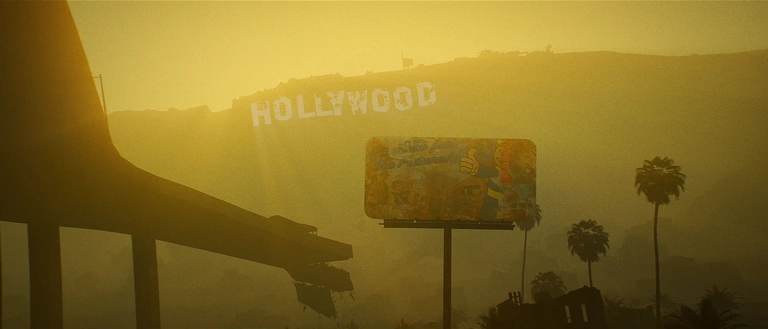
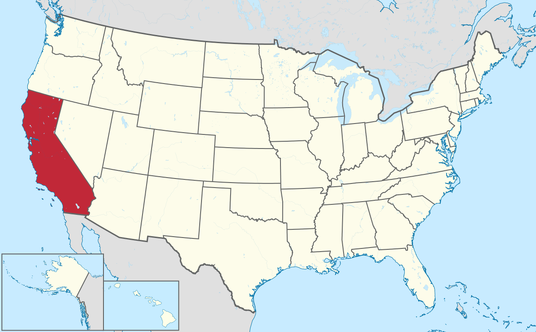
California Crest Studios was a pre-War motion picture company located in the Hollywood district of Los Angeles, California. Its main studio lot appears as a location in the Fallout TV series.
Background
California Crest Studios was founded before the Great War and operated primarily in the Hollywood district of Los Angeles. Its main studio is located not far from a section of the Hollywood Walk of Fame. The company was well known as the makers of the highly successful Western movie The Man from Deadhorse starring Cooper Howard, and had already begun working on a sequel to the film around January 2077. As of that month, they had also signed a deal with the Nuka-Cola Corporation for a seventeen-film series featuring the Nuka-Cola mascots Bottle and Cappy. The studio worked with film services businesses such as catering company Catering to the Stars! and transportation and equipmental rental firm Studio Services, and also operated a bus tour service, California Crest Studio Tours, for tourists visiting its physical location. The company was also known to utilize Mister Handy robotic units in their operations.
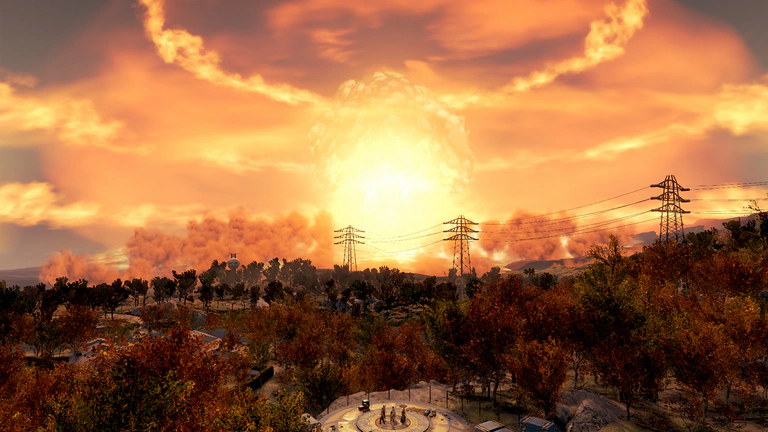
Like much of the greater Los Angeles area, the bombs dropping reduced the studio building to rubble, with the desert winds and rolling sands of the wasteland gradually swallowing it up over the years.
The Head
In the first of two flashbacks to Cooper's life in the pre-War era, he is filming the final scene of his movie The Man from Deadhorse at the studio but cuts near the end and expresses his discomfort to the film's director Emil Dale about how his sheriff character is scripted to shoot and kill the outlaw played by his co-star Jorge rather than arresting him alive as always happens in his Western films. When Emil fails to convince him of the creative choices behind the decision, Cooper wants to involve one of the writers Cadillac Bob but is informed about the man's firing due to supposedly holding communist beliefs. Cooper's conversation with Emil is cut short when he sees his wife Barb nearby. The loving partners share a touching moment when she tricks him into eating lavender taffy which he hates, before Barb hands him a package containing a Vault jumpsuit to wear for his promotional shoot in collaboration with Barb's employer, the Vault-Tec Corporation. Cooper reluctantly agrees, then opts to race their daughter Janey to his trailer.
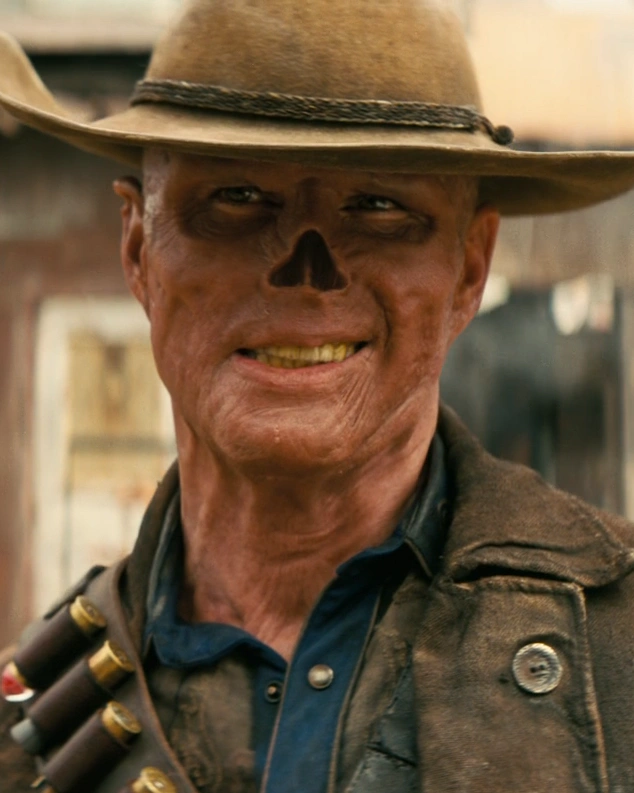
In the present of 2296, the Ghoul and a captive Lucy MacLean march onto the site of the ruined California Crest Studios lot during the trek from Hollywood Boulevard to a Super Duper Mart near Santa Monica Boulevard. The bounty hunter stops at one point to survey the ruins, remembering the times long ago when he worked there as an actor. Lucy tries to beg for some nourishing water, but the Ghoul cruelly dumps the rest of his canteen onto the ground and then mockingly suggests she try drinking from a nearby irradiated pond. As they near the lot of the old studios, Lucy sees a pre-War billboard with Vault Boy on it right before the Ghoul shoots a hole through the mascot's face in quiet anger and they carry on.
In the second flashback, Cooper emerges from his trailer on the CCS lot dressed up in his jumpsuit, which Barb reveals she personally designed to incorporate the signature blue-and-gold color scheme of his sheriff character. Cooper then walks with his family through the backlot to the site of the promo shoot. There, Barb introduces him to Vault-Tec reps George Yaffe and Sarah Clements. Though they initially share banter, the reps fall awkwardly silent after Cooper asks if the jumpsuits are really radiation-proof, then hastily answer positively. As the shoot is getting ready to start, Cooper makes an off-hand suggestion to add a thumbs-up gesture, an idea the Vault-Tec employees applaud.
Layout
What is shown of the company's assets in the TV series indicates that California Crest Studios consisted of a large number of hangars used for filming, with roads in between where props, actors' trailers, and other services could be located for shooting. The studios also had a large, two-story blue house with a large bronze statue of a woman holding a wireframe globe outside it.
By 2296 long after the nuclear apocalypse, there is almost no trace left of the area except for the ruins of the house and the destroyed statue, along with some other smaller ruined houses some distance away from the area.
Sources
Adapted from the original article, under CC BY-SA 3.0.