Group
Vault-Tec Corporation
Pre-War defense corporation
The Vault-Tec Corporation, also known as Vault-Tec Industries, Vault-Tec Incorporated, or simply as Vault-Tec, was a pre-War defense corporation which won the federal government contracts to design and implement a network of bunkers known as Vaults with the stated intent of preserving a small fraction of the U.S. population. By the time of the Great War, it was the largest company in America, valued at an estimated trillion dollars, with stakes in countless industries and businesses. Its wealth gave it immense sway against the United States government, rendered bankrupt by the decade-long Sino-American War. Cooper Howard: "Sorry you couldn't make it to the party the other night, Charlie. Guess you had one of your meetings, huh? One of your Communist meetings? Come on, man. We watched people die together up north fighting against all that horseshit." Charles Whiteknife: "Yeah, and for what?" Cooper Howard: "What do you mean, for what? For the American dream. We're actors. We make movies, Charlie." Charles Whiteknife: "Yeah, the American dream has me getting shot in the ass by you all day." Cooper Howard: "You got five acres in Tarzana. I think you're doing all right." Charles Whiteknife: "It don't matter, Coop. Vault-Tec's the fucking devil, man." Cooper Howard: "My wife works there. You really think Barb's the devil?" Charles Whiteknife: "No, no, okay, I... I like Barb, okay? Do you know what "fiduciary responsibility" means?" Cooper Howard: "Fiduciary responsibility?" Charles Whiteknife: "Yeah." Cooper Howard: "No, I have no fucking idea. I play a cowboy for a living." Charles Whiteknife: "Okay. So, the U.S. government has outsourced the survival of the human race to Vault-Tec. Vault-Tec is a private corporation that has a fiduciary responsibility to make money for its investors. And how does it make money? By selling vaults." Cooper Howard: "That's called capitalism, Charlie." Charles Whiteknife: "But they can't sell vaults if these peace negotiations go through. So Vault-Tec has a fiduciary responsibility to make sure that it don't work out." Cooper Howard: "Yeah. How they gonna do that?" Charles Whiteknife: "I don't know. You remember that movie we did with Johnny Morton... you were the sheriff and I was some generic Indian?" Cooper Howard: "Come on, man, don't say that. Tallhand Mudlake could talk to horses. You played him with grace and with dignity. It was a great role for you." Charles Whiteknife: "Morton played a rancher who owned half of Missouri. And what happens when the cattle ranchers have more power than the sheriff?" Cooper Howard: "The whole town burns down." Charles Whiteknife: "The whole town burns down. Right. Vault-Tec is a trillion dollar company that owns half of everything. And after ten years of war, the U.S. government is broker than a joke. The cattle ranchers are in charge, Coop." Cooper Howard: "Oh, come on." Charles Whiteknife: "Unless the people do something about it." Cooper Howard: "I guess everything's a conspiracy, right? Come on, man, you sound like you're in a cult." Charles Whiteknife: "And you're sitting here defending a system that's ready to set the world on fire, Cooper. Maybe you're the one in the cult. Look. You should come to a meeting. You should learn the truth about where your wife works. For her sake." ("The Trap")
These political and economic factors caused the company to deem the U.S.A. a failed nation and shift priorities. The lack of confidence in the United States was so great that one executive, Barb Howard, entertained the idea of Vault-Tec instigating the Great War themselves, to wipe the slate clean and usher in a new world free of war. Project Safehouse was redesigned to ensure the survival of the company at all costs, rather than the survival of America, with the vast majority of the Vaults being used to test the development of a perfect society under varying experimental conditions. In the spirit of competition, other corporate leaders were invited to contribute ideas and take control of their own Vaults for post-apocalyptic monopolies. The Enclave was also deeply affiliated with Vault-Tec and its Vault program, and saw the Vault experiments as a key part of the "great plan" for their own survival.
The company itself became defunct due to the nuclear war, with most Vaults failing to safeguard their populations, and despised by surface dwellers as retreats for the rich. However, select junior employees of Vault-Tec survived well into the late 23rd century through cryostasis in Vault 31 as part of Bud Askins' personal experiment to conquer the future in Vault-Tec's name; they are currently the only known active remnant of Vault-Tec.
The company is sometimes referred to as Vault-Tek VaulTek, and Vaul Tek, though it has consistently been spelled as Vault-Tec since Fallout 3. It is also occasionally written as Vault-Tech, although in both instances of this it is likely to be a typo.
Origins
America's preeminent nuclear defense corporation existed as early as 2031, when it acquired and re-branded Morgantown's local college as Vault-Tec University, with some of their top executives and scientists either teaching or graduating from there. This investment in cadre would pay off in the early 2050s: When the Euro-Middle Eastern War, the New Plague, and the collapse of the United Nations resulted in a nationwide scare, the government set Project Safehouse in motion in 2054. This massive national defense endeavor was intended to create shelters that would protect the population in the event of nuclear wars, famines, pandemics, floodings or asteroid strikes. Vault-Tec proclaimed preparedness for any eventuality. Following the success of its demonstration Vault, built near their headquarters in Los Angeles at the time, the company won the bid for the construction of the shelters. The tremendous success of the company allowed it to build a new headquarters in Washington, D.C.
The impoverished government financed the project with junk bonds and even then, only commissioned 122 of these shelters nationwide, allowing less than 0.1% of the population to save their life in the event of the holocaust. Vault 13's budget was $400 billion dollars, and by the end of its construction the total costs reached $645 billion, well over 150% of the initial figure. The staggering cost was further increased by the circumstances: As crucial elements of national defense, much of the project was classified and protected under the New Amended Espionage Act, and the corporation received broad privileges in enforcing security, up to and including authorization for its private security to use lethal force if Vaults are activated. Lack of oversight led to consistent mismanagement, corruption, and embezzlement defining Project Safehouse before the War, even before taking the atrocious Vault experiments into account. Yet for all these problems, Vault-Tec was able to create a number of cutting edge technologies and develop shelters that legitimately protected the inhabitants.
Some of these miracles manifested as breakthroughs in construction technology, allowing for these gargantuan bunkers to be constructed at a rapid pace. Most were completed by 2063, although the construction of several Vaults was delayed, particularly Vault 13 (which only started construction in August 2063) and the network surrounding Washington, D.C. Some Vault construction was delayed due to work stoppage. Despite these problems, Vault-Tec began advertising Vaults in newly annexed Canada, though these were in the early stages of completion. Furthermore, partnerships with other corporations followed, such as RobCo Industries, which provided personal information processors for Vault dwellers. Their joint venture was considered the most successful of its kind, licensed by Bud Askins, senior junior vice president and manager for "HR R&D" for Vault-Tec. Integration with admission systems ensured they were a permanent element of Vault infrastructure. Over the course of the Sino-American War, Vault-Tec became the largest company in the United States, and to maintain their power and influence, a group of high-ranking executives took steps to ensure the Resource Wars would continue, such as by acquiring and burying cold fusion research led by Lee Moldaver.
The Societal Preservation Program
Headed by Stanislaus Braun, the Societal Preservation Program was Vault-Tec's scientific program for its Vaults, with the goal of studying the survival of humanity under extreme experimental conditions (with some eugenicist elements of finding the humans most fit to survive) and developing new science and technology to help improve post-War society (under Vault-Tec's guidance). Aside from 17 control Vaults, all of the other Vaults were designed to have some sort of experiment to be carried out on its residents. Some experiments were passive or relatively benign—like Vault 101, which was simply intended never to open. Some of the most benign experiments were even advertised to the public, like those of Vault 4 (advertised on television) Cooper Howard: "Oh. Hello there. Yep, it's me, Cooper Howard, star of stage and screen. But I'm not here today to talk to you about my latest picture. No, today I'm here to show you a vast and wonderful place, not made by God Almighty but by the working man. A veritable Camelot of the nuclear age. Now, how 'bout we turn on some lights. There, that's better. Now, I'm speaking to you from deep inside the fully-livable Model 96JQ1164. And what a beaut she is. And what a song she sings. Now, that right there is Vault 4's three-foot-thick lead casing. Strong enough to keep out the rads and the Reds. Each one of these underground burghs comes with all the modern amenities you've come to expect from our rip-roarin' republic. Now, this corridor here is Sycamore Street, where you'll wave howdy to any one of your 200 neighbors on your way home for an enchanted evening with your loved ones. Mm. Meet the Hawthornes. Now, this isn't just your average all-American family. No, Lloyd and Cassandra here are both scientists, specializing in the effects of radiation on human DNA." Lloyd Hawthorne: "That's right. And we'll be living and working right here in Vault 4, leading a community governed entirely by scientists." Cooper Howard: "Wait a second, did you say "living down here"? Well, there hasn't been a nuclear incident, has there?" Lloyd Hawthorne: "Uh, no, not yet. But, uh, our family and a group of 80 volunteers will be conducting a five-year trial of Vault 4. To demonstrate to the world that, no matter what comes our way, America will be ready." Cooper Howard: "Five years. Well, I may play a hero in the movies, but... you all are heroes in real life. And now you can be a hero, too. By purchasing a residence in a Vault-Tec vault today. Because if the worst should happen tomorrow, the world is gonna need Americans just like you to build a better day after." ("The Trap") and Vault 22 (promoted on a sign outside the Vault). Some were well-intentioned but had unethical or terrible consequences for their residents, like Vault 81's research for a universal cure. The worst were downright sadistic, like Vault 106, where psychoactive drugs were pumped into the air filtration system, to lethal effect. Finally, some experiments were simply bizarre, such as Vault 43, which held 30 human residents and one panther, or Vault 77, with a population of one man and a crate of puppets.
To the program's backers, loss of life was considered meaningless in the face of data that could be acquired. Ethical concerns were dismissed by the researchers as counter-productive and close-minded. Thus far, all known experiments in the Vaults were either designed and administered directly by Stanislaus Braun and his team, or through the proposals of independent Vault-Tec executives like Hugo Stolz and Bud Askins.
Public, private, and secret backers
While Project Safehouse itself was funded under contract by the federal government, the government was not the Vault program's only backer. In fact, only one known Vault was designed specifically with the government in mind: Vault 79, built to contain the gold reserves of the United States Bullion Depository. With Vault-Tec itself coming to view the U.S. and its government as a liability, it turned to other sources to collaborate on the less savory parts of the Vault program.
As the Resource Wars dragged on and the risk of total nuclear annihilation increased, members of the Enclave invested into various contingency measures to survive the coming war. Funded by corporate and government money, these installations would enable the Enclave to continue waging war even after the United States ceased to exist. The Enclave was involved in Project Safehouse and had access to all the data from the Societal Preservation Program, which they intended to use to facilitate their own survival. While their level of involvement in the Vault design process is unclear, the Enclave did have some level of monitoring and communications access to some if not all Vaults (including a facility called the "Enclave Vault-Research Control"), which they would come to use to exploit the Vaults' populations for their post-War efforts. The Enclave's ultimate plans for this program were grander than restoring or conquering a world devastated by nuclear war: they wanted to use data harvested from the experiment to create a multi-generational starship to resettle on another world. Dick Richardson">Dick Richardson: "{218}{prs33}{Well, no it didn't. But at least it knocked the damn Red menace back into the stone age.}" The Chosen One: "{219}{}{And us with it.}" Dick Richardson: "{220}{prs34}{Well, no. No... not quite. You see, we had planned ahead. We were ready. }" The Chosen One: "{221}{}{What do you mean?}" Dick Richardson: "{222}{prs35}{We had a number of sanctuaries that would enable the glorious American civilization to endure. These facilities - the Vaults - were part of the great plan.}" The Chosen One: "{223}{}{Those damn Vaults didn't work the way they were supposed to. A lot of people in them died.}" Dick Richardson: "{224}{prs36}{Actually, they worked almost exactly the way they were supposed to. You might call it a social experiment on a grand scale. }" The Chosen One: "{225}{}{An experiment?}" Dick Richardson: "{226}{prs36a}{The Vaults were set up to test humanity. Some had not enough food synthesizers, others had only men in them, yet others were designed to open after only 6 months. They each had a unique set of circumstances designed to test the occupants.}" The Chosen One: "{227}{}{What about Vault 13? What was it's purpose?}" Dick Richardson: "{228}{prs37}{Ahh. Vault 13 was a special case. It was supposed to remain closed until the subjects were needed. Vault 13 was, in scientific parlance, a control group.}" The Chosen One: "{229}{}{But they would all have died if my ancestor didn't get them a replacement water chip. That doesn't seem to fit in with your plan.}" Dick Richardson: "{230}{prs38}{An unfortunate, and unforeseen, accident. However, as it turns out, a rather fortuitous one.}" The Chosen One: "{231}{}{What do you mean?}" Dick Richardson: "{232}{prs39}{As it turns out we needed test subjects from untainted, pre-war, human stock - your ancestors in Vault 13 - and some freshly mutated stock - the villagers from Arroyo.}" The Chosen One: "{233}{}{Why?}" Dick Richardson: "{234}{prs39a}{For the Project. It's almost ready. Humanity's salvation is almost at hand and the United States of America will be the progenitor of that rebirth.}" The Chosen One: "{235}{}{Rebirth? What do you mean?}" (Qhprzrch.msg)
Although Vault-Tec and the Enclave both saw the Vault experiments as a way to study potential human survival, Vault-Tec's own priorities differed from those of its shadow sponsor. For one, Vault-Tec executives such as Barb Howard and Bud Askins saw the imminent nuclear war as an opportunity to wipe the slate clean and redefine mankind in their own vision, with the Vaults used to experimentally determine the perfect conditions for humanity, in what Howard termed a "spirit of competition." The idea was pitched to figures from the largest, potentially like-minded corporations in the U.S., including Big MT, REPCONN Aerospace, RobCo, and West Tek, who were offered the opportunity to claim a stake in several Vaults and create their own social experiments for their own chance at a post-apocalyptic monopoly. To ensure that the experiments would happen, Howard floated the idea of these megacorporations instigating the nuclear war deliberately, allowing an intentionally designed society to arise from the ashes, configured to eliminate friction, conflict, and ultimately war. Bud himself would carry out a personal contingency plan to ensure Vault-Tec's post-War dominance via the Three Vaults in Los Angeles. However, it is unclear if these corporate leaders really did follow through on their plans; at least one attendee, Robert House, had no plan to take drastic action and did not believe the others at the meeting would either. He instead believed there was an unknown third party that was manipulating Vault-Tec and pulling their strings. While at the time he could not identify them, he eventually came to realize that the third party was the Enclave.
Regardless of Barb Howard's proposal, the corporation acted elsewhere to ensure its own hegemony after the Great War. Vault-Tec facilities such as Vault 63 and Vault 88 were designed with the intentions of creating technologies that would be used by all Vault-Tec Vaults to help establish better post-War society under their guidance, and Vault programs not designed directly by Braun or his team were approved only if their research could benefit Vault-Tec's position. Special vaults were designed for Vault-Tec staff and management, from which they would oversee the rest of the vaults. Secret orders were issued to overseers to directly oppose the government, if not the Enclave: the overseer of Vault 76 was instructed to seize control of the Appalachian Automated Launch System and wrest nuclear weapons from the military. Although this varied, some Vaults even rejected the Enclave's claimed authority altogether in favor of their Vault-Tec directives.
Imminent nuclear war
Naturally, these plans were not publicized, and Vault-Tec was voted a company with the brightest future in the United States in January 2077, Its stock value quickly soared following the Battle of Anchorage, due to the anxiety surrounding a potential nuclear confrontation. Vault-Tec capitalized on this, offering single Vault spaces for sale. Some Americans realized the gravity of the situation: As a private company to whom the government outsourced the entirety of contingency planning, it had a fiduciary responsibility to its investors to make money. Any peaceful solution to the Resource Wars and especially the Sino-American War would eliminate the specter of nuclear war and wipe out the need for Vaults, hurting the corporation's profits. This perverse incentive resulted in Vault-Tec having every reason to see the war continue or even see nuclear war erupt, especially since the government was broke and powerless in comparison with the company. Indeed, peace talks between the U.S. and China after the Battle of Anchorage significantly hurt Vault-Tec sales projections, which incentivized them to take more direct action.

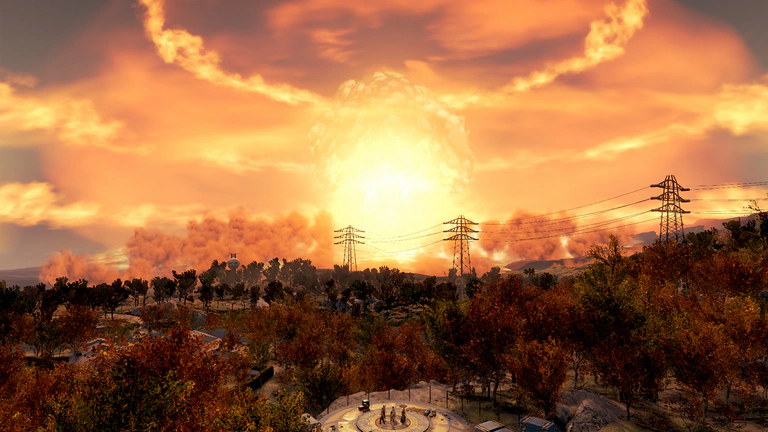
Despite the ongoing popularity of the Vaults, drills in completed Vaults slowly created a cry wolf effect among the population. Turnouts for the drills fell over time, limiting the Vaults' future role in ensuring the survival of humanity irrespective of Vault-Tec's plans. Work stoppages, civil unrest, and other problems also affected the implementation of the experiment plans. When the Great War happened on October 23, 2077, several Vaults were yet to be completed, while the cry wolf effect resulted in just a fraction of people going into the Vaults. Most of Vault-Tec's special management vaults were either left unused, with their intended occupants never arriving, or were simply abandoned over time; whatever the case, this evidently left Vault-Tec unable to make any coordinated oversight of their mainline Vaults. The Enclave's grand plans were undone by circumstance and interference from within: The heart of the master plan, the Whitespring, was cut off from the network and the plans crippled. Regardless, most of the Vaults populated and sealed as scheduled, with enough personnel to carry out their experimental plans. The Vaults used by Vault-Tec's more independent executives were among this number: Bud Askins' plans largely succeeded, with enough of a population in Vaults 31, 32, and 33 to proceed, while Hugo Stolz's sprawling Vault 63 was unfinished, but successfully protected enough of its population for their work to continue post-War. However, the actual loss of life fell short of the projected 90%, and survivors started resettling on the surface - including Vaults. In 2091, after receiving the all-clear signal, Vault 8 opened and Vault City was founded. A year later, the demonstration Vault in the ruins of LA opened. The inhabitants founded Adytum in what became known as the Boneyard.

As a result, the ambitious plans of Vault-Tec executives to use the nuclear war to wipe the slate clean and redefine society never came to pass. Many Vaults failed over the next few centuries (whether due to the total population dying or leaving, or simply due to the experiments being subverted), while facilities of the defunct megacorporation became little more than prime sources of salvage. This led to the Vaults being considered tall tales or luxuries that benefited only the most privileged. As a result, Vault 31 and its junior executives remained sealed underground, while the surface prospered, with the New California Republic becoming the first post-War nation-state. However, the shadow of Vault-Tec did not disappear: After Rose MacLean fled Vault 32, discovering the NCR's existence, she inadvertently set in motion a chain of events that would culminate in the destruction of Shady Sands by her ex-husband, Hank MacLean, sending the Republic into freefall.
Corporate model
The primary focus of Vault-Tec was the development of a line of nuclear war defense installations and the technology necessary for their construction. Although their most recognizable product remains the venerable Vault, the company has also developed cheaper alternatives, like the Series 1000 shelter, and contracted its technologies out to other entities requiring a reliable, proven pipeline for constructing subterranean bunkers. Apart from heavy construction and technologies necessary for sustaining a population underground, Vault-Tec has also developed nuclear reactors, medical devices, such as the organ extractor, Motion sensors based on Wattz Electronics' designs, and even the SimTek 5000 virtual reality simulation suite for accustoming Vault dwellers with the outside and the Vault-Tec Assisted Targeting System for facing any threats. Other proprietary inventions were designed to improve the quality of life for a Vault dweller, including SimuSun Lighting, Floorsuck Autocleaner Systems, Culinator 3000 Kitchen Systems, Entertainotron Rooms and Eye-On-You surveillance cameras.

Vault-Tec's technology at its best was generally reliable and of high quality, leading to widespread adoption. However, Vault-Tec outsourced many critical elements of Vault infrastructure, selecting the lowest bidders to maximize profits. The most notorious examples were water chips. Some of this outsourcing led to long-term partnerships: RobCo Industries provided Pip-Boys, forming the most successful joint venture in history, General Atomics supplied nuclear reactors where Vault-Tec couldn't, while Radiation King provided TV sets and other appliances for the Vaults.
For the majority unable or ineligible to purchase a space in the Vaults, Vault-Tec's Budg-Tec division developed several additional "cost-efficient" alternatives, including the company's "most humane" product: Plan D, banana flavored cyanide.
Divisions
A division of Vault-Tec, Future-Tec, was tasked with developing cutting edge technologies to allow Vault dwellers to brave the horrors of a post-nuclear world. Their crowning achievement was the G.E.C.K.

Budg-Tec
Future-Tec
Psychological Research Department
Vault-Tec Documetation Department
Social Science Division
Vault-Tec American Tricentennial Committee
Vault-Tec Electronics
Vault-Tec Films
Vault-Tec Game Studios
Vault-Tec Graphics
Vault-Tec Maps
Vault-Tec Media Department
Vault-Tec Promotional Division/Department
Vault-Tec Publicity Division
Vault-Tec Public Relations Department
Vault-Tec Science Service
Vault-Tec Simulation Department
Vault-Tec Security
Vault-Tec Special Projects Division
Vault-Tec Subscriber Inc.
Employee relations
However, the reality for Vault-Tec employees was completely different. Employees received the Vault-Tec employee handbook, a monumental publication which outlined everything about the company and its procedures, down to bathroom breaks. The regulations were nothing less than draconian and oppressive: Vault-Tec's human resources and administration division considered 2.25 minutes (135 seconds) to be the reasonable length of a bathroom break. Exploitative and abusive labor practices seemed to be the norm. Employees could also be subjected to unethical medical experiments, e.g. the aforementioned tests at Nuka-World and other locales, which could lead to severe medical issues including depression and suicides. These were buried as standard practice.
As a strategic defense contractor for the government, Vault-Tec's affairs and all related publications (including, for example, the Vault Dweller's Survival Guide) were protected by the New Amended Espionage Act and any whistle blowing attempts would likely hurt the whistle blower more than the corporation.
Drills
Vault-Tec was authorized to carry out drills for citizens selected for inclusion in the Vaults and operated its own alert system. Beta alert drills were carried out at regular intervals (sometimes as many as five a week) to test admission protocols and prepare the future Vault dwellers for an orderly admission into the Vault, in case of an Alpha Alert. Members of the experimentation staff were expected to participate in the drills each time. Compliance and secrecy were accomplished simply by providing the scientists (frequently graduates or even students) with a hefty paycheck, added by the implied threat of force should they decide to blow the whistle.
Marketing
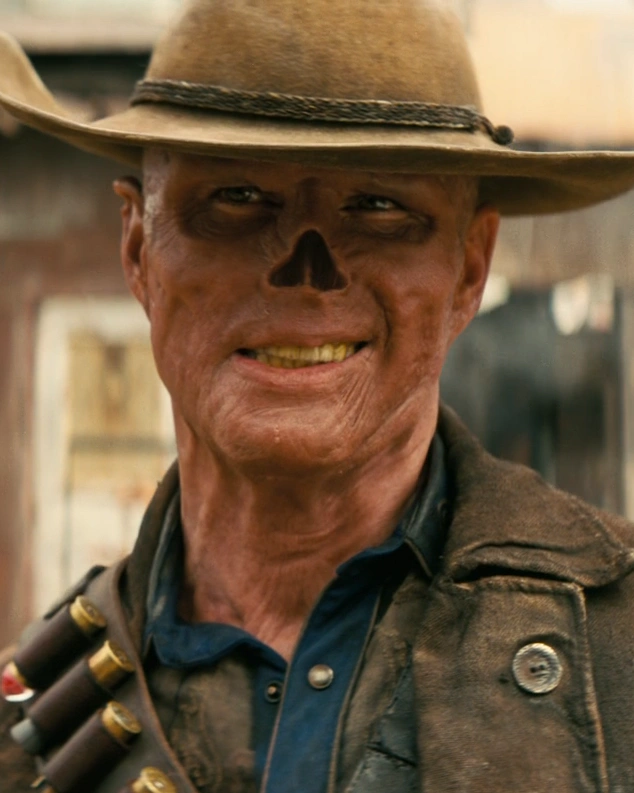
While Vault-Tec was a strategic defense contractor, the company carefully curated a public image as an all-American corporation guaranteeing the survival of the American way of life. The corporation's mascots, Vault Boy and Vault Girl, became recognizable nationwide, while Cooper Howard, a veteran of the first years of the Sino-American War and a movie superstar, was chosen as the company's spokesperson (after convincing from his wife). Appearing in promotional photoshoots and television advertisements promoting Vaults, he gradually became known as the "pitchman for the end of the world", eventually leading to ostracism in the Hollywood acting community.

The most ambitious effort was a large exposition at the Museum of Technology in the capital was designed to promote their shelters and explain their functionality, and the Among the Stars attraction at Nuka-World, highlighting the potential applications of patented Vault-Tec technologies in the colonization of space (which would also rationalize the mass investment in Vaults in the event nuclear war didn't happen). The attraction doubled as a testing area for the so-called Project Consumer Guidance, using electromagnetic radiation, subliminal messaging, airborne toxins, and theta-band radiation to manipulate human behavior. Vault-Tec had limited success, achieving primarily severe headaches in employees (an improvement from depression and suicide in previous iterations), and minor medical complications among visitors. Other notable partnerships included one with Galaxy News Network, with a decade-long partnership deal signed around the time Vault 33 was unveiled in January 2077.
The company also invested in conventional promotional tours and awarding of prizes like the Pressed Vault Suit Award for preparedness were also used to promote a positive image of the company. Vault 76 was intensely promoted as Vault-Tec's commitment to preserving the American way of life, unveiled on the United States' Tricentennial. A massive merchandise line was created to promote Vaults, including baseball caps, lunchboxes, T-shirts, leather bomber jackets, golf tees, drink cozys, Vault-Tec bobbleheads (and the matching Bobblehead collector's stand), as well as Limited Edition snow globes showcasing landmarks around the nation.
Vault-Tec was not above dishonest advertising. While the cruel social-experiments of the Vaults were kept hidden from society, some included intentionally misleading residents on the quality of life conditions within the Vaults. In marketing posters they considered depicting large singular blasts over the predicted multiple smaller yield blasts to be used by the Chinese.
Prospective dwellers could receive information on Vaults and potential postings via Vault-Tec's hotlines: 1-888-4-82858832 (1-888-4-VAULTTEC), 213-258-2858 (213-25-VAULT), and KL-5743.
Iconography
The colors blue and yellow/gold are used prominently in Vault-Tec branding, including Vault-Tec propaganda posters, and branded armor and weapon paints. The symbol for the company is a white circle with three "wing" protrusions on either side, and this symbol is often incorporated into the Vaults, sometimes on their main entrances. Likewise, the gear design of the Vault entrances are used as a major motif. The number of each Vault is also a recurring motif for those Vaults, and each Vault suit is tailored with their Vault's number on the back, fostering a sense of identity.
Mascot
Originally, Vault-Tec managed to reach a sponsorship deal with famous Hollywood actor Cooper Howard as the face of their marketing campaign, appearing on posters and doing TV specials on Vault life. However, Cooper Howard parted ways with Vault-Tec upon learning of their horrific experiments and plans to escalate nuclear war, so Vault-Tec instead created the iconic Vault-Boy in his image, including the signature thumbs-up pose, and almost always wearing the standard issue Vault jumpsuit.
Vault Boy is used to represent the company as a whole, as well as the average Vault dweller trying to survive in the Vault and post-apocalyptic wasteland. Characterized as chipper, optimistic, hard-working, and charismatic, but also indifferent to the suffering of others, Vault Boy appears constantly in Vault-Tec advertisements, products, and propaganda. Vault Boy also features in various animated shorts, commercials, promotional, educational, and internal training videos where he is meant to act as the stand-in for the viewer through whatever imagined scenario Vault-Tec is presenting. Frequently, intense bodily harm is either heaped upon, by, or around Vault Boy in cartoonish displays of gore.
Numerous other similar figures show up in Vault-Tec marketing, most notably the female counterpart character Vault Girl, usually simply representing additional Vault dwellers whom Vault Boy interacts with.
Vault suits
Barb Howard implies that the blue and yellow color scheming used in the Vault suits was inspired by Cooper Howard's blue-and-gold sheriff's outfit from his western films. Vault suits are primarily blue, with black boots and leather cuffs, with a large yellow/gold stripe around the collar and going down the front, with some variants including integrated black wires and circuitry. These Vault suits are mandatory for all dwellers, and many dwellers continue to wear them even after moving to the surface. Each Vault suit has the number of their Vault stitched on the back.
Vault suits are often very tight to wear, though some of them are much baggier. Variations include a utility jumpsuit often worn by repairmen, and labcoats worn by doctors and scientists (often over top of their jumpsuits). Vault suits provide limited protection against radiation and energy weapons, though this can be upgraded to sizable degrees. The jumpsuits can be worn under leather armor or heavier armor variants by Vault dwellers braving the Wasteland.
Vault security officers often wear security armor and helmets over their Vault suits.
Slogans
These slogans are seen on posters used in the Vaults, or in promotional advertising for the company.
• Better Living Underground!
• Be prepared for the future today!
• Welcome Home
• Hard Work is Happy Work
• Surface Never, Vault Forever
• Improving morale for over 100 years!
Ideology
On the surface, Vault-Tec presented itself as a typical civic-minded, patriotic capitalist corporation, exemplifying the best of the American system. Much Vault-Tec advertising and propaganda centered on the idea that the American way of life, and its associated economic standards of living, could be preserved in its underground Vaults, and that the Vault-Tec "family" would help to usher in the next chapter of American history with its reconstruction and resettlement.
In actuality, Vault-Tec was entirely dismissive of American values of democracy and equality and was run by what can only be characterized as complete psychopaths and sociopaths who delighted in human suffering, with the ultimate goal of world domination. With the United States' failures during the Great War (having essentially bankrupted them) Vault-Tec deemed America a failed nation, and saw no point in trying to revive it. Instead, they believed that "America's best and brightest" lay in Vault-Tec and were the only thing left worth preserving. While pro-American themes would continue to be used within Vaults, these values were abstracted, and often the values of Vault-Tec were the ones more truly emphasized. Most overseers were granted autocratic power, while many Vaults were designed with undemocratic systems such as a technocracy, or with purposefully designed upper and lower classes. Vault 76 was given secret orders to seize American nuclear silos, while the employees in Vault 31 were given orders to dispose of any surface survivors be they of civic, federal, or military authorities (i.e. still in the control by the American government). References to the Chinese and communism as a threat would also occasionally feature in Vault-Tec propaganda, and be used by some Vault dwellers, though many Vaults had socialistic qualities of their own, such as lacking any known sort of monetary exchange, having free access to healthcare and education, and universal employment to encourage its inhabitants to be active participants in the development of the Vault.
While ostensibly adhering to capitalist competition, Vault-Tec's ultimate goal was a total monopoly on the survival of mankind. They believed that, if they were in control of all surviving humans on the planet, they would have outlived all potential competition, and thus eliminated any conflict. To this end, they were actively trying to escalate the Sino-American War to total nuclear devastation under the assumption that the only potential survivors would be enclosed in Vault-Tec facilities. They failed to account for survivors on the surface, or other factions that were able to seek shelter from the bombs and survive, such as the Enclave. Vault-Tec is known to have taken action to destroy post-War nations—most notably with the atomic bombing of Shady Sands by Overseer Hank MacLean of Vault 33.
Rather than design the Vaults as advertised as large nuclear bunkers to allow communities to survive, the Vaults were instead designed with horrific social experiments with only a minority of Vaults designed to actually save people (and even then, only for the purpose of acting as control populations for the experiments). Supposedly, these experiments were done to test potential societal models and determine the most superior through a means of competition. However, many were simply designed to fail and observe the consequences of doing so, such as the Bakersfield Vault which was designed to not fully close. It can be seen that more benevolent, straightforward, or harmless experiments that were proposed at Vault-Tec were typically outright dismissed and those that proposed them were characterized as not understanding the corporate culture, so malevolent experiments were prioritized. It was believed that truly bold science needed to cross ethical boundaries. Vault-Tec employees were not at all safe from these experiments; often, they were lied to about the nature of their experiments and Vault-Tec staff were themselves subject to horrific social experiments, with many resulting deaths even in the pre-War era.
Despite this, Vault-Tec was able to foster a sense of reverent loyalty to the company that would persist for centuries after the Great War and without any communication to some existing corporate structure. Very few Vault-Tec overseers, in the face of the Great War and their now limited resources for survival, refused to carry out their experiments in their now isolated Vaults. Consequently, the vast majority of Vaults ultimately failed. Likewise, Vault-Tec actively cultivated a toxic work culture, focused on displays of loyalty through overwork and encouraging abuses through the corporate chain of command.
Vault and shelter equipment
The Vaults
Series 1000 shelter
Vault-Tec Shelters
Equipment and supplies for the Vaults, including food synthesizers
Vault-Tec reactor
Uranium Nuclear Reactor
Vault Star super reactor
Soda fountain
Phoropter
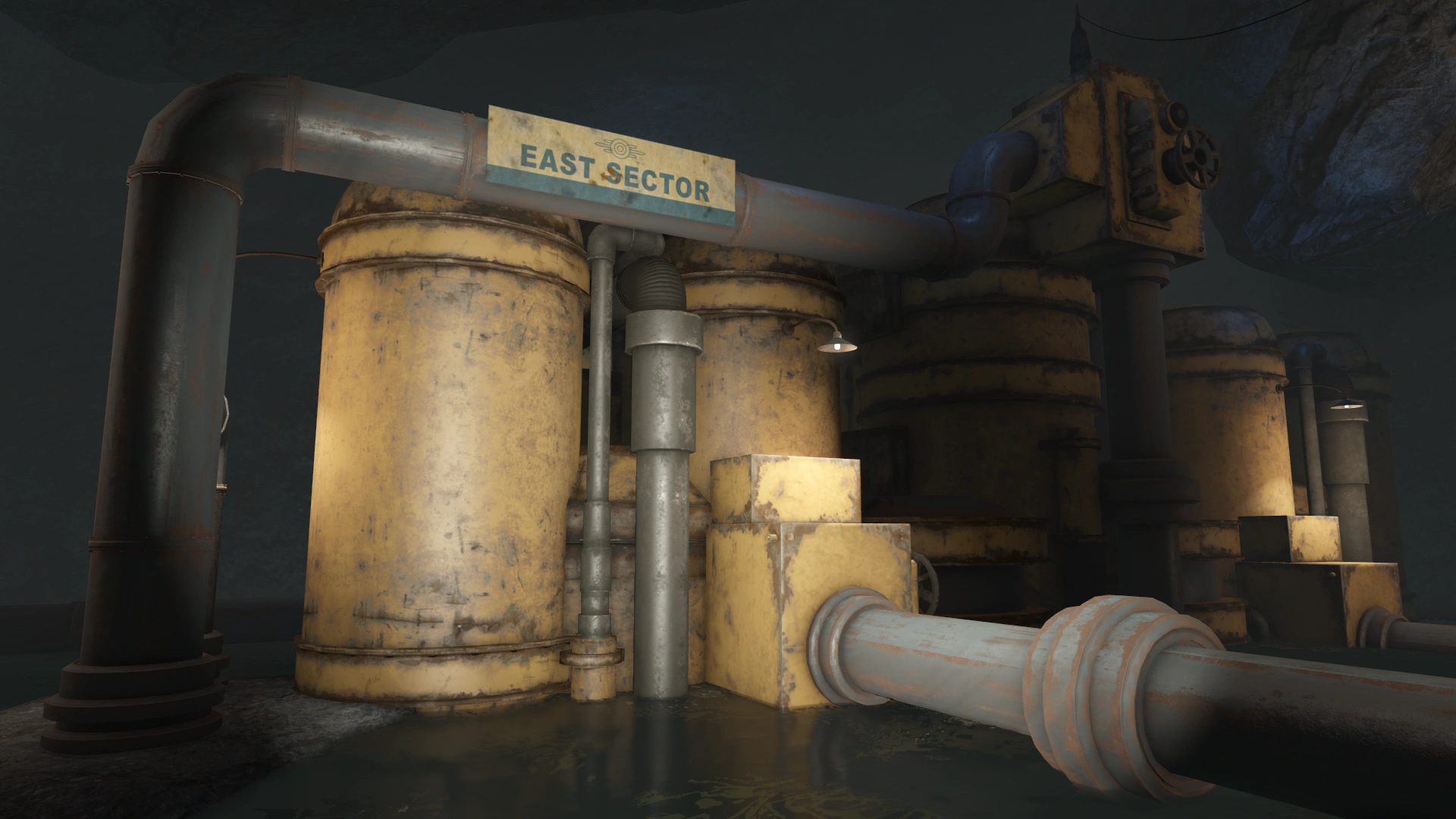
Vault-Tec water pump
Vault-Tec Industrial Megaloader XL-9000
Plan B - Budg-Tec Pop-Up Shelter
Plan C - A Vault-Tec stamped Carboard Box
Vault-Tec Premium Elite Plus program for personal cryonic chambers
Vault-Tec oven
Consumables
• Nutritional Alternative Paste Program (NAPP) food paste
• Plan D - Banana-flavored cyanide
Reclaiming the wasteland
Garden of Eden Creation Kit or G.E.C.K., developed by Future-Tec
The Vault-Tec Assisted Targeting System or "V.A.T.S."
C.A.M.P.
My stash box
Scrapbox
Vault-Tec supply packages
Vault-Tec Population Management System

Books and manuals
• Survival handbooks, including the Vault Dweller's Survival Guide, the Vault Dweller's Survival Guide: Pocket Reference Edition, and the Vault Dweller's Guide

• Vault-Tec Employee Handbook
• Vault Boy's Big Book of Laughs for Kids
• Holy Bible, Vault-Tec Edition
• You're SPECIAL!
Entertainment
• A Better Life Underground game board and its radio play
• Power Cycle 1000
• Pipfall
• Red Menace
• Vault playing cards
• Vault-Tec Channel 9
Locations
Vaults 1-122
Vault-Tec management vaults
California management Vault
Oregon management Vault
Vault-Tec headquarters, located in Los Angeles.
Vault-Tec headquarters, located in Vernon Square, Washington, D.C.
Vault-Tec Regional HQ, located in Beacon Hill, Boston.
Vault-Tec: Among the Stars, an attraction at the Nuka-World amusement park showcasing a potential extraterrestrial Vault using contemporary Vault-Tec equipment.
Vault-Tec University (VTU), located in Morgantown, West Virginia, it served to train potential Vault staff and overseers for Vaults across the country.
Vault-Tec Agricultural Research Center, located near Flatwoods, West Virginia.
The following is based on information from Fallout: Brotherhood of Steel and is not canon.
Vault-Tec Warehouse, located in Los
Corporate Vault, located under Los
End of information based on information from Fallout: Brotherhood of Steel
Sources
Adapted from the original article, under CC BY-SA 3.0.