Place
Hollywood
Municipality of Los Angeles
Hollywood was a municipality of Los Angeles that was known for its celebrities and film productions before the Great War.
Pre-War
Before the War, Hollywood was known for being the site of numerous film studios and productions, to the point that the word "Hollywood" itself was synonymous with the American film industry. Countless actors and directors found success in Hollywood, creating movies of all genres, ranging from Westerns and noir dramas to romances, sci-fi, and horror flicks. Hollywood was also known for its celebrity culture, being a gathering place for film stars and other high-profile personalities. It was frequently associated with scandalous or borderline scandalous activities, with substance abuse and "compromising" romantic situations (such as one witnessed by Keith McKinney between director Sergio Amore and actor Vince Natali in a nightclub) being little more than the "usual Hollywood tune."
By the 2070s, however, with wartime tensions and corporate power at an all-time high, some of the luster started to fade. Many figures in the film industry were either affiliated to communism or otherwise disagreed with the propaganda; whatever the case, they were all lumped together as radicals who opposed the United States. These supposed ties could cost people their reputations (such as with actors Charles Whiteknife and Cooper Howard), if not their jobs (as with screenwriter Cadillac Bob), regardless of their accuracy. Some studios recognized the winds of public opinion and even rewrote entire films just to present themselves as patriotic, as with California Crest Studios and their box office-topping Western The Man from Deadhorse.
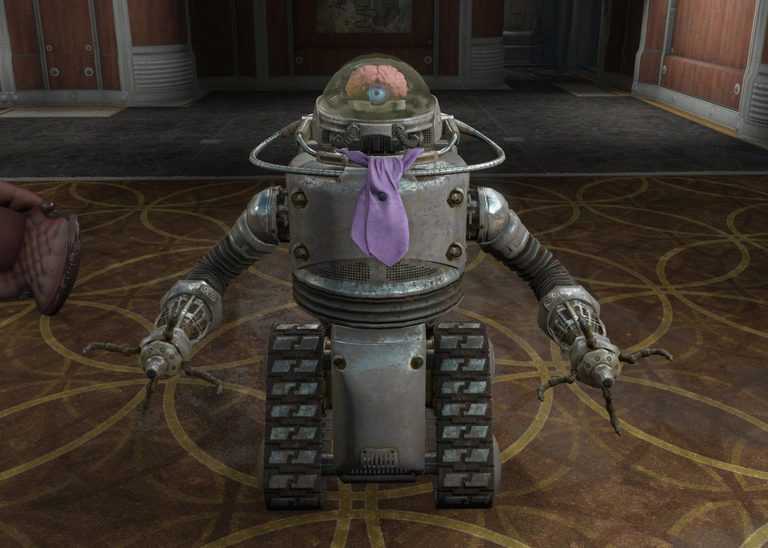
Meanwhile, corporations began turning to Hollywood celebrities to further their business through promotional deals, celebrity endorsements, and/or product enhancement. Cooper Howard became the public face of the Vault-Tec Corporation for some time (by October 23, 2077, he had been labeled as a communist and replaced with Vault Boy), while English actor Sebastian Leslie sold his vocal rights to RobCo for their Mister Handies, and the Nuka-Cola Corporation entered a deal with California Crest Studios to produce an entire seventeen-picture series of films featuring their mascots, Bottle and Cappy. As Sebastian Leslie saw it, the future was entirely in products, and anyone who refused to acknowledge this would only be left in the dust.
Despite opposition from some on political or moral grounds, the commercialization of Hollywood did not end. By 2077, Hollywood itself (or at least its iconic Hollywood Sign) was sponsored by Nuka-Cola, with a prominent addition underneath the sign proclaiming as such.
Post-War
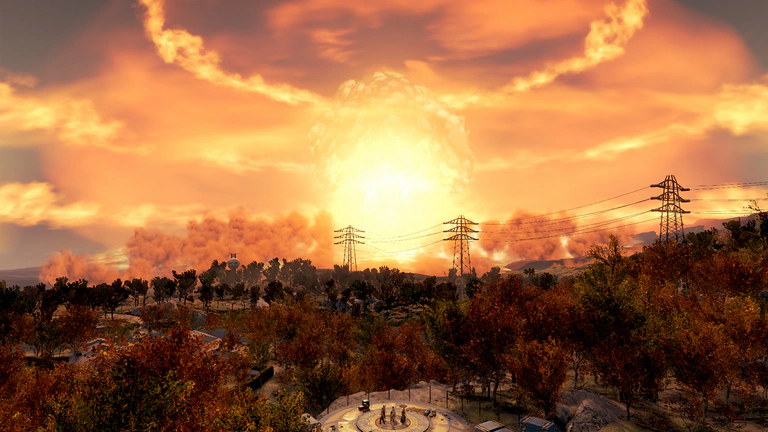
Hollywood was not spared by the bombs. By 2296, much of Hollywood Hills had been reduced to desert, like the rest of California. The KPSS radio station is located in Hollywood Hills and is owned by DJ Carl, who uses its radio tower to broadcast his beloved fiddle music. At least part of Hollywood Boulevard was flooded, becoming infested by gulpers. The Hollywood Sign is still partially intact.
Following the battle for Griffith Observatory, power was restored to the entire L.A. Boneyard (presumably including any remains of Hollywood), by the cold fusion reactor at Griffith Observatory.
Hollywood ties
Various characters throughout the series have had connections to Hollywood. Vera Keyes, Gilda Broscoe and Keith McKinney were all famous Hollywood actors before the War.
Raul Tejada recounts RobCo mastermind Robert House's fondness for Hollywood starlets during his pre-War life, a trait shared with Dean Domino and Frederick Sinclair. Hubris Comics producer Aaron Babowski had a number of connections in Hollywood, who he threatened to call in to replace Tina Hopkins mid-production for the live-action adaptation of the Mistress of Mystery comics. Xerxo (a post-War identity adopted by actor Elliot Manfield) also makes reference to Hollywood directors in association with the Blast Hannigan franchise. Katherine Swan claims that the character Stella Skyfire was perfect for Hollywood because she was so thin.
Sources
Adapted from the original article, under CC BY-SA 3.0.