Group
United States Congress
Legislative branch of the United States' federal government
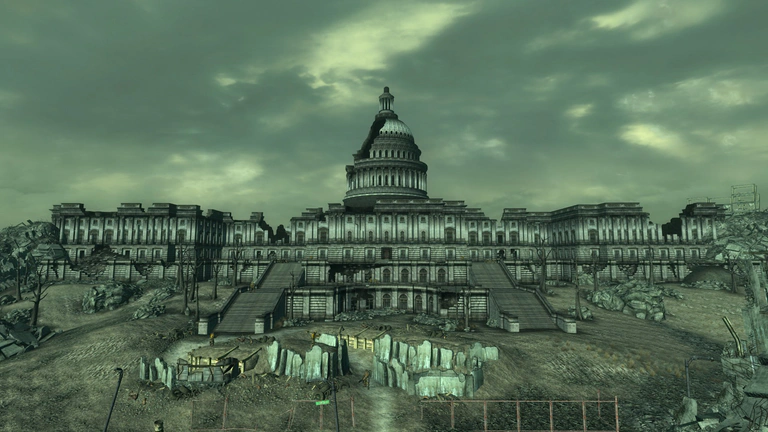
The United States Congress was the legislative branch of the United States' federal government. It was composed of two bodies: the Senate and the House of Representatives.
Background
Since its inception, the U.S. Congress would meet in the U.S. Capitol Building in Washington, D.C. The Senate was made up of one hundred members, two sent from every state, while the House had proportional representation based on population. Senators and representatives were chosen through biannual direct election, with vacancies being filled by special elections. The vice president served as president of the Senate, though they were only able to vote in the event of a tie. The Library of Congress was the official library of the legislative body.
Members of the House sat for a two-year term. Senators were elected at-large in their state for a six-year term, with terms staggered, so every two years approximately one-third of the Senate was up for election. Each state, regardless of population or size, had two senators, so there were 100 senators for the 50 states. Article One of the United States Constitution required that candidates for election to Congress meet certain conditions: they had to be at or older than 25 years (House) or 30 years (Senate) of age; they must have been an official citizen of the United States for seven (House) or nine (Senate) years at minimum; and they had to be an officially-recognized inhabitant of the state which they represented.
Aside from making laws, Congress also held the powers to impeach presidents, allocate funds and resources, and declare war on other countries. To recognize the historical significance of seven sites in Boston, Massachusetts, Congress in 1843 created the Boston National Historical Park, which later became part of the U.S. national park system overseen by the National Park Service. In response to the tragic collapse of the Silver Bridge connecting Point Pleasant, West Virginia and Gallipolis, Ohio in December 1967, Congress adopted the National Bridge Inspection standards in 1968.
Beyond their positions of power in government, congressmen enjoyed a number of other perks. These included checking out items from the Library of Congress, access to the congressional gym, and discount meals at the Capitol cafeteria. Senators also enjoyed access to a Senatorial Lounge in the presidential metro. The title also earned them great respect among higher society, with membership extended from the elite Boylston Club in Boston free of charge for members of the upper chamber. Both senators and representatives were known to frequently vacation on Mount Desert Island off the coast of Maine. A popular book collection of writings on speech and deception was named Lying, Congressional Style, a reference to the archetype of the lying politician.
In the late 21st century, with global tensions high during the Resource Wars and the ever-present threat of nuclear war engulfing the world, a fortified bunker was built beneath the Whitespring Resort in West Virginia to protect the President, their Cabinet, and members of Congress. Dubbed the Whitespring Congressional Bunker, work began on it around 2075. However, early on in construction, the project's intended goal was subverted by the machinations of the Enclave. Rather than a shelter to protect the current federal government and ensure the continuity of America in the wake of nuclear holocaust, it would be used purely to protect the Enclave's own members, and as a command center to continue the war against China.
In late 2077, General Constantine Chase made a request to Congress asking for more resources to defend Alaska and the Alaskan Pipeline from Canadian freedom fighters springing up in the wake of the annexation of Canada, claiming that the US should not let its guard down after successfully liberating Anchorage. Sometime around 2077, the alien crew of Mothership Zeta abducted an unnamed senator.
The Senate was supposed to have a luncheon with Chinese ambassador Xiu-Ling on October 31, 2077, though this never came to happen. On the day of the Great War, those congressional officials who arrived at the Whitespring seeking the safety they were promised instead found themselves split up, interviewed, and vetted by armed guards of the Enclave; those who were not on the pre-compiled list cleared to enter were executed. This did not include the last Speaker of the House of Representatives who, despite being a member of the Enclave, never received an alert to head to the bunker as they had been removed from the list beforehand for an unknown reason.
Congress
A presentation introducing the Vault 79 gold reserves project to members of Congress and the U.S. Armed Forces was prepared by the Vault-Tec Corporation.
The pre-War baseball team of Washington, D.C. was named the Capital Congressmen.
Some miscalculations with the Kovac-Muldoon Platform led to it burning through its fuel supply much faster than intended, leaving it only fifty years of use. An occupant of the Whitespring bunker hoped those five decades would be enough time for Congress to use it as needed after the apocalypse.
O. Olivette, the runner-up choice for overseer of Vault 81, intended to have Vault-Tec dragged to a congressional hearing if she found that their experiment in the Vault violated ethical lines.
Senate
During a radio conversation with Elizabeth Taggerdy about forming a chapter of the Brotherhood of Steel in Appalachia sometime around 2082, Roger Maxson blamed the Great War on America's leaders, naming its senators, generals and presidents as the ones to blame. During a later radio conversation between the two, Maxson sarcastically asked Taggerdy if, instead of creating a new organization in the Brotherhood, he should instead declare himself president and appoint her as a senator.
In the pre-War motion picture Roborilla Goes to Washington, the titanium behemoth becomes a senator, writing legislation that will end world hunger, solve the pollution crisis and balance the budget. When one Senator Colburn threatens to filibuster the bill, Roborilla eats him, allowing it to pass through to the president's desk.
Senate
The last vice president of the United States
Senator Sam Blackwell of the Appalachian Territories (resigned 2077)
Senator Burk
Senator Calvert and two other unnamed senators from the Calvert family
Senator Clark
Senator Jon McDougall
Senator Jody Sorreset
Senator DeSoto (1968)
Unnamed senator - Died in the Capitol Building's presidential sub level
Unnamed senator - Captured by the alien crew of Mothership Zeta
House of Representatives
Representative Diane Welch of Glendale
Seven unnamed representatives from the Calvert family
Sources
Adapted from the original article, under CC BY-SA 3.0.