Event
Sino-American War
Pivotal event in the timeline of the Fallout series
The Sino-American War was a pivotal event in the timeline of the Fallout series, a global war between the People's Republic of China and the United States of America as the two leading superpowers in the late 20th century and throughout most of the 21st century following World War II and the Divergence. As resources began to dwindle, both nations clashed over control of the last remaining energy resources on Earth, drawing in client states and annexed territories as both civilian and military resources were harnessed to achieve victory over the other side, all in a struggle that was as much about resources as it was about ideology.
The war was marked by atrocities on both sides against foreign and domestic populations, steady escalation of hostilities up to and including the use of nuclear, biological, and chemical weapons, and gradual transition of both states into totalitarian dictatorships no different from each other. Resource shortages made it a war of position rather than maneuver. Trench warfare occurred in the Alaskan theater after its invasion by the Chinese military, with stalemates and static battlelines until the next generation of warfare was unleashed with the development and deployment of power armor by the U.S.
At its peak, the Sino-American War was the most destructive war in human history, resulting in unprecedented casualties among soldiers and civilians alike after the steady escalation of conflict reached the level of thermonuclear exchange, an event in and of itself known as the Great War. As the inciting incident for its apocalyptic climax, the Sino-American War can be therefore understood as the war that brought about the end of the Old World and the birth of the wasteland and its own collection of warring factions.
Background
The leadup to the Sino-American War first began in 2060 when available fuel reserves ran out worldwide. Traffic on the streets of major cities gradually disappeared as fuel became too valuable to waste on automobiles. The automotive industry desperately tried to come up with a solution to the problem, but electric and early fusion cars were too little, too late to help solve the growing needs of society. The fuel problem was further emphasized by the collapse of the European Commonwealth and the Middle Eastern oil powers as the once-rich oil fields were allegedly exhausted.

The situation across the United States worsened, both as a result of the deteriorating economy, and as a result of the New Plague continuing to wreak havoc despite increased quarantine measures. The federal government attempted to use the increasing national paranoia to control the situation by discouraging assemblies, fueling the anti-communist sentiment, and encouraging the reporting of subversive elements. The Vigilant Citizen's Hotline was even established to allow hysterical citizens to report neighbors to the government for any behavior that could be construed as in support of communism. The next red scare unfolded as a response to the increased hostility of the People's Republic of China and its operations on American soil. Research efforts were undertaken that could have alleviated the resource crisis entirely. The military, seeking to increase the mobility of its mechanized cavalry units, initiated a research program seeking to develop power armor in 2065. Research, development, and prototyping paved the way for future advances in military, construction, and most importantly, fusion technology. Research in other areas continued as well, including more powerful nuclear weapons.
However, these efforts would lead to Chinese conflict with the United States. As the economy of the communist state was dependent to a much greater degree on fossil fuels than that of the U.S., China found itself on the brink of collapse by the spring of 2066, with oil fields finally drying up globally. With the United States unwilling to export its own reserves of crude oil, China had become more aggressive in its negotiations. Adding further insult to the world crises, the first crude fusion cell developed for the power armor project was revealed to the American public in the summer of 2066.
In desperation, China launched an invasion of Alaska at the tail end of 2066 to seize its oil reserves. This daring military operation marked the beginning of the Sino-American War.
Invasion of Mexico (2051)
Predating the Sino-American War by more than two decades, the invasion of Mexico in 2051 can be considered a precursor to the Resource Wars; to protect U.S. economic interests in Mexico, primarily the crude oil supply, the U.S. deliberately destabilized the country using economic sanctions, paving the way for a military invasion. Once they ran their course, the U.S. invaded Mexico, citing its political instability and pollution as a threat. American military units seized oil refineries and infrastructure to ensure that the flow of petroleum to the American market did not cease, all at Mexico's expense.
The reasons for the invasion became clear the following year; a landmark television documentary revealed the depth of the energy crisis to the population at large, revealing withered husks of Texan oil fields, no longer capable of supplying the nation's ever-growing energy demand.
War in the Middle East (2052)
The energy crisis was not limited to the United States. Skyrocketing oil prices triggered a global crisis in 2052, outright bankrupting smaller nations, and prompting the European Commonwealth to invade the Middle East. Reliant on oil imports from the region, the Commonwealth refused to pay the exorbitant prices and instead resorted to military action. This further destabilized the global situation, deeply affecting the economies of the United States and particularly China, whose economy was reliant on fossil fuels. The dissolution of the United Nations in July signaled the beginning of the Resource Wars.
New Plague (2053)
Another blow was struck in 2053, when the New Plague virus emerged. The virulent nature of the plague and the speed at which it had spread led to the first-ever national quarantine and the closing of American borders, as tens of thousands died. In 2055, the government commissioned West Tek to develop a cure for the virus. Though no cure was known to have ever been found, the research into a cure paved the way for subsequent biochemical research efforts.
Project Safehouse (2054)
The global security situation, in particular the nuclear exchanges in the Middle East, the Euro-Middle Eastern War and the New Plague led the U.S. federal government to establish Project Safehouse in 2054. Bankrolled by junk bonds, the program envisioned creating a network of fallout shelters that would protect some of the United States' population in the event of a nuclear war or other world-ending scenario.
The Vault-Tec Corporation won the contract, and this massive national defense project was set in motion. Breakthroughs in construction technology allowed for these shelters, called Vaults, to be constructed at a rapid pace, although Vault-Tec's status as a critical defense contractor, and the classified nature of its enterprises, lead to many instances of fraud and mismanagement.
Anchorage Front Line (2059)
By the end of the decade, in 2059, the United States started to prepare for war. The Anchorage front line had been established in Alaska, to protect its oil reserves from foreign invaders. Canada became the target of a pressure campaign, as the U.S. demanded that American military units should be able to protect the strategic Alaskan pipeline on Canadian soil.
Niagara Sabotage (2062)
Chinese intelligence efforts and attempts to penetrate the civilian and military sectors in the United States played a part in beginning the war. Wan Yang, a major Chinese intelligence asset, was apprehended following the Niagara Sabotage.
Invasion (2066-2067)
Under the command of General Jingwei, Chinese forces landed in Alaska as part of a massive invasion supported by a massive airborne assault. Carried out in winter, the landing allowed the Chinese to usurp control of Alaska's oil pipeline, derricks, and reserves, and secure the flow of resources to the homeland, propping up its economy. The American military retreats on all fronts as the Chinese gamble pays off. Unable to sustain the war effort without establishing safe supply routes on land, away from the Chinese Navy, the United States pressures Canada into granting military access on land and its airspace. When Ottawa yields, despite initial resistance, the stage is set for the subsequent occupation and annexation of Canada ten years later.

With the pressure for a functional suit of power armor greater than ever, the United States military and its contractors created the first, stopgap model of power armor. Designated T-45, it was a crude construction. However, its ability to wield heavy weapons with ease greatly increased the firepower and mobility of American troops, allowing them to counter Chinese tanks and infantry. After the first suits are deployed in January 2067, China rushes to create its own versions but is unable to come up with a counter. The crude nature of the armor only allows for stabilizing the front. The situation rapidly devolves into a stalemate. General Constantine Chase and his command of the newly formed power armor units became instrumental in stabilizing the front and even retaking land from the Chinese army.
The Chinese nuclear threat was thought contained at the time, as an ideal nuclear first strike scenario (according to DIA intelligence at the time) would only succeed in destroying 41% of the American nuclear stockpile.
Stabilization and escalation (2068-2073)
The war effort in Alaska continued to consume ever-increasing amounts of resources. With the Chinese occupying and exploiting the resources and infrastructure of Alaska, the United States drew on Canadian resources to support its war effort. Entire stretches of timberland were destroyed as the military consumed Canadian wealth to battle the Chinese across the western front. By 2069, the pressure became unbearable, but Canadian protests went unheard. The entire country slowly became Little America in the minds of U.S. citizens. The tensions culminated in a sabotage attempt on the newly-reclaimed Trans-Alaskan Pipeline by Canadian forces. Faced with open hostility and rioting in several Canadian cities, the United States responds by beginning the annexation of Canada on June 3, 2072. The United States Army also commissioned the development of Liberty Prime, intended to be as a superweapon meant to establish the dominance of the United States on the Alaskan front. However, despite significant resources poured into the project, it failed to produce usable results, only drawing assets away from the war.
Drawn into a war of attrition in a remote theater of war, China authorized the use of biological weapons on the front. In response, the American government ordered West Tek to develop a Pan-Immunity Virion on September 15, 2073. This research eventually evolved into the Forced Evolution Virus project. Since West Tek was effectively nationalized two years prior, the scientists had no other choice but to obey their military masters.
Stalemate (2074-2076)
One of the turning points of the war came in 2074, as, despite claims of fighting a defensive war, American infantry and mechanized divisions launched a mainland counter-invasion of China itself. The American economy strained as American soldiers, Marines, sailors, and airmen fought a war on three fronts: Canada, Alaska, and mainland China. Neither side was willing to yield, despite eight years of constant warfare. The situation rapidly deteriorated into a stalemate, just like in Alaska. Conflicts also took place in Shantou, the Gobi Desert and Nanjing, while other troops were present in Mambajao. In 2075, the DIA reported the possibility that Chinese were able to develop stealth submarines, explaining reports of the Ghost Fleet submitted by field agents.
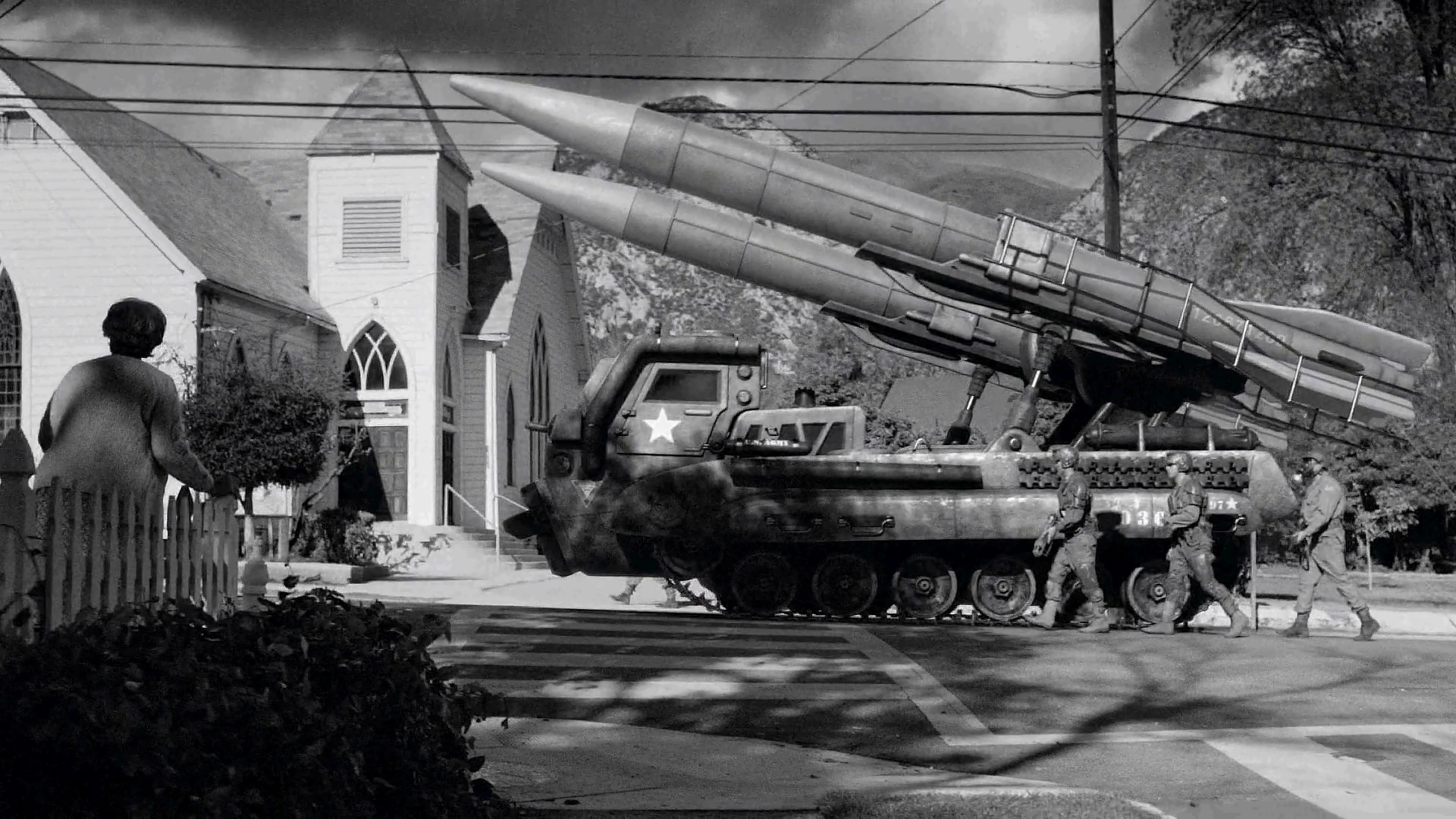
By 2076, the war had raged for a decade, stuck in a stalemate. For both soldiers and citizens alike, the long war caused intense psychological effects, several soldiers returning home with post-traumatic stress disorder. Chinese forces still held their own in Alaska, with the reclamation of Anchorage no closer to completion, while expeditionary forces in the Chinese mainland struggled to make headway. Shanghai would remain in Chinese hands well into 2077, with fighting raging for months after the months-long battle for Nanjing. Other campaigns would go deep into the Chinese interior, such as the Gobi Campaign, and Yangtze Campaign.
The annexation of Canada in January bolstered the sagging economy. As American units occupied locations throughout its provinces, martial law was enacted and all protesters were shot on sight. However, both superpowers struggled to maintain the war effort. The US further ramped-up production, and ordered experimental project turnaround cut in half. The completion of the T-51 power armor model in June started to shift the tide of the war. After the first batch of T-51 model B units arrived in China, the new series performed exceedingly well against the remaining Chinese tanks, armored vehicles, and infantry. The Chinese rallied and resisted the invasion, even as supply lines began to break down across the board, with nations annexed by China beginning to break down and revolt.
However, the United States was unable to fully exploit this advantage, as food and energy riots broke out in urban centers across the United States in August. A state of emergency and eventually martial law was declared, with U.S. military forces being deployed on the homefront to suppress riots. China would continue to invest in espionage and sabotage operations within the United States, in areas such as DC, Point Lookout, and West Virginia. This in turn fueled American paranoia of communist infiltration, and anti-Chinese sentiment with Chinese-Americans becoming a persecuted minority, many of whom were rounded up and forced into concentration camps.
Mutually assured destruction (2077)
Through a combination of attrition, loss of supply routes, and offensives conducted by the United States across the front, Chinese units in Alaska found themselves surrounded and cut off from reinforcements. The liberation of Anchorage spearheaded by winterized T-51 power armor units under the command of General Constantine Chase marked the end of the Anchorage Reclamation, after a decade of war. Fallout 3 Official Game Guide Game of the Year Edition p.43: "Chinese Army (Simulated), U.S. Army (Simulated) With conditions deteriorating between the United States and China, a military presence in Alaska was established to prevent a possible invasion across the Bering Strait. With increasingly scarce oil reserves, a last deep-sea deposit below the Pacific Ocean was claimed by China before allegedly being sabotaged by American special operatives. Strained relationships spiraled downwards into escalated conflict, as China marched on Alaska, and the Sino-American War of 2066—2077 erupted. Under the command of General Jingwei, the Chinese Army usurped control of Alaska's oil pipeline and reserves. In response, the Americans had begun what came to be called "The Alaskan Reclamation Operation" (2067—2077). Under the leadership of General Constantine Chase, the U.S. Army battled fiercely to the front lines of the conflict before General Chase deployed specialized power armor units that began pushing the Chinese back. Future power armor suits were further refined as the conflict dragged on, and the Trans-Alaska Pipeline was reclaimed. With resources flowing through Canada, strained diplomatic tensions between Canada and the United States becoming problematic, and as the Canadian forces attacked the pipeline, the country was annexed. A combination of inclement weather, constant American bombardment and trench warfare, and U.S. powered armor unit attacks sweeping through mainline China, the Chinese supply lines weakened and finally broke down completely. By the beginning of 2077, the city of Anchorage was finally liberated, the Chinese invaders eradicated, and the operation had been deemed a success. A commemorative memorial was erected in Washington, D.C., in honor of the soldiers who fought and perished for the greater American good. Violence between America and pockets of Canadian freedom fighters continued throughout 2077, until the Great War obliterated almost all infrastructure, commerce, and human life." (Fallout 3 Official Game Guide faction profiles) General Jingwei, commander of the Alaskan theater, was killed in action.


The campaign in mainland China was reinvigorated by the victory in Alaska and the deployment of T-51 units. Army troops clad in T-51 regularly witnessed Chinese troops surrendering upon sighting them and their miniguns. However, the effect did not last. As American troops pushed deeper into the mainland, Chinese resistance increased. By October, the situation transitioned from a rout into a stalemate. After a decade of war, there was no end in sight. Billions of dollars and thousands of lives were spent in vain. Although taxes and various wartime revenues ensured the United States government was able to fund a standing army on a scale far greater than at any previous point in American history, the Chinese similarly retained manpower numbering in the millions and continued to rival the U.S. military in terms of combat prowess. Meanwhile, the United States turned to automation, shuttering bases and converting them to automated strongpoints and redeploying personnel to the front line and to fight the Canadian resistance that continued to defy American occupiers.
The situation was made worse by the fact that the President and key Enclave officials in the United States retreated to remote locations, expecting a last-ditch nuclear strike from China at any moment. The oil rig was claimed by the President and key members of this inner circle, becoming the foundation of the future Enclave. Though contingency efforts were made, the United States was effectively leaderless; even a rebelling Army unit at a top secret location did not cause a government response as late as October.
By late October 2077, one of the last conflicts of the war being actively reported on was in Mambajao, one of the Philippine islands. Both sides started to realize that the war was essentially unwinnable and started negotiations to find an alternative solution to the conflict. However, with the absence of the President, the negotiations proceeded at a snail's pace and the war continued unabated.

Sources
Adapted from the original article, under CC BY-SA 3.0.