Place
Vault
The Vaults are a series of subterranean shelters designed and constructed by…
The Vaults are a series of subterranean shelters designed and constructed by the Vault-Tec Corporation under a joint operation contract with the United States government (codenamed Project Safehouse) to create hard-sealed fallout shelters outwardly intended to protect a selected portion of the American population from impending nuclear holocaust in the 21st century, so that the survivors could eventually repopulate post-apocalypse America on Reclamation Day. Unknown to the public at large, outside a minority of control Vaults, the main purpose of the Vaults was to conduct social experiments on the inhabitants, often involving mental, psychological, and physical torture for the purpose of scientific research into various, often unethical fields of study. The Vaults have appeared in every installment as an iconic element of the Fallout series.

Although the term "vault" has many meanings, it was trademarked by Vault-Tec to specifically refer to their particular brand of fallout shelter.
Vault-Tec Vaults are not to be confused with the Series 1000 shelter or the C.A.M.P. system's shelters which are similar in function, but different in goal: short-term vs long-term survival.
Project Safehouse
The origins of the Vault network date back to the early 2050s, when the Euro-Middle Eastern War, the New Plague, and the collapse of the United Nations resulted in a nation-wide scare. In response, the government set Project Safehouse in motion in 2054. This massive national defense endeavor was intended to create shelters that would protect the population in the event of a nuclear war or plague. Breakthroughs in construction techniques allow for these gargantuan bunkers to be constructed at a rapid pace.

The impoverished government was forced to finance the project with junk bonds and even then, only 122 Vaults were ever commissioned, allowing less than 0.1% of the population to save their life in the event of the holocaust. The sheer costs of a single Vault are staggering. For example, the intended budget for Vault 13 was $400 billion dollars, and by the end of its construction the total costs reached $645 billion, well over 150% of the initial figure.
As a crucial element of national defense, much of the project was classified and protected under the New Amended Espionage Act. Installations built as part of the Vault-Tec Societal Preservation Program commonly claimed to have a chance to fail equal to 1,763,497 to 1; however, the reality was a far cry from this bold claim.
Following the success of Vault-Tec Corporation's demonstration Vault built near their headquarters in Los Angeles at the time, the company won the bid for constructing the shelters. The building of the shelters proceeded rapidly and most were completed by 2063. The construction of several Vaults was delayed, particularly Vault 13 (which only started construction in August 2063) and the network surrounding Washington, D.C. Some were delayed due to work stoppage. Ongoing drills in completed shelters slowly created a "cry wolf" effect. Turnouts for the drills fell as the years went on, further limiting the Vaults' role in ensuring the survival of humanity.
Additional problems were caused by consistent mismanagement, corruption, and embezzlement that seemed to define Project Safehouse before the war. Yet for all these problems, Vault-Tec was able to create a number of miracle technologies and develop shelters that really protected the inhabitants, as long as they worked properly. Vault-Tec even advertised Vaults in newly annexed Canada, though these were in the early stages of completion. It was also a tremendous success for the company, allowing it to expand its headquarters to Washington, D.C. and even sponsor a large exposition at the Museum of Technology in the capital, designed to promote their shelters and explain their functionality. Promotional tours and awarding of prizes like the Pressed Vault Suit Award were also used to promote a positive image of the company, regardless of the numerous problems associated with it.
Vault construction timetable - - Vault 13 August 2063 March 2069 - Vault 76 2065 2069 (planned) 2076 (actual) - Vault 87 May 2066 May 2071 - Vault 92 May 2062 May 2068 - Vault 106 May 2064 December 2069 - Vault 108 March 2061 December 2069 - Vault 112 November 2068 June 2074
True purpose
Contrary to what its demonstration Vaults would claim, the Vaults were not meant to save humanity in general. The entire program was hijacked by a national conspiracy involving human experimentation overseen by what would become the Enclave. Project Safehouse was subverted for its own ends. Rather than act to save humanity directly, Vaults were built to test their population as part of the Societal Preservation Program. The Program was basically a vast data gathering exercise, to provide the Enclave with the information necessary to construct a multi-generational starship that would take a select group of people ("the best and brightest") off world to colonize new worlds, rather than try to restore the Earth: Enclave projections assumed the worst possible outcome: Global thermonuclear war renders Earth completely uninhabitable. Outside of the Enclave, this information was privy to only select Vault-Tec personnel (mostly overseers) and high ranking members of the military-industrial complex, such as the leadership of Big MT.
As such, all Vaults were designed to feed data to the Enclave. Of the 122 known public Vaults, 17 were designed to work more or less properly, as control Vaults. The 105 other Vaults were presented with a variety of scenarios, ranging from annoying to downright lethal, to gauge how humans would react and how they would survive them (if at all):Fallout Bible 0: "I read the start thing of the bible thats on the net. One thing I don't agree with in the fallout universe is that the Vaults were just a bunch of "social experiments". I mean why. Even though the enclave were a bunch of assholes, why would they want to purposely see their own country men die when the Vaults were societies last chance at a good survival. I like to think that lots of people died because the Vaults just didn't work. Like in FOT there is a terminal that says that money had been diverted from much needed common sense things to an underground game hunting facility or whatever it was. experiments was a bit over the top, but corruption is far more believable. that's what i think anyhow. and Fallout 3, is it a possibility or not?" "Michael" "Answer: The Vault experiments were an idea created by Tim Cain, and I don't really know the reason behind them, but I can offer some speculation." "First off, thematically, it's pretty creepy, and we all know that developers will pull all sorts of crazy shit to try and mess with players' heads. It's possible that Tim had just finished watching an X-Files episode and had conspiracy theories swimming around in his subconscious. As to your comment about the experiments being a bit over the top, well, yeah. We're guilty as charged." "Secondly, as proven time and again in Fallout 2, the Enclave isn't a particularly rational bunch of fellows. Thematically, they embrace a paranoid view of the world and a heightened sense of superiority over everyone else in Fallout." "Third, the federal government (or whatever branch of federal government was responsible - it was not necessarily the Enclave) may not have ever considered the Vaults as society's best chance for survival - the government may have considered themselves the best candidates for rebuilding the world and already had their asses covered in the event of a nuclear or biological war by relocating to other remote installations across the nation (and elsewhere) that weren't necessarily Vaults. The Enclave certainly didn't seem to be devoting much effort to digging up any other Vaults and trying to use the human stock there to rebuild civilization." "Fourth, a lot of people did die because the Vaults didn't work. Some suffered worse fates." "Nonetheless, even members of the Enclave probably could not answer the question of who created the Vault experiments and their reasons, as many of the people responsible for the creation of the Vaults died long ago, and many records were lost in the great static of 2077. President Richardson was familiar with the purpose of the Vaults, but he never saw them as more than little test tubes of preserved humans he could mess with." Some were not provided with enough food synthesizers for their population, others had only men in them, or were designed to open prematurely. Each of these unique circumstances would provide vital data for the spaceship construction, helping the Enclave to figure out how to sustain people for hundreds of years in cryonic suspension and generations of the crew necessary to maintain the ship, how to create sustainable, closed ecosystems to grow food, purify water, and maintain breathable air, and in the case of control Vaults like Vault 8, to test how recolonization of the surface using a Vault as base could work. Even Vault 13, ostensibly a control group, was intended to find out the theoretical lifespan limitations of Vault-Tec technologies.
Vault-Tec itself didn't simply act as intermediary: It used the shelters to create technologies that could be used to redefine society even if the starship project fell through. An entire Vault was set aside to act as proving grounds intended to test a variety of prototype devices with the aim of rolling them out through the rest of the Vaults. Once Vault 88 was fully operational, the company expected to roll out new devices every fiscal quarter. Unlike other Vaults, Vault-Tec would send test subjects before any disaster scenario, starting in early 2078. Human lives were considered irrelevant, with quick iteration time given a priority. The prototypes were meant to convert "useless" exercise into a socially-useful activity, manipulate the moods of the dwellers, or even develop crude forms of mind control. Ethical concerns were dismissed as counter-productive and close-minded.
The Great War
On October 23, 2077, the Great War came. The Vault-Tec air raid sirens blared, but the "cry wolf" effect resulted in few people going into the shelters. They were sealed and the experiments entered their decisive phase. The control Vaults functioned as intended and protected their populations. Others were not so lucky.
Within the next few decades, many shelters would fail as a result of their experiments. The few that did survive would often prosper. In 2091, after receiving the all-clear signal, Vault 8 opened and Vault City was founded. A year later, the demonstration Vault in the ruins of Los Angeles opened. The inhabitants founded Adytum in what became known as the Boneyard. Years later, Vault 15 opened. While a large portion of the Vault inhabitants that left the overcrowded Vault would band into raider tribes by the winter of 2097 (marking the beginning of the Khans, Vipers, and Jackals), the remaining Vault dwellers would found Shady Sands in spring. The town used its G.E.C.K. well. No one expected that these humble beginning would eventually culminate in the formation of the mighty New California Republic.
There was a darker side to the Vaults. As protective as they were, they would also ensure that the population within would be kept put for whatever purpose someone with less-than-ethical intentions might have for them. Such was the case in 2155, when the Master's forces captured a caravan of Vault dwellers from the L.A. Vault. He learned the location of the Vault and moved his base of operations there. Learning of other Vaults in the area, he realized their occupants were perfect subjects for his project. The super mutants began to scour the region for the Vaults, boosting the output of the Mariposa vats tremendously.
Eighty years later, Vaults would serve another nefarious purpose, as the Enclave, the architects of the original experimentation program, raided Vault 13 on March 16, 2242; the inhabitants were taken to the oil rig, so that the inoculation rendering humans immune to the FEV-based toxin could be tested.
By the late 23rd century, very few functional Vault-series shelters remain. The only known Vaults that still maintain societies comprised of the original dwellers and/or their descendants are Vault 101 (circa 2277), Vault 81 and Vault 118 (2287), and Vault 4 and Vault 33 (2296). Some other Vaults have kept their original experimental functions ongoing, such as Vault 112 (2277) and Vault 31 (2296), while many Vaults have been repurposed by outside factions as strongholds or, in the case of Vault 21, a hotel.
Construction
A typical Vault is built deep underground in a geologically stable area (typical choices include mountain ranges and remote areas away from population centers), but such shelters have also been built below the foundations of modern cities in order to survive the effects of a nuclear blast. Vault-Tec's method was patented as the Triple-S Technology (Safety, Survivability and Sanitation), to provide a maximum of comfort to the inhabitants without compromising their safety. Vaults were typically built using reinforced concrete and solid metal sheeting to ensure durability and longevity of the shelter construction. The primary protection came in the sheer amount of earth covering: Vault 13 was shielded by 3,200,000 tons of soil, at 200 feet (60m) of thickness, while Vault 88 was sheltered by granite deposits common to Quincy.

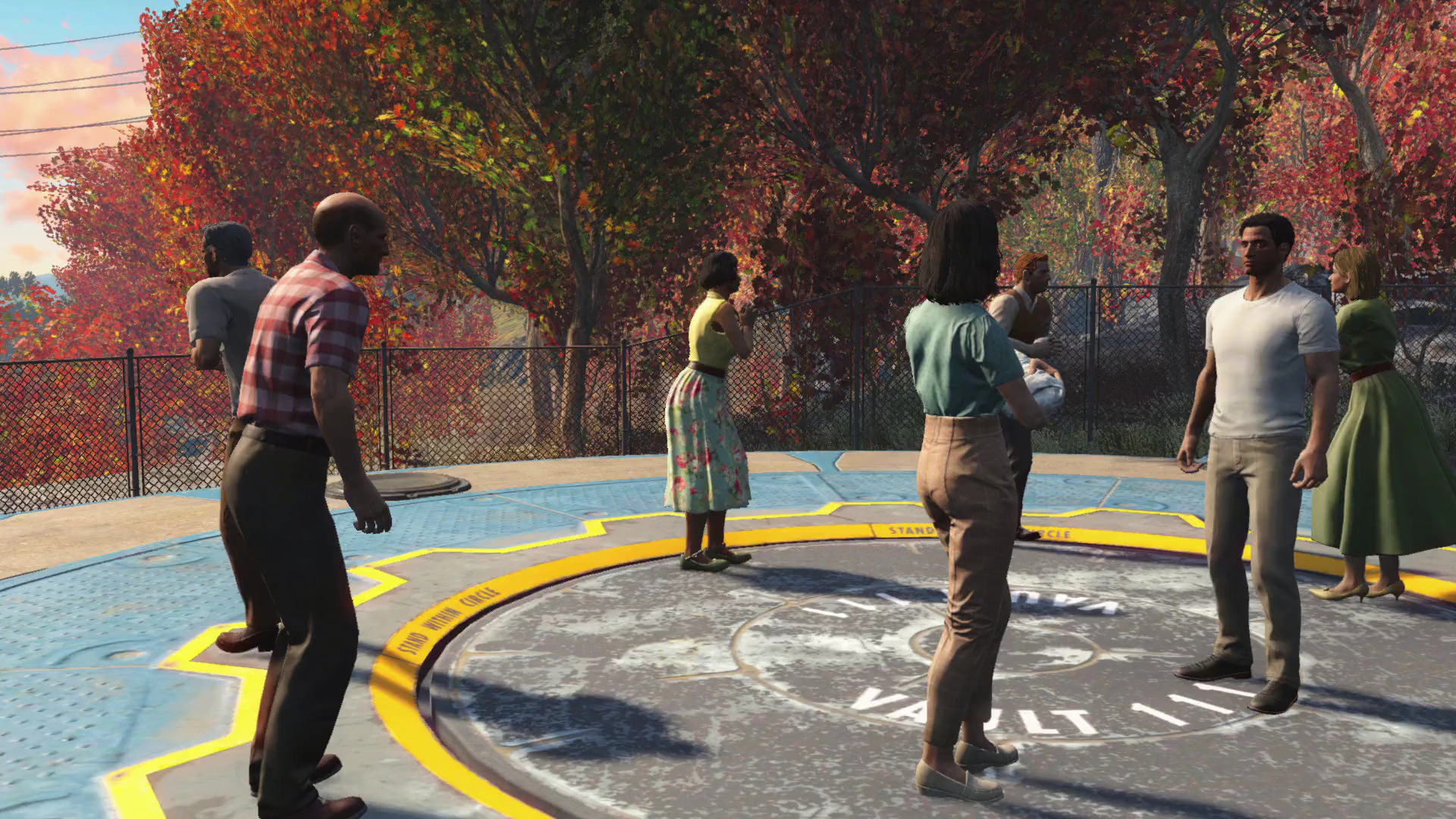
The entrance was controlled by a Vault blast door and an airlock. The Vault doors had a projected 2% failure rate in case of a direct hit by a nuclear missile. The only shelter hit by a nuclear weapon is Vault 87 and the blast damaged the door beyond repair. Some featured additional protective measures, such as an additional external blast door and reinforced access corridor, like Vault 8, or were accessed vertically through an elevator inside a protective dome that caused to blast wave to sweep over the dome and leave the Vault door intact, as is the case with Vault 111. Regardless of the presence of these measures, all entry points into a shelter were overpressurized to keep contaminants out.
The precise method of constructing Vaults evolved greatly as Vault-Tec accumulated experience in constructing these vast underground shelters. The first shelters were built using contemporary technologies, combining prefabricated elements with poured concrete and modular machines and electronics. The demonstration Vault built in Los Angeles set the standard for this first generation of Vaults built in California, which used the same kind of technology used for military and industrial construction, such as nuclear reactors, military bunkers, or corporate research facilities. Vault-Tec quickly started implementing its own, purpose-built technologies. Vaults started becoming more and more modular, using entire prefabricated sections built to spec on the factory floor and assembled on site. Many second-generation shelters exhibited a combination of both old and new technologies, with the only fully next-generation Vaults built on the East Coast, in Boston and Appalachia. These were built entirely using prefabricated sections complete with all the necessary infrastructure, fixtures, and fittings, greatly reducing construction times.
By 2077, Vault-Tec could rapidly construct Vaults, especially in areas where natural or artificial features such as stable cave networks or underground tunnels permitted it. For example, the stability of Quincy's granite quarries and the ground allowed extensive excavation operations, creating a network of natural and artificial caves. After reinforcement, these caves were connected to a temporary railroad that rapidly delivered all the necessary prefabricates, construction equipment, and other necessities.
Infrastructure
In order to power the entire installation, Vaults were provided with a variety of power sources, depending on local geology and the actual size of the Vault (with the average being approximately 220 dwellers). The largest of them, like Vault 13, required nearly 3.98 MWh/day for continued operations for its 1000 occupants (housed in a hot-bunking system). In order to meet the demand, the shelter used a geothermal power plant as a primary source, with General Atomics nuclear power as backup. Infrastructure is designed for durability, but also for convenience. Critical elements are usually hidden behind wall panels so as to keep them out of harm's way.
The usual go-to solution was geothermal power, in areas where it was practical. If not, the usual fallback option was the aforementioned General Atomics nuclear power plant, often used as the primary power source due to its reliability and scalability. Concrete, steel reinforcements, and SimuSun lighting were also utilized. Vaults can hold double the number of occupants under a hot bunking system. Vaults are known to use the systems listed below.
Vault Number of occupants Primary power supply Secondary power supply - Vault 4 200 (at construction), Cooper Howard: "Oh. Hello there. Yep, it's me, Cooper Howard, star of stage and screen. But I'm not here today to talk to you about my latest picture. No, today I'm here to show you a vast and wonderful place, not made by God Almighty but by the working man. A veritable Camelot of the nuclear age. Now, how 'bout we turn on some lights. There, that's better. Now, I'm speaking to you from deep inside the fully-livable Model 96JQ1164. And what a beaut she is. And what a song she sings. Now, that right there is Vault 4's three-foot-thick lead casing. Strong enough to keep out the rads and the Reds. Each one of these underground burghs comes with all the modern amenities you've come to expect from our rip-roarin' republic. Now, this corridor here is Sycamore Street, where you'll wave howdy to any one of your 200 neighbors on your way home for an enchanted evening with your loved ones. Mm. Meet the Hawthornes. Now, this isn't just your average all-American family. No, Lloyd and Cassandra here are both scientists, specializing in the effects of radiation on human DNA." Lloyd Hawthorne: "That's right. And we'll be living and working right here in Vault 4, leading a community governed entirely by scientists." Cooper Howard: "Wait a second, did you say "living down here"? Well, there hasn't been a nuclear incident, has there?" Lloyd Hawthorne: "Uh, no, not yet. But, uh, our family and a group of 80 volunteers will be conducting a five-year trial of Vault 4. To demonstrate to the world that, no matter what comes our way, America will be ready." Cooper Howard: "Five years. Well, I may play a hero in the movies, but... you all are heroes in real life. And now you can be a hero, too. By purchasing a residence in a Vault-Tec vault today. Because if the worst should happen tomorrow, the world is gonna need Americans just like you to build a better day after." ("The Trap") later unknown Vault-Tec reactor powered by a fusion core Unknown - Vault 8 Unknown, estimated at 100-200 Lumpy: "{230}{}{Broken Hills is where we get all the uranium that we need for the atomic reactor from. From what I understand, the uranium is mined by mutants down there. But they have humans trade the stuff for them.}" The Chosen One: "{231}{}{Why do they have humans trade the stuff for them?}" Lumpy: "{250}{}{Well, because they trade uranium to Vault City, too. Vault City treats anyone that’s not a pure strain human just like lepers. So, Broken Hills uses human traders. Some guy named Chad, I think.}" (GCLUMPY.MSG) None - Vault 13 500 (1000 with hot bunking) Geothermal General Atomics nuclear power - Vault 33 220, later reduced to at least 47 Unknown Unknown - Vault 51 52 (at sealing) Vault Star super-reactor None - Vault 75 Survey data 88 Unknown Unknown - Vault 76 Construction plans LightLife geothermal Dual Vault Star super reactors General Atomics nuclear power - Vault 81 Survey data 96 (plus unknown number of researchers) Nuclear reactor None - Citadel terminal entries; Vault-Tec terminal, Vault 87 Unknown General Atomics nuclear power Versicorps fusion power - Vault 88 Construction unfinished, none given super reactor None - Citadel terminal entries; Vault-Tec terminal, Vault 92 245 General Atomics nuclear power None - Vault 94 Unknown Class-VI fusion reactor Class-VIb fusion reactor Two Class-VIII reactors servicing G.E.C.K. containment and control - Vault 95 Survey data 72 Unknown Unknown - Vault 106 107 Rok-Solid Brand geothermal General Atomics nuclear power - Vault 108 475 General Atomics nuclear power (designed to fail after 240 months or 20 years) Steam Whistle mini geothermal - Citadel terminal entries; Vault-Tec terminal, Vault 112 85 Sure Power geothermal X-Tra Sure Power geothermal - Vault 114 Survey data 120 Unknown Unknown
All of that power was necessary to power the facilities necessary to sustain the people living within. Apart from air filtration systems required to keep the air breathable, which was already an issue without toxic contaminants leaking in, Vaults also included hydro-agricultural farms and food synthesizers to provide sustenance, water purification systems (able to take even sewer waste and convert it into up to 15,000 gallons of drinkable water each day with no loss of output for 250,000 hours of operation), and other necessary amenities, like a Vault-wide intranet allowing instant access to any entertainment, social, and educational files from any terminal in the Vault. Vaults were also equipped with incinerators for disposal of the dead and likely other waste products. Security was provided by heavy duty doors (which could be sealed by security in case of disturbances) and an extensive network of Eye-On-You surveillance cameras. The entire Vault was typically managed by a single, centralized computer system, the most advanced of which is the ZAX series of supercomputers, currently known to have only been used in Vault 51. The most common brands were Brainpower and Think Machine.
All of the systems were reported to function without failure for nearly 900 years, though the uneven quality of components would prove this claim untrue. For example, the water chips were manufactured by a low-bid contractor, resulting in poor quality and a high failure rate. Such was the case with Vault 13 in 2161, exacerbated by the fact that the process was too complicated for a workaround system. For the resettlement of the surface, the shelters were provided with complete construction equipment and preselected installations received one or two G.E.C.K.s, intended to help the inhabitants create a viable civilization in the post-nuclear world after the "all clear" signal is sent.
Vault dwellers
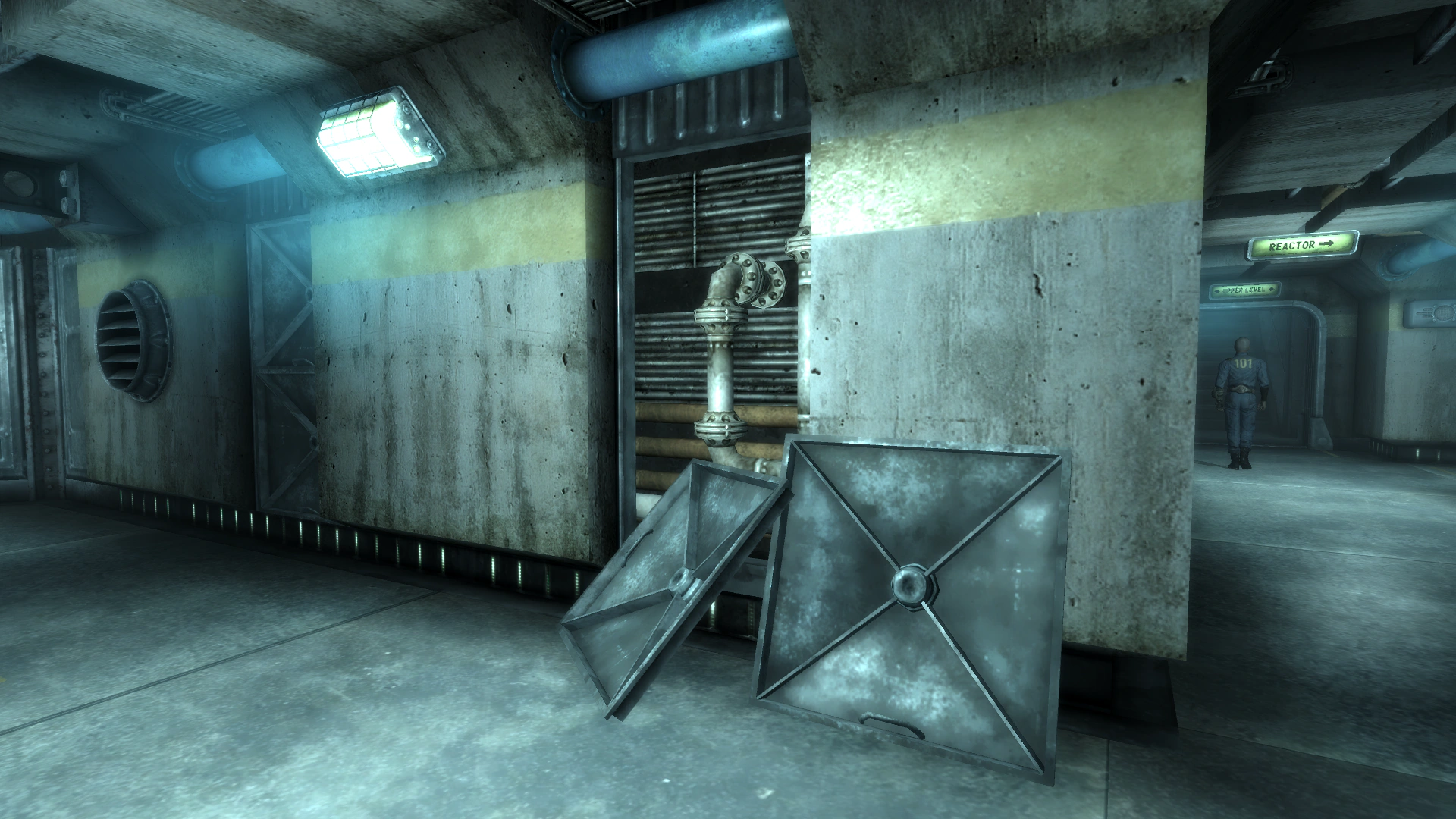
The total number of inhabitants could be as high as 500 (1,000 with hot bunking) in installations like Vault 13 and Vault 76 and as low as 100. As the government only commissioned 122 Vaults as part of Project Safehouse, only a fraction of the 400 million U.S. citizens would actually be accepted into the Vaults. The duration of stay varied. Some shelters were only intended to stay sealed for ten years (Vault 13, though this directive was overridden), while others were designed for 38 years and more, like Vault 108.

Since the Enclave never really intended for the Vaults to save anyone, they used Project Safehouse and Vault-Tec's network of shelters for a grand social experiment, to test the occupants in unique circumstances. The Enclave eventually abandoned their goal of settling on another planet and decided to resettle the one they already had. Vault monitoring and research continued as the Vault Behavioral Project. In order to monitor the populations being experimented upon, the Enclave's oil rig possessed a great deal of equipment that allowed them to observe and control the Vaults. For example, the Enclave sent the all clear signal to Vault 8 shortly after the war, prompting them to leave the shelter and build their city. These monitoring tools also let the Enclave see that the population of Vault 13 was largely intact, although this wouldn't become important until much later.
Pre-selected segments of the population accepted into Vault-Tec's shelters would enjoy a very high quality of life, though it would be completely different from the free market capitalist consumerism experienced on the surface - a planned socialist utopia underground (giving China the last laugh). As a closed system, the Vaults were designed to recycle and reuse as much as possible and implement a completely planned economy that would maintain the system for the planned duration of the Vault. Every inhabitant would be registered with a unique 11 digit Vault identification number (or VID) and provided with clothing, bedding, and other accommodations necessary for their life within the Vault.
The only exception was food and water, as these could only be procured with the proper ration coupons (at least in some Vaults). Luxury, non-essential goods were available for purchase in exchange for work credits, a form of currency earned through performing work for the Vault. The aforementioned ration coupons would sometimes also be used as a form of currency. Nourishment would be provided by a combination of food grown in hydroponic farms, like in Vault 13, or food synthesizers, capable of creating a variety of foodstuffs. Water would be provided by purifying liquid drawn from the local water table.
Vault dwellers would be unable to use their own clothing in the long term. While dwellers could arrange to have their belongings sent to their quarters in advance, there was a strict policy disallowing bringing baggage along in case of an emergency entrance. The uniform Vault jumpsuit would replace regular clothes. Manufactured inside the Vault, it was designed for utility and comfort. Enterprising dwellers could, however, customize theirs to add a bit of individuality to the generally conformist design. Planning and conformity also extended to other areas. For example, trash disposal would only be permitted in designated receptacles on pre-set trash burning days. These receptacles would also be used for the disposal of corpses, as there was no space for proper burial in the confined environment of the Vault. Children would also be assigned their first work duties starting with the day after their tenth birthday.
In exchange for these sacrifices in lifestyle, dwellers would receive private quarters provided with the latest in home appliances, including Floorsuck Autocleaner Systems to minimize sweeping, Culinator 3000 Kitchen Systems for cooking, and access to complete libraries of social and entertainment files together with the public Entertainotron room. A standardized education would be received by all Vault dwellers, including schooling in arithmetic, chemistry, biology, history, and other sciences. Tertiary education would also be provided and Vault-trained specialists would be highly sought after the apocalypse and count on a stable career in their chosen field, like Doc Mitchell from Vault 21, who opened a practice in Goodsprings after the Vault was opened.
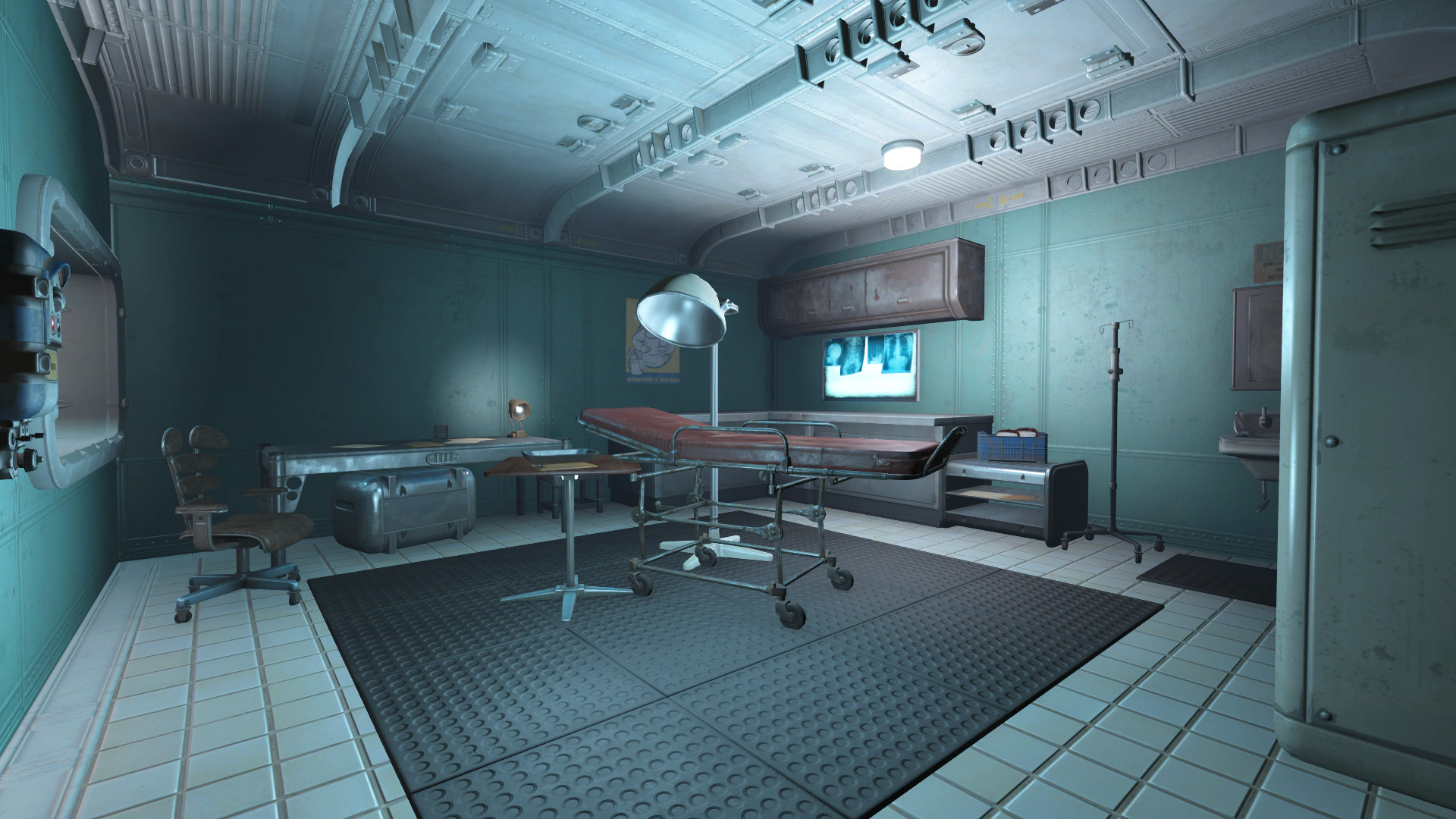
Their health would be assured by well-educated doctors with access to the latest in medical technologies. Auto-Docs capable of performing a broad variety of procedures and manufacturing medical drugs were the standard issue of the Emergency Medical Labs (which were equipped well enough to rival clinics). Some Vaults were also equipped with facilities for cloning replacement tissue and organs. To avoid the development of medical problems, shelters were lit using a Simu-Sun lighting system simulating natural sunlight. It was estimated that living in a properly maintained Vault would result in an average lifespan of 92.3 years. Prolonged isolation, even in generations born after entry, took its toll. Vault depressive syndrome was a common problem, manifesting as intense depression that could be debilitating. The usual recourse was to prescribe and treat it with anti-anxiety medication. Furthermore, those who exited successful Vaults seem to have a heightened chance of suffering from xenophobia (fear of strangers) and/or agoraphobia (fear of open places).
Security inside the Vault was provided by its dedicated security force, usually hand-picked by the overseer. A typical Vault was provided with enough firearms and armor to arm ten men. Surface monitors and communications systems were designed to facilitate connecting with other Vaults, though this functionality was either never implemented or failed soon afterwards.
Layout
Due to the nature of the project, Vaults were provided with standardized facilities and layouts. Some Vaults were built according to a uniform design plan (like Vaults 8, 12, 13, and 15), while others had to be adapted to local geological features. The following section attempts to summarize the most common design features.

Common schematic of Vault design used in mountainous areas. 1 - Natural bedrock 2 - Reinforced concrete that creates the outer shell of a Vault 3 - Entrance area 4 - Living quarters 5 - Command center
Entrance
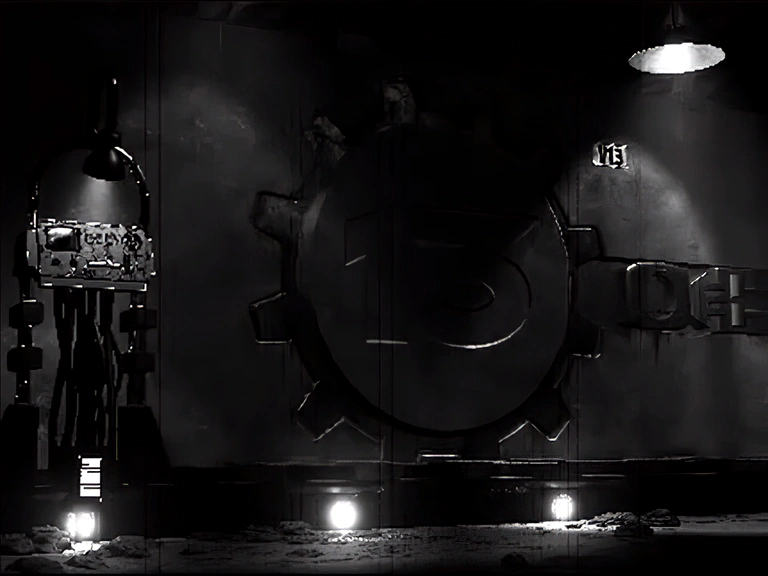
A Vault was designed to provide the best possible protection from nuclear fallout, indirect blast effects, and any unrest that might occur following a global thermonuclear war. Protected by a massive Vault blast door available in several different variants, from the basic Seal-N-Safe Model No. 343, through fortified doors, all the way to the high tech fortified Vault entrances, the entrance area would double as an overpressurized airlock. There future dwellers would undergo decontamination and processing by Vault-Tec personnel, then change into Vault jumpsuits provided in sealed packages before entering the Vault. Vault doors would be operated either remotely or from control pods located near the door (both outside and inside the Vault). Specific access codes would be necessary to operate the door. Some Vaults were provided with an external blast door, providing additional protection against the blast.
Several layouts were developed for entrance areas. The earliest designs, derived from the demonstration Vault, had a simple airlock, terminating in a security door fitted with additional armored plating to deter attackers and protect against radiation. This airlock would typically contain a status terminal and a locker for emergency supplies.
Later, more advanced layouts greatly expanded the airlock into a fully-featured processing and decontamination station. Advanced Vault doors and airlocks would funnel prospective Vault dwellers into a decontamination shower and then to a separate area for disrobing and changing into jumpsuits (which would later double as a staging area for excursions), before allowing them to enter the shelter. A separate room to the side would be used for monitoring purposes.
The latest, fortified airlocks seen only in high-tech areas such as the Commonwealth further iterate on the system. The entry door connects to a retractable catwalk leading into the Vault, monitored by security officers and staff during processing. The entrance area, painted in warm colors with a reassuring corporate slogan prominently displayed (Welcome Home), would typically include a security station and an array of radiation scanners that would analyze people entering the Vault proper.


East and West Coast (nine-cog model)
Living quarters
Living quarters were typically located deeper into the Vault and their design varied by the installation. A standard level had 20,000 square feet of usable area. The standard approach was to provide discrete apartments to Vault couples, provided with a private sanitary compartment, terminal, and a bed, on top of any additional amenities they may require.
Different philosophies were implemented depending on the designer and the intended purpose. Some did away with apartments in favor of separate dormitories for genders, where multiple dwellers would occupy the same room, or for apartment blocks composed of a bedroom (with one or two beds, the former typically utilized under hot bunking) and living space, with common lavatories accessible in the corridors. Other facilities typically located in living quarters include diners, cafeterias, classrooms, laundry rooms, and even cigar lounges.

Emergency medical lab
Typically found on the entrance level, the EML is one of the most important places in the shelter. Despite its name, a typical EML is a fully-featured medical clinic allowing dwellers to undergo medical procedures in a safe and sterile environment. A medic is expected to be present on site 24 hours a day, to respond to any emergencies immediately. The EML typically varies in size between Vaults. Some installations abandon the moniker entirely and simply refer to it as the clinic.
Command center
The command center is the nexus of Vault activity, where all the computers necessary to maintain the Vault's various functions. Centered around the overseer's office, it typically incorporates the security station, armory, computer core, meeting room, and library, although many variations of the layout have been developed.
The oldest Vault designs usually dedicated an entire floor of the Vault for these purposes, owing to the multiple functions it was supposed to fulfill. One wing of the level would incorporate the overseer's office, a vaulted chamber with a command post equipped with a pair of CZ-53 5mm miniguns designed to defend the overseer, connected to the main processing computers (including the water purification controls) and the security post with the Vault's main armory. A Vault security guard would be posted in the area on watch around the clock.
Later designs would forgo the inclusion of a discrete command post and hall, in favor of a more modest office. The workplace of the overseer would typically be located in an area overlooking the atrium - the center of activity within the Vault, where dwellers would spend their leisure time, socialize, and even engage in sports. The office would typically connect to necessary administrative and security facilities, such as the computer core, security station and armory, laboratories and the personal quarters of the overseer and their family.

Sources
Adapted from the original article, under CC BY-SA 3.0.